
The Delhi Sultanate emerged after the defeat of Prithviraj Chauhan in 1192 and was ruled by five dynasties: Mamluks, Khiljis, Tughlaqs, Sayyids and Lodis. It expanded across northern and parts of central and southern India through military campaigns, but faced constant rebellions and resistance from kingdoms such as the Eastern Gangas, Hoysalas, Mewar and the Bahmani Sultanate. Ala-ud-din Khilji and Muhammad bin Tughlaq greatly expanded its territories, but political instability and poorly executed policies weakened the Sultanate. Timur’s invasion of Delhi further devastated it. Eventually, increasing regional resistance reduced its territory, and the Lodi dynasty became its last ruling dynasty before the Sultanate ended in 1526.
Rise and Fall of The Delhi Sultanate
Beginning of the Delhi Sultanate
1. Beginning of the Delhi Sultanate:
- The Delhi Sultanate was formed after the defeat of King Prithviraj Chauhan in 1192.
- Prithviraj Chauhan ruled over parts of northwestern India.
- The Delhi Sultanate was ruled by five successive foreign dynasties of Turkic-Afghan origin:
- Mamluks, also known as the Slave dynasty
- Khiljis or Khaljis
- Tughlaqs
- Sayyids
- Lodis or Lodhis
2. Expansion and Resistance:
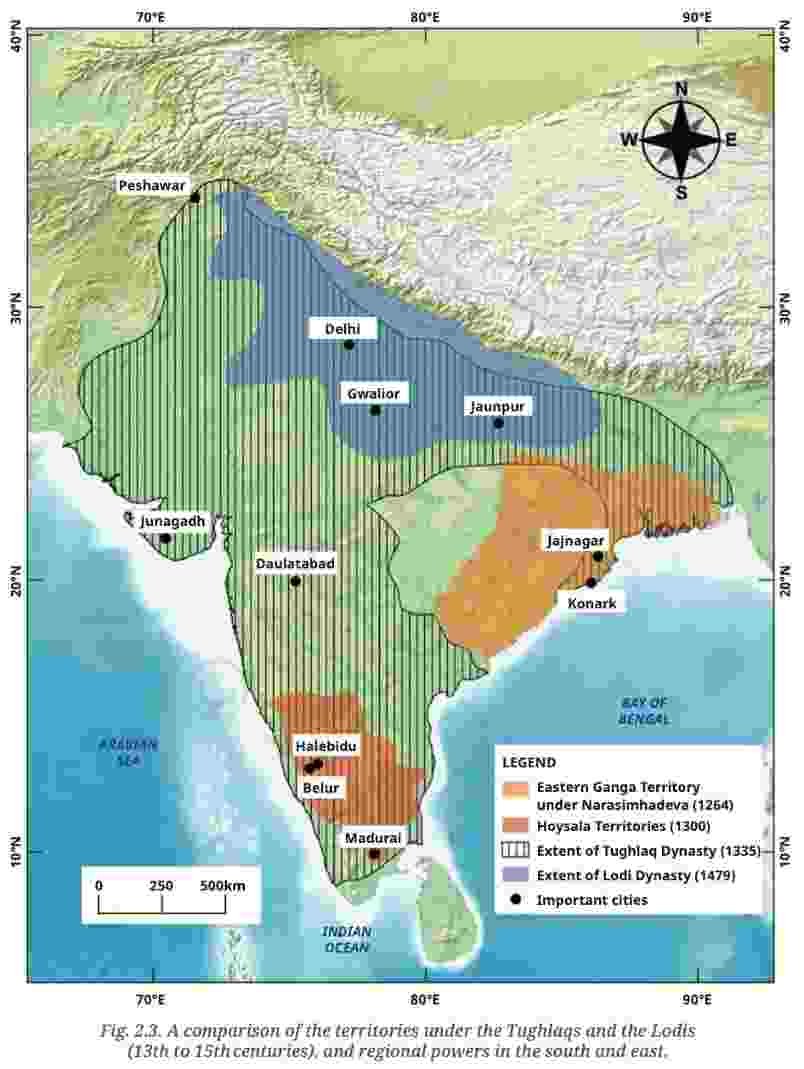
- Certain parts of northern India came under the control of the Delhi Sultanate.
- The Eastern Gangas in the east and the Hoysalas in the south resisted the Sultanate’s expansion.
- These neighbouring kingdoms also became thriving centres of:
- Art
- Culture
- Administration
- The city of Delhi gained greater importance in the political landscape of northern India.
3. Political Instability of the Sultanate:
- The Sultanate period was marked by:
- Political instability
- Efforts at territorial expansion
- Military campaigns often involved:
- Raiding villages and cities
- Plundering wealth
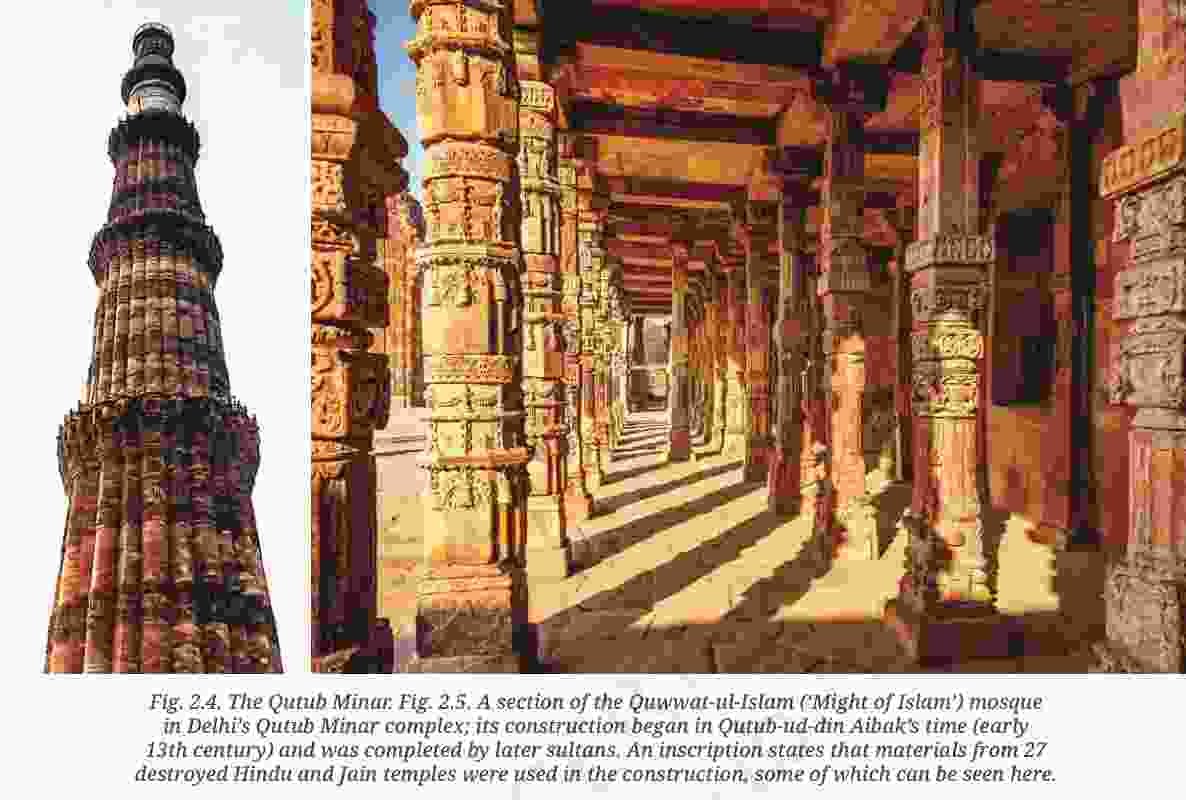
- Destroying temples
- Destroying seats of learning
- Successions to the throne were often violent.
- Almost two out of every three sultans seized power by eliminating their predecessors.
- The average reign of a sultan was hardly more than nine years.
Ala-ud-din Khilji and Military Expansion
1. Campaigns of Ala-ud-din Khilji:
- At the beginning of the 14th century, Ala-ud-din Khilji conducted military campaigns across large areas of north and central India.
- His campaigns involved the sacking and plundering of many cities.
- He also successfully repelled several Mongol invasions.
- The Mongols were attempting to add India to their vast empire, which covered most of Asia at that time.
2. Malik Kafur’s Southern Campaigns:
- Malik Kafur, the slave-general of Ala-ud-din Khilji, expanded the Sultanate southward.
- He conquered several kingdoms during his campaigns.
- The wealth obtained through plunder helped finance the Sultanate’s large military apparatus.
- Malik Kafur also attacked several Hindu centres, including:
- Srirangam
- Madurai
- Chidambaram
- Possibly Rameswaram
Muhammad bin Tughlaq and Expansion
1. Expansion of the Sultanate:
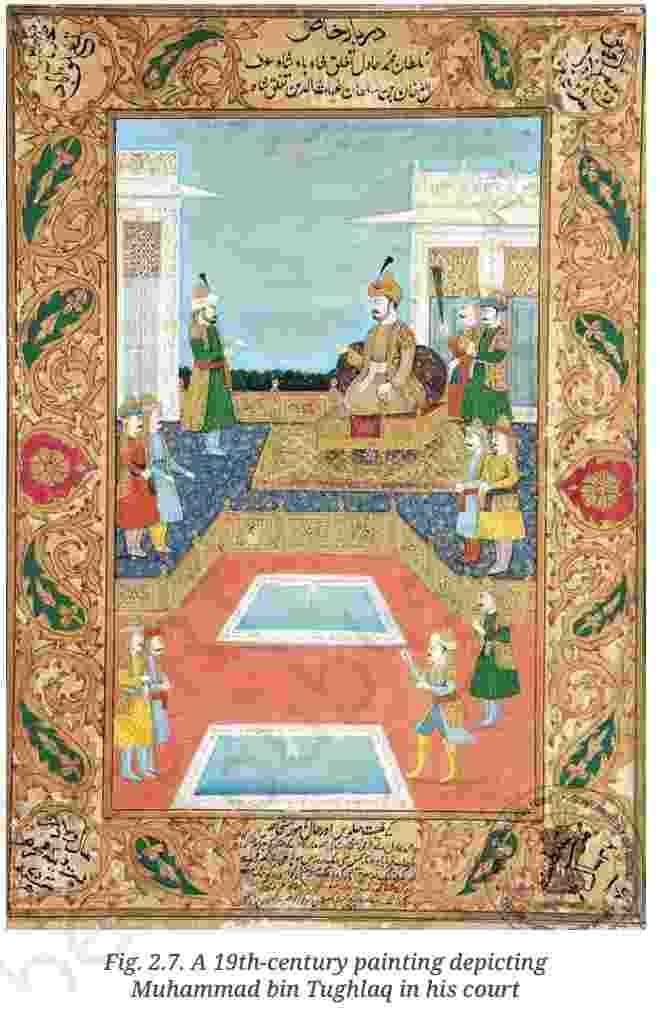
- Muhammad bin Tughlaq ruled Delhi and expanded the territories of the Delhi Sultanate further.
- For the first time since the Mauryan Empire, most of the Subcontinent came under one ruler.
- This dominance was significant but short-lived.
2. Shifting the Capital:
- Muhammad bin Tughlaq had ambitious schemes, but they were often poorly executed.
- He shifted the capital from Delhi to Daulatabad, then called Devagiri, near present-day Sambhaji Nagar.
- He may have believed that Daulatabad’s more central location would provide better control over the empire.
- People were forced to travel over 1,000 km from Delhi to Daulatabad.
- A few years later, the capital was shifted back to Delhi.
- According to some sources, both transfers resulted in great loss of life.
3. Introduction of Token Currency:
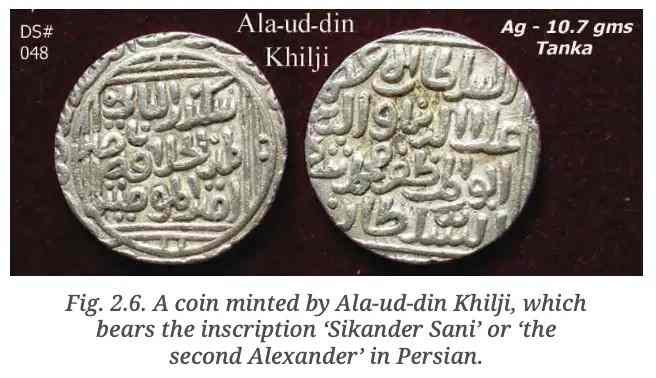
- Muhammad bin Tughlaq introduced token currency.
- Cheap copper coins were declared to have the same value as silver or gold coins.
- The idea was progressive because much of the currency used today is also token currency.
- At that time, however, the measure:
- Created confusion in trade.
- Encouraged people to counterfeit copper coins.
- Contributed to the decline of the economy.
Wealth and Economy under the Sultans
1. Luxurious Life of the Ruling Elite:
- Sultans and their court elite lived in luxurious palaces.
- They enjoyed:
- Elaborate clothing
- Jewelled ornaments
- Fine food
2. Sources of Wealth:
- Their wealth largely came from:
- Plunder from military campaigns
- Taxes imposed on common people and conquered regions
- Slave trade
- Enslaved people were used as free labour or sent to distant Central Asia to be sold.
3. Impact of Plunder:
- Plunder affected:
- Trade networks
- Agricultural production
4. Destruction of Sacred Images:
- The period witnessed numerous attacks on sacred or revered images in:
- Buddhist temples
- Jain temples
- Hindu temples
- Such destruction was motivated not only by plunder but also by iconoclasm.
Jizya Tax
1. Meaning and Purpose:
- Some sultans imposed jizya, a tax on non-Muslim subjects.
- It was imposed in return for:
- Protection
- Exemption from military service
2. Impact of Jizya:
- Depending on the ruler, this discriminatory tax could become:
- An economic burden
- A source of public humiliation
- It also created financial and social incentives for subjects to convert to Islam.
Timur’s Invasion
1. Attack on Delhi:
- At the end of the 14th century, Timur, a brutal Turkic-Mongol conqueror from Central Asia, invaded northwestern India.
- He launched a devastating attack on Delhi.
- At that time, Delhi was a thriving city.
2. Objectives of Timur:
- According to his memoirs, Timur’s two-fold objective was:
- To wage war with the infidels
- To gain wealth by plundering their wealth
3. Consequences of the Invasion:
- Large numbers of people were:
- Killed
- Enslaved
- Delhi was left in ruins.
- Timur soon withdrew from India with huge amounts of plunder.
Exam & Revision Summary: Rise and Fall of the Delhi Sultanate
The Delhi Sultanate began after the defeat of Prithviraj Chauhan in 1192 and became an important political power in northern India. It was ruled by five successive Turkic-Afghan dynasties: Mamluks (Slave dynasty), Khiljis, Tughlaqs, Sayyids and Lodis. The Sultanate controlled large parts of northern India at different times, but powerful kingdoms such as the Eastern Gangas and Hoysalas resisted its expansion.
The Sultanate period was marked by political instability, military expansion and frequent violent succession struggles. Many rulers used military campaigns to expand their territories, while villages, cities, temples and centres of learning were sometimes raided and destroyed. Nearly two out of every three sultans reportedly gained power by eliminating their predecessor, resulting in short reigns.
Ala-ud-din Khilji and Expansion
Ala-ud-din Khilji expanded the Sultanate across large parts of northern and central India and successfully resisted several Mongol invasions. His general Malik Kafur led campaigns into southern India and brought back enormous wealth, which helped finance the Sultanate’s military. Several important Hindu centres, including Srirangam, Madurai and Chidambaram, were attacked during these campaigns.
Muhammad bin Tughlaq
Muhammad bin Tughlaq expanded the Delhi Sultanate further, bringing much of the Indian Subcontinent under one ruler for the first time since the Mauryan period. However, many of his ambitious plans were poorly implemented.
His major experiments included:
- Transfer of capital: He shifted the capital from Delhi to Daulatabad (Devagiri), forcing people to travel more than 1,000 km. The capital was later shifted back to Delhi.
- Token currency: He introduced inexpensive copper coins with the value of silver or gold coins. Counterfeiting became widespread, causing economic problems.
- These failed policies, along with military expenses, weakened the economy.
The wealth of the ruling elite came largely from military plunder, taxation and the slave trade. Excessive warfare also disrupted agriculture and trade networks. Attacks on sacred images and temples were sometimes motivated by both plunder and iconoclasm.
Jizya and Timur’s Invasion
Some sultans imposed jizya, a tax on non-Muslim subjects. Although it was presented as a tax for protection and exemption from military service, it could become a significant economic and social burden.
At the end of the 14th century, Timur, a Turkic-Mongol conqueror from Central Asia, invaded northwestern India and attacked Delhi. Large numbers of people were killed or enslaved, and the city suffered massive destruction. Timur returned to Central Asia with enormous wealth, leaving Delhi weakened.
The Lodis later became the final dynasty of the Delhi Sultanate, but by then its territory had greatly declined because of resistance from regional kingdoms.
Resistance to the Delhi Sultanate
The Delhi Sultanate never achieved complete control over India. Several powerful kingdoms successfully resisted its expansion.
Eastern Gangas
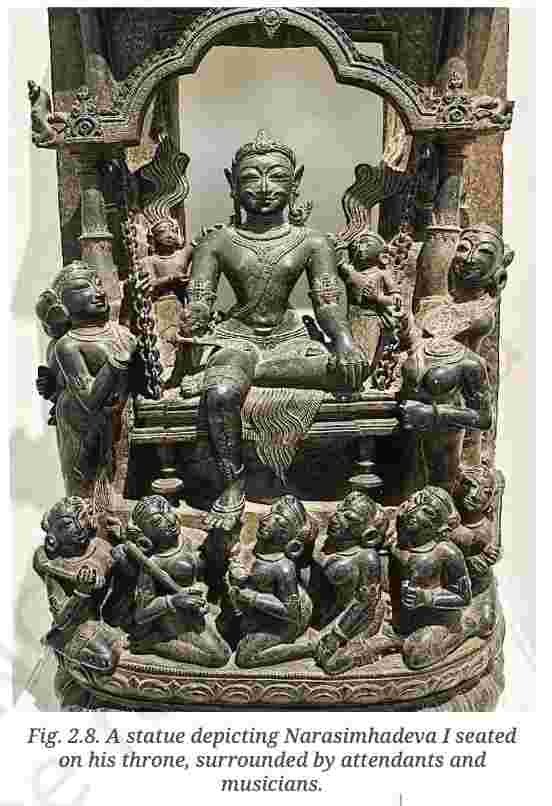
The Eastern Ganga kingdom of Kalinga, covering parts of present-day Odisha, Bengal and Andhra Pradesh, successfully resisted the Sultanate.
Narasimhadeva I was a notable ruler who defeated the Sultanate’s governor of Bengal and resisted several invasions. He also built the famous Sun Temple at Konark, partly to commemorate his military victories.
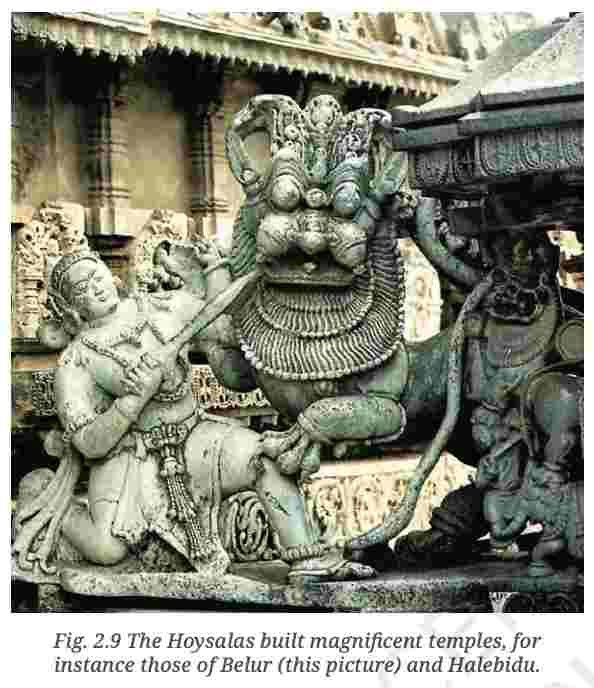
Hoysalas
The Hoysalas, who ruled parts of present-day Karnataka, resisted several attacks from the Delhi Sultanate. They were the last major independent kingdom in southern India for a time. However, repeated attacks and internal conflicts weakened them, and the kingdom was eventually absorbed into the Vijayanagara Empire in the 14th century.
Regional Sultanates and Rajput Resistance
The decline of Delhi’s power encouraged the emergence of independent regional Sultanates. The Bahmani Sultanate became a major power in the Deccan, while independent Sultanates also emerged in Gujarat, Bengal and other regions.
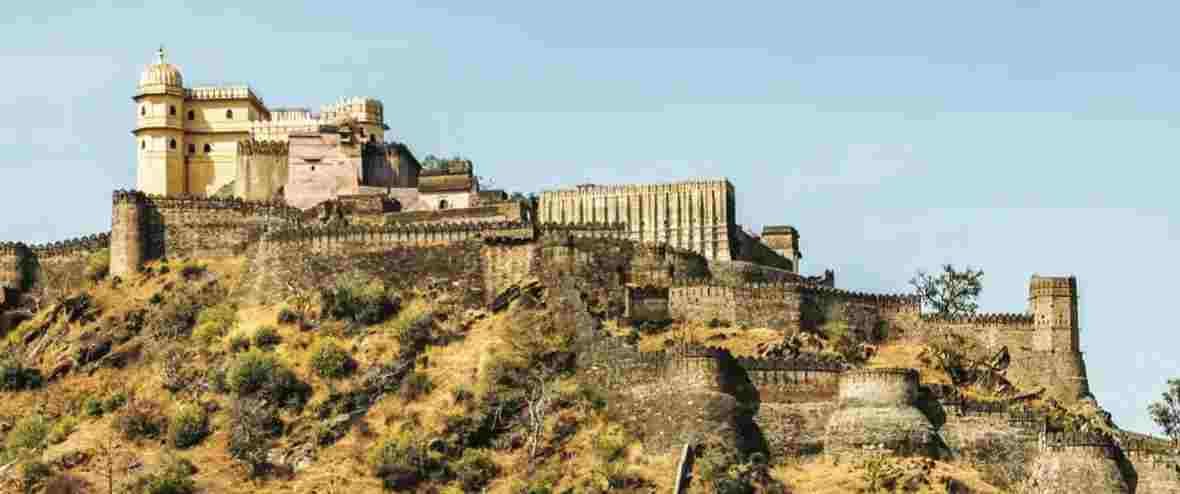
In Rajasthan, several areas remained outside Delhi’s control. Rana Kumbha of Mewar successfully resisted invasions and strengthened his kingdom.
He built the famous Kumbhalgarh Fort in the Aravalli hills. Its massive 36-kilometre-long wall made it an important stronghold of Mewar.
Key Takeaway
The Delhi Sultanate was a major medieval political power, but its history was characterised by territorial expansion, military campaigns, political instability and strong regional resistance. Powerful rulers such as Ala-ud-din Khilji and Muhammad bin Tughlaq expanded its influence, while kingdoms such as the Eastern Gangas, Hoysalas and Mewar successfully resisted it. Eventually, internal weaknesses and the rise of powerful regional states caused the Sultanate’s territory to shrink, leading to the end of the Lodi dynasty and the emergence of new political powers.
MCQs on NCERT Social Science Class 8 Chapter 2 Topic – Rise and Fall of The Delhi Sultanate
Question 1. The Delhi Sultanate was formed after the defeat of which ruler in 1192?
A. Rana Kumbha
B. Prithviraj Chauhan
C. Narasimhadeva I
D. Ala-ud-din Khilji
Answer: B. Prithviraj Chauhan
Question 2. Which of the following was not one of the five dynasties of the Delhi Sultanate?
A. Mamluks
B. Khiljis
C. Tughlaqs
D. Cholas
Answer: D. Cholas
Question 3. Which of the following gives the correct sequence of the five dynasties of the Delhi Sultanate?
A. Mamluks, Khiljis, Tughlaqs, Sayyids, Lodis
B. Khiljis, Mamluks, Sayyids, Tughlaqs, Lodis
C. Mamluks, Tughlaqs, Khiljis, Lodis, Sayyids
D. Sayyids, Lodis, Mamluks, Khiljis, Tughlaqs
Answer: A. Mamluks, Khiljis, Tughlaqs, Sayyids, Lodis
Question 4. What was a major feature of the Delhi Sultanate period?
A. Complete political stability
B. Political instability combined with efforts at territorial expansion
C. The end of military campaigns
D. The absence of resistance from other kingdoms
Answer: B. Political instability combined with efforts at territorial expansion
Question 5. Which ruler conducted extensive military campaigns in north and central India and also repelled several Mongol invasions?
A. Muhammad bin Tughlaq
B. Ala-ud-din Khilji
C. Timur
D. Rana Kumbha
Answer: B. Ala-ud-din Khilji
Question 6. Who was Ala-ud-din Khilji’s slave-general who expanded the Sultanate’s reach southward?
A. Joachim Rheticus
B. Malik Kafur
C. Narasimhadeva I
D. Rana Kumbha
Answer: B. Malik Kafur
Question 7. Why was the wealth plundered during Malik Kafur’s southern campaigns important to the Delhi Sultanate?
A. It was used to finance the Sultanate’s large military apparatus
B. It was used only to build temples
C. It was distributed among farmers
D. It was used to end the slave trade
Answer: A. It was used to finance the Sultanate’s large military apparatus
Question 8. Which ruler expanded the Delhi Sultanate to cover most of the Indian Subcontinent for the first time since the Mauryan Empire?
A. Ala-ud-din Khilji
B. Muhammad bin Tughlaq
C. Timur
D. Rana Kumbha
Answer: B. Muhammad bin Tughlaq
Question 9. Why did Muhammad bin Tughlaq shift his capital from Delhi to Daulatabad?
A. He wanted to escape from the Mongols
B. He believed its more central location might provide better control over the empire
C. Delhi had no water supply
D. Daulatabad was the capital of the Mauryan Empire
Answer: B. He believed its more central location might provide better control over the empire
Question 10. What was the major problem with Muhammad bin Tughlaq’s token currency experiment?
A. Gold coins became too common
B. Cheap copper coins were given the value of silver or gold coins, encouraging counterfeiting and creating confusion in trade
C. People stopped using copper completely
D. It increased agricultural production
Answer: B. Cheap copper coins were given the value of silver or gold coins, encouraging counterfeiting and creating confusion in trade
Question 11. Which of the following was a major source of wealth for the sultans and their court elite?
A. Only agriculture
B. Military plunder, taxes and slave trade
C. Only international trade
D. Donations from farmers
Answer: B. Military plunder, taxes and slave trade
Question 12. What was the jizya?
A. A tax imposed on non-Muslim subjects
B. A tax on merchants only
C. A military salary
D. A tax on agricultural products
Answer: A. A tax imposed on non-Muslim subjects
Question 13. What was one consequence of the jizya according to the passage?
A. It always reduced economic inequality
B. It could become an economic burden and social humiliation for non-Muslim subjects
C. It abolished military service for everyone
D. It ended religious conflicts
Answer: B. It could become an economic burden and social humiliation for non-Muslim subjects
Question 14. Who invaded northwest India and devastated Delhi towards the end of the 14th century?
A. Malik Kafur
B. Muhammad bin Tughlaq
C. Timur
D. Narasimhadeva I
Answer: C. Timur
Question 15. Which kingdom successfully resisted the Delhi Sultanate and was ruled by Narasimhadeva I?
A. Hoysala kingdom
B. Eastern Ganga kingdom of Kalinga
C. Bahmani Sultanate
D. Mewar kingdom
Answer: B. Eastern Ganga kingdom of Kalinga
Question 16. Which famous temple was built by Narasimhadeva I partly to commemorate his victories?
A. Meenakshi Temple
B. Sūrya Temple at Konark
C. Brihadisvara Temple
D. Jagannath Temple
Answer: B. Sūrya Temple at Konark
Question 17. Which kingdom remained the only independent kingdom in southern India for a period while resisting attacks from the Delhi Sultanate?
A. Mewar
B. Bahmani
C. Hoysala
D. Kalinga
Answer: C. Hoysala
Question 18. Which Sultanate emerged in the Deccan in the mid-14th century?
A. Bahmani Sultanate
B. Lodi Sultanate
C. Mamluk Sultanate
D. Hoysala Sultanate
Answer: A. Bahmani Sultanate
Question 19. Who was the ruler of Mewar who successfully resisted invasions from later Sultanates?
A. Narasimhadeva I
B. Malik Kafur
C. Rana Kumbha
D. Muhammad bin Tughlaq
Answer: C. Rana Kumbha
Question 20. Why is Kumbhalgarh Fort significant?
A. It was built by Ala-ud-din Khilji as the capital of Delhi
B. It was built by Rana Kumbha and served as a stronghold of the rulers of Mewar
C. It was built by Timur after his invasion
D. It was the capital of the Bahmani Sultanate
Answer: B. It was built by Rana Kumbha and served as a stronghold of the rulers of Mewar
Next & Previous Topics of NCERT/CBSE Social Science Class 8 Chapter 2: Reshaping India’s Political Map
| Topics No. | Topics Name |
|---|---|
| 1 | Rise and Fall of The Delhi Sultanate |
| 2 | The Vijayanagara Empire |
| 3 | The Mughals |
| 4 | Resistance to the Mughals |
| 5 | Administering India |
| 6 | People’s Lives |
FAQs on Rise and Fall of The Delhi Sultanate Class 8 Social Science
1. What were the five dynasties that ruled the Delhi Sultanate?
Answer: The five successive dynasties that ruled the Delhi Sultanate were the Mamluks (Slave dynasty), Khiljis, Tughlaqs, Sayyids and Lodis. They were of Turkic-Afghan origin.
2. Why was the rule of the Delhi Sultanate politically unstable?
Answer: The Delhi Sultanate was politically unstable because succession to the throne was often violent. Almost two out of every three sultans seized power by eliminating their predecessors. The Sultanate also faced resistance from neighbouring kingdoms, rebellions and invasions, particularly from the Mongols.
3. What were the main military achievements of Ala-ud-din Khilji?
Answer: Ala-ud-din Khilji conducted military campaigns across large parts of northern and central India and conquered and plundered many cities. He also successfully repelled several Mongol invasions. His slave-general Malik Kafur expanded the Sultanate southward and conquered several kingdoms.
4. Why did Muhammad bin Tughlaq shift the capital from Delhi to Daulatabad?
Answer: Muhammad bin Tughlaq shifted the capital from Delhi to Daulatabad, then called Devagiri, because he perhaps believed that its more central location would help him control the empire more effectively. However, the plan failed, and he later shifted the capital back to Delhi. The two transfers caused great loss of life according to some sources.
5. Why did Muhammad bin Tughlaq’s token currency experiment fail?
Answer: Muhammad bin Tughlaq introduced cheap copper coins as tokens having the value of silver or gold coins. Although the idea was progressive, it created confusion in trade and encouraged people to counterfeit copper coins. This ultimately contributed to the decline of the economy.
6. What were the main sources of wealth of the Delhi Sultans and their court elite?
Answer: The wealth of the sultans and their court elite came largely from plunder from military campaigns, taxes imposed on common people and conquered regions, and the slave trade. However, excessive plunder also affected trade networks and agricultural production.
7. What was the impact of Timur’s invasion of Delhi?
Answer: At the end of the 14th century, Timur invaded northwestern India and launched a devastating attack on Delhi. Large numbers of people were killed or enslaved, and the city was left in ruins. Timur withdrew with huge amounts of plunder, leaving chaos behind.
8. How did Narasimhadeva I resist the Delhi Sultanate?
Answer: Narasimhadeva I, ruler of the Eastern Ganga kingdom of Kalinga, successfully repelled several attacks by the Delhi Sultanate. He also defeated the Sultanate’s governor of Bengal. Partly to commemorate these victories, he built the famous Sūrya Temple at Konark.
9. How did the Hoysalas resist the expansion of the Delhi Sultanate?
Answer: The Hoysalas, who ruled parts of southern India, resisted several attacks by the Delhi Sultanate and remained the only independent kingdom in the south for a period. However, weakened by these attacks and internal conflicts, the Hoysala kingdom eventually declined and was absorbed into the Vijayanagara Empire in the mid-14th century.
10. Which regional kingdoms and rulers resisted the Delhi Sultanate?
Answer: Several regional powers resisted the Delhi Sultanate. The Eastern Gangas of Kalinga resisted its expansion in the east, while the Hoysalas resisted it in the south. The Bahmani Sultanate and other independent Sultanates emerged in regions such as Gujarat and Bengal. In Rajasthan, Rana Kumbha of Mewar successfully resisted invasions and remained a strong opponent of the later Sultanates.