
Between the 13th and 17th centuries, India remained economically prosperous despite political instability. Agriculture was the mainstay of the economy, supported by irrigation and the production of food and commercial crops. Artisans produced textiles, weapons, utensils and jewellery, while shipbuilding and trade connected India with Arabia, Persia and Central Asia. Systems such as guilds, jātis, credit networks and hundis supported economic activity. Temples also acted as centres of trade, credit, irrigation and community development. However, heavy taxation, famines, warfare and economic inequality created hardships for peasants and labourers. Despite these challenges, different communities generally lived together and contributed to India’s rich shared cultural heritage.
People’s Lives
1. Economic Prosperity and Foundations of the Economy:
- Despite changing political powers between the 13th and 17th centuries, India experienced vibrant economic activity.
- The major foundations of the economy were:
- Agriculture
- Artisanal industries
- Community-based economies
- Temple-based economies
- Extensive trade networks
- Decentralised economic and social systems included:
- Śhreṇis (guilds)
- Jātis (professionally defined communities)
- Systems of credit
- These systems helped the Subcontinent remain one of the wealthiest regions in the world.
2. Infrastructure and Currency:
- During the Delhi Sultanate period, infrastructure developed through:
- Roads, especially in north India
- Bridges
- Canals
- Other irrigation works
- Creation of new cities
- These developments expanded considerably during the Mughal period.
- Coins made of several metals and denominations were used as currency.
- The Mughals used a different currency system consisting of:
- Rupaya: silver
- Dam: copper
3. Agriculture as the Mainstay:
- Agriculture was the mainstay of the Indian economy.
- Rulers depended on agrarian revenue to maintain:
- Administration
- Military
- Land revenue was typically extracted at one-fifth of the produce.
- Some sultans increased the land revenue demand to as high as one-half of the produce.
4. Irrigation and Crop Production:
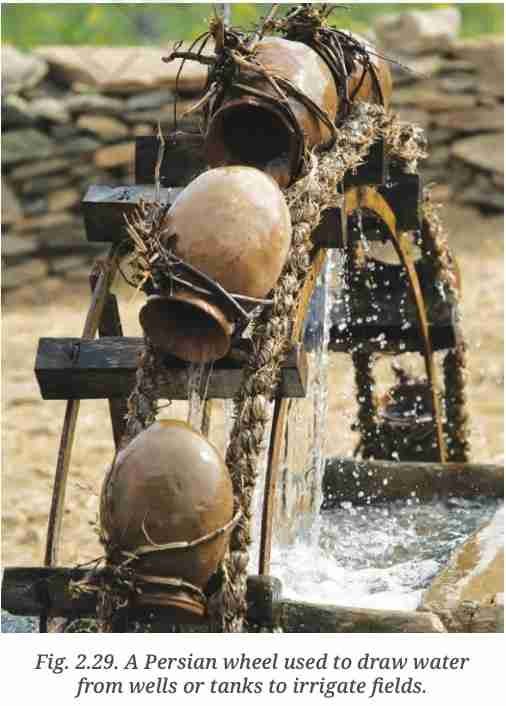
- Expansion of irrigation systems increased agricultural productivity.
- Improved irrigation allowed farmers to produce multiple crops.
- Food crops included:
- Rice
- Wheat
- Barley
- Pulses
- Sugarcane
- Spices
- Non-food crops and products included:
- Cotton
- Silk
- Wool
- Dyes
- Timber
- Jute
- Cotton supported a thriving textile industry.
5. Condition of the Peasantry:
- Agricultural output varied according to region and period.
- The peasantry experienced several severe famines.
- Relief during famines depended on the benevolence of the particular ruler.
6. Crafts and Artisanal Production:
- Craftspeople produced a wide variety of goods.
- Their products included:
- Weapons
- Utensils
- Ornaments
- Jewellery
- Ship-building developed considerably during this period.
- Ship-building was important for both:
- River trade
- Overseas trade
7. Indian Exports and Imports:
- Indian goods were exported through important coastal and riverside towns.
- Major trading towns included:
- Calicut
- Mangalore
- Surat
- Masulipatnam
- Hooghly
- India imported much less than it exported.
- Important imports included:
- Silk
- Horses
- Metals
- Luxury goods
8. Foreign Merchants:
- Merchants from Arabia, Persia (now Iran), and Central Asia settled in Indian ports.
- Their settlement contributed to the bustling trade activity in India.
9. Hundi System:
- The hundi system enabled merchants to transfer funds across political boundaries.
- It allowed them to transfer money without physically transporting currency.
- This made merchants less vulnerable to plunder.
- A hundi was a written instruction to make payment to an individual.
- It could be carried across political borders.
- Hundis enabled financial transactions without the need to carry currency.
- The hundi system can be seen as a precursor to modern banking.
- These financial systems operated across trade networks without the participation of ruling classes.
10. Trader Communities and Credit:
- Trader communities such as the Marwaris became skilled at operating across different political regimes.
- They developed parallel systems of credit and trust.
- These systems functioned independently of official structures.
11. Condition of Peasants:
- The late 1600s witnessed increasing economic stress.
- After paying taxes and payments to intermediary parties, peasants were often left with only a small share of their produce.
- As a result, many peasants:
- Lost their land.
- Became bonded labourers.
12. Condition of Craftspeople and Labourers:
- Historians suggest that craftspeople and labourers also often faced harsh economic conditions.
- Despite these hardships, India continued to be regarded as a land of abundance by many Arab and European travellers.
13. Concentration of Wealth:
- India’s wealth was largely concentrated among:
- Rulers
- Courtiers
- High officials
- Merchant class
14. Impact of Warfare:
- Frequent warfare caused forced displacement of populations.
- Political instability therefore affected the lives of ordinary people.
15. Relations among Different Communities:
- There were instances of clashes among common people, especially over sacred sites that had been desecrated or destroyed under the sanction of rulers.
- Despite such conflicts, people of different faiths and communities generally lived peacefully side by side.
- Different communities were also economically dependent on one another.
16. Art, Culture and Shared Heritage:
- Most rulers across India patronised the arts.
- Communities also worked to maintain or revive their traditions.
- Many traditions adapted to changing circumstances.
- Interaction among different cultural traditions contributed to the creation of a shared heritage.
- India developed a shared cultural heritage through continued interaction among communities.
17. India’s Resilience:
- During this period, India remained economically prosperous on the whole, despite frequent political instability.
- The political map of India was frequently reshaped.
- India faced serious challenges but survived.
- The period reflects both:
- Hardship
- Resilience
- Resilience was expressed through:
- Military resistance when required
- Art
- Literature
- Spirituality
- Timeless values
Temples as Centres of Economic Activity
1. Temples and Economic Life:
- Many temples served purposes beyond worship.
- They functioned as centres of:
- Learning
- Social interaction
- Performing arts
- Economic activity
- Temples created economic ecosystems with bustling markets.
2. Donations and Temple Management:
- Ruling classes donated land and wealth (dāna) to temple deities.
- These donations were held in trust by temple managers.
- Temple managers used these resources to develop community infrastructure.
3 .Infrastructure Developed by Temples:
- Temple managers developed facilities such as:
- Irrigation systems
- Tanks
- Pilgrim accommodations
- Pilgrim accommodations included dharmaśhālās and chhatrams.
4. Temples and Trade:
- Temples provided credit to merchants.
- They also funded:
- Internal trade
- Maritime trade
- Thus, temples played an important role in supporting markets, credit and trade networks.
People’s Lives: Exam & Revision Summary
Between the 13th and 17th centuries, India remained economically prosperous despite frequent political changes. Its economy was based mainly on agriculture, along with thriving crafts, trade, guilds (śhreṇis), jātis, credit systems and temple-based economies.
Agriculture and Irrigation
Agriculture was the mainstay of the economy. Rulers depended heavily on land revenue, usually taking about one-fifth of the produce, though some sultans raised it to one-half. Expansion of irrigation increased agricultural productivity and allowed farmers to grow multiple crops such as rice, wheat, barley, pulses, sugarcane, spices and cotton. Cotton supported India’s important textile industry. However, agricultural production varied by region and period, and peasants sometimes suffered severe famines.
Crafts and Industries
India had skilled craftspeople who produced textiles, weapons, utensils, ornaments and jewellery. Shipbuilding also developed significantly, supporting river and overseas trade. India’s abundant production made it a major exporter.
Trade and Merchants
Indian goods were exported through important ports and trading centres such as Calicut, Mangalore, Surat, Masulipatnam and Hooghly. India generally exported more than it imported. Imports included silk, horses, metals and luxury goods. Merchants from Arabia, Persia and Central Asia settled in Indian ports and contributed to trade.
The hundi system allowed merchants to transfer money across political boundaries without physically carrying coins, reducing the risk of theft. Merchant communities such as the Marwaris developed strong networks of credit and trust that could operate across different political regimes.
Temples as Economic Centres
Temples were not only places of worship and learning but also important economic and social centres. Donations of land and wealth supported markets, irrigation systems, tanks and pilgrim accommodations. Temples also provided credit to merchants and supported both internal and maritime trade.
Economic Problems
By the late 1600s, economic stress increased. Heavy taxes and payments to intermediaries left many peasants with very little produce. Some lost their land and became bonded labourers. Craftspeople and labourers also faced difficult conditions. Although India remained a land of abundance, wealth was concentrated mainly among rulers, courtiers, officials and merchants. Frequent warfare also caused displacement.
Society and Cultural Life
Despite occasional conflicts, people of different faiths and communities generally lived together and depended on one another economically. Communities preserved and adapted their traditions, while interaction between different groups contributed to a shared cultural heritage.
Overall, India during this period combined economic prosperity with political instability and social challenges. Its agriculture, crafts, trade networks, temples, merchant communities and cultural traditions showed the resilience of Indian society.
MCQs on NCERT Social Science Class 8 Chapter 2 Topic – People’s Lives
Question 1. What was the mainstay of the Indian economy during this period?
A. Mining
B. Agriculture
C. Ship-building
D. Handicrafts
Answer: B. Agriculture
Question 2. Which of the following contributed to India’s vibrant economic activity between the 13th and 17th centuries?
A. Agrarian foundations, artisanal industries and extensive trade networks
B. Only military expansion
C. Only foreign trade
D. Decline of agriculture and crafts
Answer: A. Agrarian foundations, artisanal industries and extensive trade networks
Question 3. What were śhreṇis?
A. Guilds of people engaged in particular occupations
B. Military units
C. Religious institutions
D. Tax-collecting officials
Answer: A. Guilds of people engaged in particular occupations
Question 4. Which of the following was used as currency during the Mughal period?
A. Rupaya of silver and dam of copper
B. Only gold coins
C. Only copper coins
D. Cowrie shells only
Answer: A. Rupaya of silver and dam of copper
Question 5. What was the typical land revenue extracted by rulers from agricultural production?
A. One-tenth of the produce
B. One-fifth of the produce
C. One-third of the produce
D. One-half of the produce in all cases
Answer: B. One-fifth of the produce
Question 6. What was the highest level to which some sultans raised land revenue?
A. One-fourth
B. One-third
C. One-half
D. Three-fourths
Answer: C. One-half
Question 7. How did the expansion of irrigation systems affect agriculture?
A. It reduced agricultural productivity
B. It increased agricultural productivity and enabled multiple crops to be produced
C. It ended the cultivation of food crops
D. It reduced the variety of crops
Answer: B. It increased agricultural productivity and enabled multiple crops to be produced
Question 8. Which of the following was a major non-food crop that supported India’s textile industry?
A. Rice
B. Wheat
C. Cotton
D. Pulses
Answer: C. Cotton
Question 9. Which of the following was an important development that supported river and overseas trade?
A. Ship-building
B. Decline of ports
C. End of irrigation
D. Closure of markets
Answer: A. Ship-building
Question 10. Which of the following was an important Indian port through which goods were exported?
A. Calicut
B. Delhi
C. Agra
D. Chittorgarh
Answer: A. Calicut
Question 11. Which of the following was an important import into India during this period?
A. Rice
B. Cotton
C. Horses
D. Sugarcane
Answer: C. Horses
Question 12. What was the main purpose of the hundi system?
A. To collect land revenue
B. To transfer funds across political boundaries without physically carrying currency
C. To record agricultural production
D. To recruit soldiers
Answer: B. To transfer funds across political boundaries without physically carrying currency
Question 13. Why was the hundi system useful to merchants?
A. It protected them from the risk of carrying large amounts of currency and made them less vulnerable to plunder
B. It increased the burden of taxation
C. It prevented long-distance trade
D. It could only be used within one village
Answer: A. It protected them from the risk of carrying large amounts of currency and made them less vulnerable to plunder
Question 14. Which community became particularly skilled at operating across different political regimes?
A. Marwaris
B. Ahoms
C. Bhils
D. Rajputs
Answer: A. Marwaris
Question 15. What economic problem became more serious during the late 1600s?
A. Peasants retained most of their produce
B. Peasants often lost land and became bonded labourers because of economic pressures
C. Trade completely stopped
D. Artisans became wealthy throughout India
Answer: B. Peasants often lost land and became bonded labourers because of economic pressures
Question 16. What role did temples often play besides being centres of worship?
A. They only conducted religious ceremonies
B. They functioned as centres of markets, credit, infrastructure and trade
C. They avoided all economic activities
D. They served only as military forts
Answer: B. They functioned as centres of markets, credit, infrastructure and trade
Question 17. What did temple managers develop using land and wealth donated to temple deities?
A. Only military camps
B. Irrigation systems, tanks and pilgrim accommodations
C. Only royal palaces
D. Overseas colonies
Answer: B. Irrigation systems, tanks and pilgrim accommodations
Question 18. What does the passage suggest about relations among different faiths and communities?
A. They were always in conflict
B. They generally lived peacefully side by side and were economically dependent on one another, despite some conflicts
C. They had no economic interaction
D. All communities followed the same traditions
Answer: B. They generally lived peacefully side by side and were economically dependent on one another, despite some conflicts
Next & Previous Topics of NCERT/CBSE Social Science Class 8 Chapter 2: Reshaping India’s Political Map
| Topics No. | Topics Name |
|---|---|
| 1 | Rise and Fall of The Delhi Sultanate |
| 2 | The Vijayanagara Empire |
| 3 | The Mughals |
| 4 | Resistance to the Mughals |
| 5 | Administering India |
| 6 | People’s Lives |
FAQs on People’s Lives Class 8 Social Science
1. What were the main features of India’s economy between the 13th and 17th centuries?
Answer: India had a vibrant economy based mainly on agriculture, thriving crafts and industries, community and temple-based economies, and extensive trade networks. Systems such as śhreṇis (guilds), jātis, and credit supported economic activity. Infrastructure such as roads, bridges, canals and irrigation works also expanded, especially during the Mughal period.
2. Why was agriculture considered the mainstay of the Indian economy?
Answer: Agriculture was the mainstay because rulers depended heavily on agrarian revenue to maintain their administration and military. Expansion of irrigation increased agricultural productivity and allowed farmers to grow several food and non-food crops, including rice, wheat, barley, pulses, sugarcane, spices and cotton. However, agricultural production varied across regions and periods, and peasants sometimes suffered severe famines.
3. What were the main products produced by craftspeople during this period?
Answer: Craftspeople produced a wide range of goods, including textiles, weapons, utensils, ornaments and jewellery. Cotton supported a thriving textile industry, while other products included silk, wool and dyes. Shipbuilding also developed considerably because it was important for river and overseas trade.
4. How did trade contribute to India’s economic prosperity during the medieval period?
Answer: India exported large quantities of goods through coastal and riverside towns such as Calicut, Mangalore, Surat, Masulipatnam and Hooghly. India imported comparatively less, mainly products such as silk, horses, metals and luxury goods. Merchants from Arabia, Persia and Central Asia settled in Indian ports, further strengthening trade. Trader communities such as the Marwaris also developed systems of credit and trust that worked across different political regimes.
5. What was the hundi system and how did it help merchants?
Answer: A hundi was a written instruction to make payment to an individual. It could be carried across political boundaries and allowed merchants to transfer funds without physically carrying currency. This reduced their vulnerability to plunder and made trade and financial transactions easier. The system functioned across trade networks without requiring the direct participation of ruling authorities.
6. How did temples contribute to economic activities during this period?
Answer: Temples were not only centres of worship, learning and cultural activities but also important centres of economic activity. Rulers donated land and wealth to temples, whose managers developed irrigation systems, tanks and accommodation for pilgrims. Temples also created markets, provided credit to merchants, and supported both internal and maritime trade.
7. What economic problems did peasants and other common people face in the late 17th century?
Answer: In the late 1600s, peasants were often left with only a small share of their produce after paying taxes and other intermediaries. Some lost their land and became bonded labourers. Craftspeople and labourers also faced harsh economic conditions. Frequent warfare caused forced displacement, while much of the wealth became concentrated among rulers, courtiers, high officials and merchants. Despite these difficulties, India remained a land of abundance and people of different communities generally lived and worked together.