
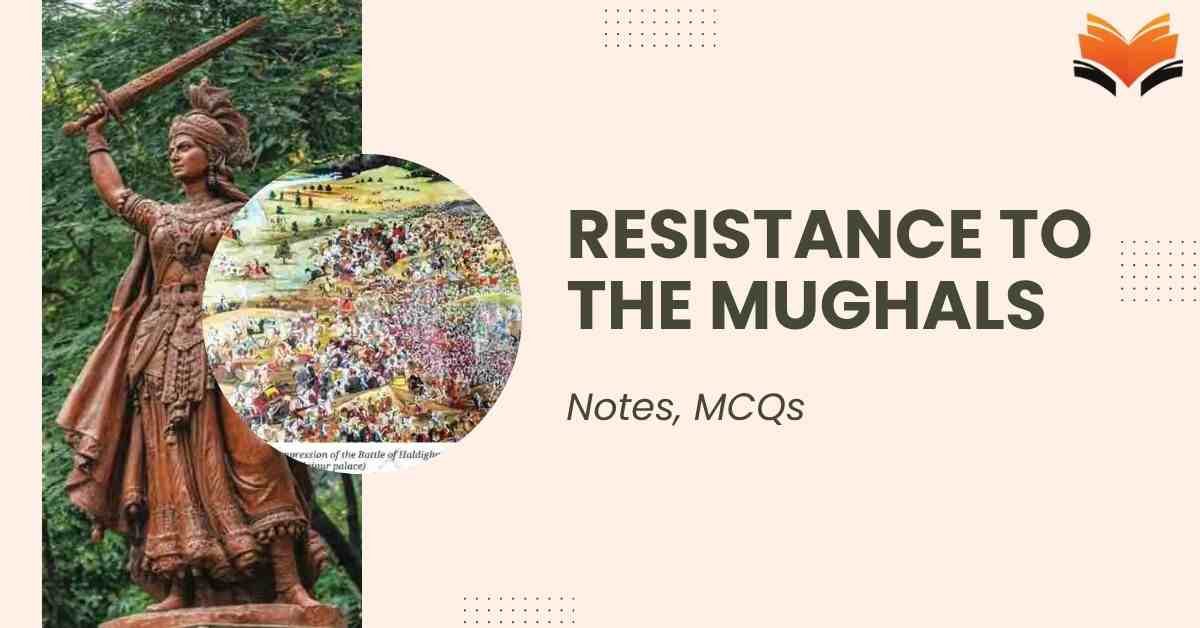
Resistance to Mughal rule came from several groups, including peasants, tribal communities, Rajputs, Ahoms and Sikhs. Jat peasants and tribes such as the Bhils and Gonds rebelled against exploitation and taxation. Maharana Pratap became a symbol of Rajput resistance, fighting the Mughals through guerrilla warfare with Bhil support. In Assam, the Ahoms defeated a much larger Mughal force at the Battle of Saraighat (1671) under Lachit Borphukan. Sikh resistance grew after persecution under some Mughal rulers, leading Guru Gobind Singh to establish the Khalsa. These rebellions weakened Mughal authority and contributed to the empire’s decline.
Resistance to the Mughals
1. Peasant Resistance against Mughal Rule:
- Several rebellions weakened Mughal power over time.
- Many peasant communities rebelled against harsh exploitation.
- In the 17th century, the Jat peasantry of present-day:
- Western Uttar Pradesh
- Haryana
- Eastern Rajasthan
rebelled against Mughal oppression.
- The Jats managed to kill an oppressive officer of the Mughal administration.
- In a subsequent battle, 20,000 Jat men confronted the Mughal army.
- The Jats fought valiantly, but their leader was killed.
- The rebellion was eventually suppressed by the Mughal authorities.
2. Tribal Resistance:
- Several tribal groups resisted attempts by the Mughals and other authorities to annex their territories or impose taxes.
- Important tribal groups that fought back included:
- Bhils
- Gonds
- Santhals
- Kochs
- Some tribal groups were subdued or gradually integrated into the Delhi Sultanate or Mughal Empire.
- Tribal groups living in forested, hilly or remote regions were often able to maintain some degree of independence.
3. Rani Durgavati:
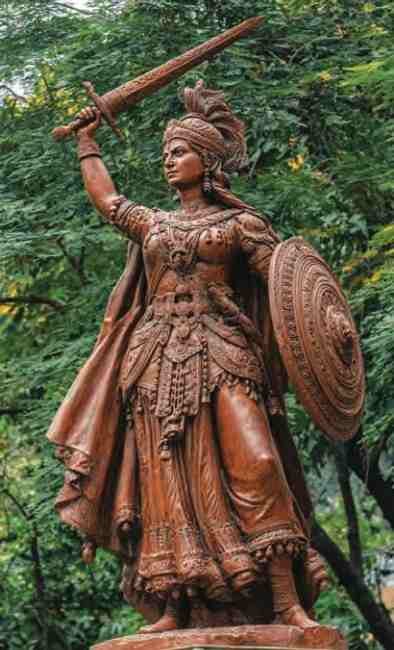
- Rani Durgavati was the valiant queen of the Garha kingdom, one of the Gond kingdoms in central India.
- She is remembered for her wise rule and for making her kingdom prosperous.
- She maintained a strong army consisting of:
- 20,000 soldiers
- 1,000 elephants
- With this army, she successfully repelled several attempted invasions.
4. Rani Durgavati’s Battle against Akbar’s Forces:
- In 1564, a general sent by Akbar attacked Rani Durgavati’s kingdom.
- Rani Durgavati was outnumbered and had inferior weaponry.
- Despite these disadvantages, she personally led her troops and fought bravely.
- After being wounded, she took her own life on the battlefield to avoid capture.
- She was only 40 years old at the time of her death.
5. Legacy of Rani Durgavati:
- Rani Durgavati’s sacrifice became a symbol of regional pride and resistance.
- She continues to be remembered as a heroic figure in Indian history.
Surge of the Rajputs
1. Rajput Resistance to Invading Forces:
- The Rajputs were located mainly in northwest India.
- Their proud traditions were inherited from earlier dynasties such as the Pratiharas.
- The Pratiharas had earlier resisted Arab invasions of Sindh.
- Because of their location and traditions, Rajputs often fought against invading forces from beyond the Subcontinent.
- After the Khiljis’ conquest, the Rajputs rebuilt their kingdoms.
- Two major Rajput clans emerged in the regions of Mewar and Marwar.
- Stories of Rajput heroic deeds continue to be told through popular ballads.
2. Rana Sanga:
- Rana Sanga, a ruler of the early 16th century, unified several Rajput clans.
- He won many battles against sultans.
- Rana Sanga was ultimately defeated by Babur at the Battle of Khanwa.
3. Maharana Pratap and Rajput Resistance:
- Maharana Pratap, the ruler of Mewar, inherited a kingdom weakened by his predecessors.
- He refused to accept Mughal suzerainty.
- He became a major symbol of Rajput resistance against the Mughals.
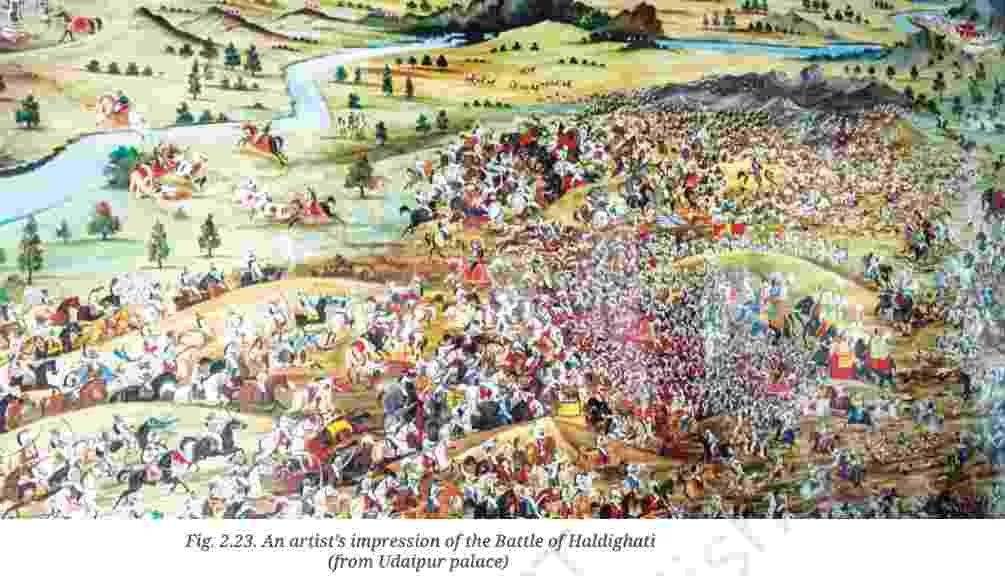
- A major confrontation between Maharana Pratap and the Mughals took place at the Haldighati Pass in the Aravallis in 1576.
- The Mughal army gained the upper hand at Haldighati.
- Maharana Pratap managed to escape and continued his resistance.
- He pursued guerrilla warfare against the Mughals for years from the Aravalli hills.
- Despite living in harsh conditions, Maharana Pratap remained firm in defending his independence.
4. Role of the Bhils:
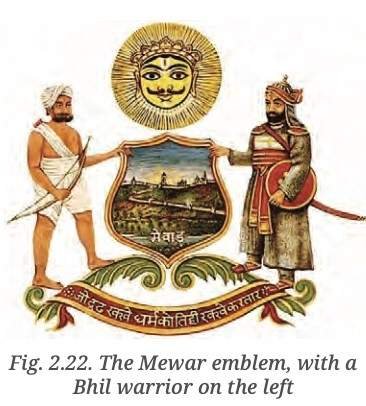
- The Bhils gave strong support to Maharana Pratap.
- They joined his forces as archers.
- They also contributed their knowledge of the terrain.
- Their military service earned them a respected place in Mewar’s military tradition.
- The role of the Bhils is reflected in the Mewar emblem.
5. Rajput Relations with the Mughals:
- Some Rajput states eventually allied with the Mughals.
- These alliances were formed through:
- Diplomacy
- Marriage alliances
- Some Rajput states, especially Mewar, continued to reject Mughal dominance.
- During Aurangzeb’s reign, several Rajput nobles rebelled against Mughal authority.
- Durga Das Rathore of Marwar was one of the important Rajput nobles who rebelled.
- Durga Das Rathore fought to protect the independence of Jodhpur.
- As a result of continued Rajput resistance, Mughal authority remained limited in Rajasthan.
The Ahoms
1. Origin and Establishment of the Ahom Kingdom:
- The Ahoms were an ethnic group that migrated from present-day Myanmar to the Brahmaputra Valley in the 13th century.
- They established the Ahom kingdom in the Brahmaputra Valley.
- During both the Delhi Sultanate and Mughal periods, the Ahom rulers strongly resisted attempts to expand into the Northeast.
2. The Paik System:
- The Ahoms developed a unique paik system.
- Under this system, every able-bodied man was required to provide service to the state.
- Service could be provided through:
- Labour
- Military duty
- In return, men received land rights.
- The paik system enabled Ahom rulers to:
- Create public infrastructure.
- Maintain a large standing force.
- Do so without a permanent army.
3. Ahom Society and Culture:
- Over time, the Ahoms assimilated the local culture.
- They promoted agriculture.
- They encouraged diverse faiths.
- They contributed to the rich traditions of Assam.
4. Ahom Resistance against the Mughals:
- In the 17th century, Aurangzeb sent Mughal forces against the Ahoms.
- Mughal forces briefly captured the Ahom capital Garhgaon.
- The Ahoms used their knowledge of the local terrain to resist the Mughals.
- The difficult terrain included:
- Dense forests
- Hills
- Rivers
- The Ahoms used persistent guerrilla tactics to repulse the Mughal attack.
- The Mughal forces had an advantage in numbers and possessed a larger fleet of river boats.
- Despite these advantages, the Ahoms successfully resisted the Mughal forces.
5. Battle of Saraighat, 1671:
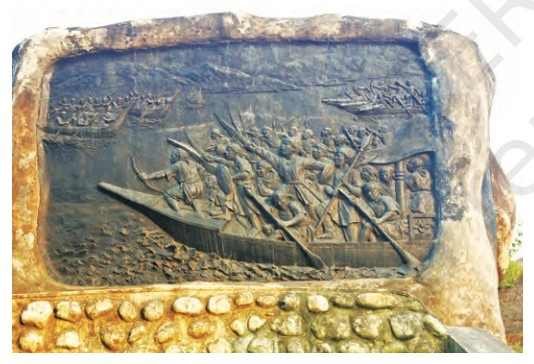
- The Battle of Saraighat was fought in 1671.
- It took place on the Brahmaputra River near present-day Guwahati.
- The Ahom military commander was Lachit Borphukan.
- Lachit Borphukan commanded around 10,000 Ahom soldiers.
- They defeated a much larger Mughal force of 30,000 soldiers.
- The Ahoms ultimately succeeded in preserving their independence.
6. Mughal Appreciation of Ahom Warriors:
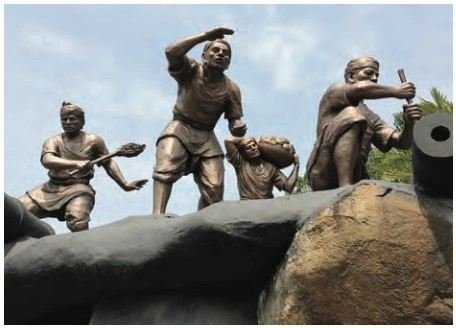
- Ram Singh, the Mughal army general, praised the versatility of Ahom warriors.
- Ahom soldiers were skilled in:
- Rowing boats
- Shooting arrows
- Digging trenches
- Using guns and cannons
- Their ability to perform different military tasks was described as exceptional.
The Rise of the Sikhs
1. Guru Nanak and the Beginning of Sikhism:
- In the 15th century, Guru Nanak spread the message of:
- Equality
- Compassion
- Oneness of God, expressed as Ik Onkār.
- His followers came to be known as Sikhs.
- Sikhism initially began as a purely spiritual movement.
2. Sikhism and the Mughal Empire:
- Later Sikh Gurus had to respond to growing intolerance and persecution under some Mughal rulers.
- During the reign of Emperor Jahangir, Guru Arjan was accused of supporting Jahangir’s rebellious son.
- Jahangir ordered Guru Arjan to be tortured to death.
- This event prompted Guru Arjan’s son and successor, Guru Hargobind, to take a more militarised approach.
- Guru Hargobind:
- Introduced martial training.
- Formed a Sikh army.
- Fought several battles against Mughal forces.
3. Guru Tegh Bahadur’s Martyrdom:
- In 1675, a group of Kashmiri Pandits approached Guru Tegh Bahadur for protection from religious persecution.
- Guru Tegh Bahadur decided to stand with them and accept martyrdom.
- After his arrest, Aurangzeb ordered him to convert to Islam.
- Guru Tegh Bahadur refused despite:
- Being tortured.
- Witnessing three of his disciples being tortured to death.
- On Aurangzeb’s orders, Guru Tegh Bahadur was publicly beheaded at Chandni Chowk, Delhi, in 1675.
4. Establishment of the Khalsa:
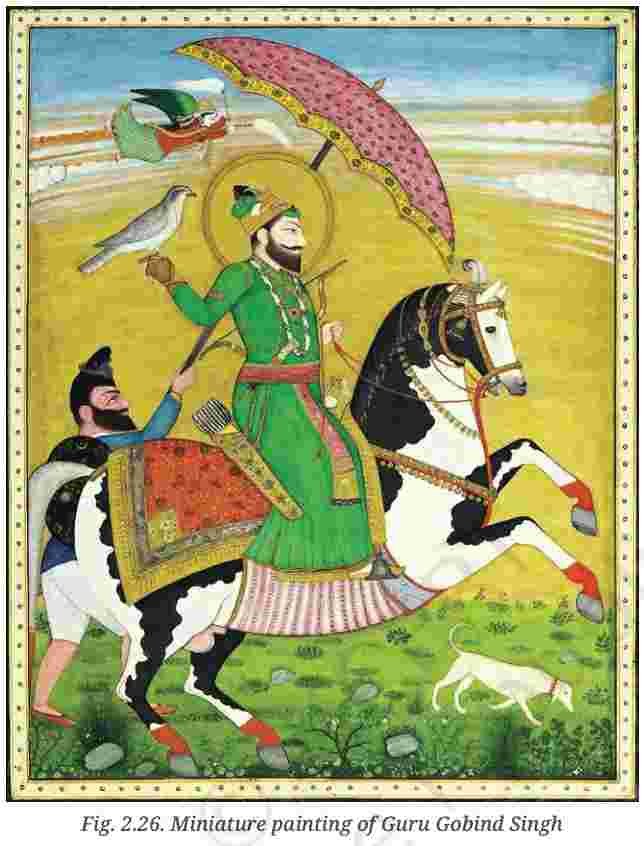
- In response to Guru Tegh Bahadur’s martyrdom, his son Guru Gobind Singh established the Khalsa.
- Guru Gobind Singh was the 10th and last Sikh Guru.
- The Khalsa was a martial brotherhood committed to:
- Justice
- Equality
- Defence of the faith
- The Khalsa frequently clashed with Mughal forces.
- These conflicts resulted in a great cost of life.
5. Rise of the Sikh Confederacies:
- As the Mughal Empire declined, several Sikh confederacies emerged in the Punjab region.
- Their emergence occurred especially during the onslaughts of the Marathas.
- These Sikh confederacies were eventually unified through the efforts of Maharaja Ranjit Singh at the turn of the 19th century.
6. Maharaja Ranjit Singh and the Sikh Empire:
- Maharaja Ranjit Singh used:
- Military acumen
- Diplomatic skill
- Religious tolerance
- He established a strong and centralised Sikh Empire.
- The empire covered much of the Northwest, including parts of Kashmir.
- Until the mid-19th century, the Sikh Empire resisted:
- Mughal remnants
- British expansion
7. Guru Granth Sahib:
- Punjab in this context refers to the vast region now divided between India and Pakistan.
- The Guru Granth Sahib is the sacred text of the Sikhs.
- It was first compiled by Guru Arjan.
- The hymns of Guru Tegh Bahadur were added later.
- The Guru Granth Sahib stresses that there is one God for all.
- It encourages values such as:
- Truthfulness
- Compassion
- Humility
- Self-control
8. Gurudwara Sis Ganj Sahib:
- A gurudwara is a place of worship in Sikhism.
- Gurudwara Sis Ganj Sahib is located at Chandni Chowk, Delhi.
- It marks the site where Guru Tegh Bahadur was beheaded by Aurangzeb in 1675.
- The historic gurudwara is honoured by the Sikh Regiment.
- Since 1979, the Sikh Regiment has saluted the gurudwara before the President during the Republic Day parade.
- Gurudwara Sis Ganj Sahib stands as a symbol of faith and sacrifice in Indian history.
Resistance to the Mughals: Exam & Revision Summary
The Mughal Empire faced resistance from peasants, tribal communities, Rajputs, Ahoms and Sikhs. These rebellions and movements weakened Mughal authority in different parts of India.
Peasant and Tribal Resistance
In the 17th century, the Jat peasants of present-day western Uttar Pradesh, Haryana and eastern Rajasthan rebelled against oppressive Mughal officials. In one major battle, about 20,000 Jats fought the Mughal army, although their leader was killed and the rebellion was suppressed.
Several tribal communities, including the Bhils, Gonds, Santhals and Kochs, also resisted attempts to annex their territories or impose taxes. While some were subdued or integrated into larger empires, others living in forests, hills and remote areas maintained considerable independence.
Rani Durgavati
Rani Durgavati, the ruler of the Garha Gond kingdom, is remembered for her bravery and effective administration. She maintained an army of 20,000 soldiers and 1,000 elephants and successfully resisted several invasions.
In 1564, an army sent by Akbar attacked her kingdom. Despite being outnumbered and having inferior weapons, Rani Durgavati fought bravely. After being wounded, she took her own life rather than being captured. Her sacrifice became a symbol of regional pride and resistance.
Surge of the Rajputs
The Rajputs had a long tradition of resisting invading forces. Two important Rajput regions were Mewar and Marwar. Rana Sanga united several Rajput clans and fought many battles against the sultans before being defeated by Babur at the Battle of Khanwa.
Maharana Pratap, ruler of Mewar, refused to accept Mughal authority. In 1576, he fought the Mughal forces at the Battle of Haldighati. Although the Mughal army gained the upper hand, Maharana Pratap escaped and continued guerrilla warfare from the Aravalli hills.
The Bhils strongly supported Maharana Pratap. They served as archers and provided valuable knowledge of the local terrain.
Some Rajput states accepted Mughal authority through diplomacy and marriage alliances, but Mewar continued to resist. During Aurangzeb’s reign, Durga Das Rathore of Marwar also rebelled to protect the independence of Jodhpur. As a result, Mughal control in Rajasthan remained limited.
The Ahoms
The Ahoms migrated from present-day Myanmar to the Brahmaputra Valley in the 13th century and established their kingdom. They strongly resisted the expansion of the Delhi Sultanate and Mughal Empire into Northeast India.
Their paik system required able-bodied men to provide labour or military service in return for land rights. This helped the Ahom rulers build infrastructure and maintain a large military force without relying on a permanent army.
The Ahoms adapted to local culture, encouraged agriculture and supported diverse faiths.
During the 17th century, Mughal forces briefly captured their capital Garhgaon, but the Ahoms used their knowledge of forests, hills and rivers and adopted guerrilla tactics to resist them.
The most important victory came at the Battle of Saraighat in 1671 near present-day Guwahati. Lachit Borphukan and around 10,000 Ahom soldiers defeated a Mughal force of about 30,000 soldiers, helping the Ahoms preserve their independence.
The Rise of the Sikhs
In 15th-century Punjab, Guru Nanak spread the teachings of equality, compassion and the oneness of God. His followers became known as Sikhs.
Under some Mughal rulers, growing religious persecution led later Sikh Gurus to organise resistance. Guru Arjan was tortured and killed under Jahangir after being accused of supporting his rebellious son. His successor, Guru Hargobind, introduced martial training and established a Sikh army that fought Mughal forces.
In 1675, Guru Tegh Bahadur stood up for Kashmiri Pandits facing religious persecution. Aurangzeb ordered him to convert to Islam, but he refused despite torture and the execution of his disciples. He was publicly beheaded in Chandni Chowk, Delhi.
His son, Guru Gobind Singh, the 10th and last Guru, established the Khalsa, a martial brotherhood committed to justice, equality and defence of the faith. The Khalsa frequently fought Mughal forces.
As Mughal power declined, several Sikh confederacies emerged in Punjab. These were eventually united by Maharaja Ranjit Singh, who established a strong and centralised Sikh Empire. His military ability, diplomacy and religious tolerance helped the empire control much of the Northwest, including parts of Kashmir.
Quick Revision Points
- Jat resistance: Peasant rebellion against oppressive Mughal administration.
- Rani Durgavati: Brave Gond ruler who resisted Akbar’s forces in 1564.
- Rana Sanga: United Rajput clans; defeated by Babur at Khanwa.
- Maharana Pratap: Resisted Mughal authority and fought at Haldighati (1576).
- Bhils: Supported Maharana Pratap as archers and guides.
- Ahoms: Maintained independence in Northeast India.
- Paik system: Military or labour service in exchange for land rights.
- Battle of Saraighat (1671): Lachit Borphukan defeated the Mughal forces.
- Guru Nanak: Spread teachings of equality, compassion and one God.
- Guru Arjan: Executed under Jahangir.
- Guru Tegh Bahadur: Martyred in 1675 for standing against religious persecution.
- Guru Gobind Singh: Established the Khalsa.
- Maharaja Ranjit Singh: Unified Sikh confederacies and established a strong Sikh Empire.
MCQs on NCERT Social Science Class 8 Chapter 2 Topic – Resistance to the Mughals
Question 1. Which peasant community rebelled against harsh exploitation under the Mughal administration in the 17th century?
A. Ahoms
B. Jats
C. Sikhs
D. Rajputs
Answer: B. Jats
Question 2. Why did many tribal groups such as the Bhils, Gonds, Santhals and Kochs rebel against the rulers?
A. To expand their kingdoms into Delhi
B. To resist attempts to annex their territories or impose taxes on them
C. To establish the Mughal Empire
D. To support the Delhi Sultanate
Answer: B. To resist attempts to annex their territories or impose taxes on them
Question 3. Who was Rani Durgavati?
A. A Rajput queen of Mewar
B. A valiant queen of the Gond kingdom of Garha
C. A Mughal princess
D. A Sikh Guru
Answer: B. A valiant queen of the Gond kingdom of Garha
Question 4. How large was Rani Durgavati’s army?
A. 10,000 soldiers and 500 elephants
B. 20,000 soldiers and 1,000 elephants
C. 30,000 soldiers and 1,000 elephants
D. 20,000 soldiers and 100 elephants
Answer: B. 20,000 soldiers and 1,000 elephants
Question 5. How did Rani Durgavati respond when Akbar’s general attacked her kingdom in 1564?
A. She surrendered immediately
B. She fled to another kingdom
C. She led her troops and fought bravely despite being outnumbered
D. She sought help from the Delhi Sultanate
Answer: C. She led her troops and fought bravely despite being outnumbered
Question 6. Who unified several Rajput clans in the early 16th century?
A. Rana Kumbha
B. Rana Sanga
C. Maharana Pratap
D. Durga Das Rathore
Answer: B. Rana Sanga
Question 7. Rana Sanga was ultimately defeated by:
A. Akbar at Chittorgarh
B. Babur at the Battle of Khanwa
C. Aurangzeb at Haldighati
D. Sher Shah Suri at Panipat
Answer: B. Babur at the Battle of Khanwa
Question 8. Who refused to accept Mughal suzerainty and became a major symbol of Rajput resistance?
A. Rana Sanga
B. Rana Kumbha
C. Maharana Pratap
D. Durga Das Rathore
Answer: C. Maharana Pratap
Question 9. The confrontation between Maharana Pratap and the Mughal forces took place at Haldighati in:
A. 1526
B. 1564
C. 1576
D. 1671
Answer: C. 1576
Question 10. Which tribal community strongly supported Maharana Pratap?
A. Santhals
B. Bhils
C. Gonds
D. Kochs
Answer: B. Bhils
Question 11. How did the Bhils support Maharana Pratap?
A. They supplied ships to his army
B. They served as archers and provided knowledge of the terrain
C. They provided elephants
D. They negotiated a peace treaty with the Mughals
Answer: B. They served as archers and provided knowledge of the terrain
Question 12. Which Rajput noble rebelled against the Mughals during Aurangzeb’s reign to protect the independence of Jodhpur?
A. Rana Sanga
B. Durga Das Rathore
C. Rani Durgavati
D. Lachit Borphukan
Answer: B. Durga Das Rathore
Question 13. From where did the Ahoms migrate to the Brahmaputra Valley?
A. Persia
B. Central Asia
C. Present-day Myanmar
D. Rajasthan
Answer: C. Present-day Myanmar
Question 14. What was the paik system of the Ahoms?
A. A system of collecting religious taxes
B. A system in which able-bodied men provided labour or military service in exchange for land rights
C. A system of royal succession
D. A system of maritime trade
Answer: B. A system in which able-bodied men provided labour or military service in exchange for land rights
Question 15. Who led the Ahom forces in the Battle of Saraighat in 1671?
A. Guru Gobind Singh
B. Lachit Borphukan
C. Maharaja Ranjit Singh
D. Ram Singh
Answer: B. Lachit Borphukan
Question 16. What was the outcome of the Battle of Saraighat?
A. The Mughal forces defeated the Ahoms
B. The Ahoms defeated the Mughal force despite being heavily outnumbered
C. The Ahoms surrendered their capital
D. The battle ended in a permanent Mughal occupation of Assam
Answer: B. The Ahoms defeated the Mughal force despite being heavily outnumbered
Question 17. Who founded the Sikh tradition by spreading the message of equality, compassion and the oneness of God?
A. Guru Arjan
B. Guru Hargobind
C. Guru Nanak
D. Guru Gobind Singh
Answer: C. Guru Nanak
Question 18. Why did Guru Hargobind introduce martial training and form a Sikh army?
A. To conquer Punjab
B. Because of growing intolerance and persecution under some Mughal rulers
C. To support Aurangzeb
D. To establish the Mughal Empire
Answer: B. Because of growing intolerance and persecution under some Mughal rulers
Question 19. What did Guru Gobind Singh establish as a martial brotherhood committed to justice, equality and defence of the faith?
A. Paik
B. Khalsa
C. Jizya
D. Deccan Sultanate
Answer: B. Khalsa
Question 20. Who ultimately unified the Sikh confederacies and established a strong Sikh Empire?
A. Guru Tegh Bahadur
B. Guru Gobind Singh
C. Maharaja Ranjit Singh
D. Lachit Borphukan
Answer: C. Maharaja Ranjit Singh
Next & Previous Topics of NCERT/CBSE Social Science Class 8 Chapter 2: Reshaping India’s Political Map
| Topics No. | Topics Name |
|---|---|
| 1 | Rise and Fall of The Delhi Sultanate |
| 2 | The Vijayanagara Empire |
| 3 | The Mughals |
| 4 | Resistance to the Mughals |
| 5 | Administering India |
| 6 | People’s Lives |
FAQs on Resistance to the Mughals Class 8 Social Science
1. Why did the Jat peasants rebel against the Mughals?
Answer: The Jat peasants rebelled against the Mughals because they faced harsh exploitation. They managed to kill an oppressive officer of the Mughal administration. In a later battle, about 20,000 Jat men fought the Mughal army, but their leader was killed and the rebellion was suppressed.
2. Who was Rani Durgavati? Why is she remembered in Indian history?
Answer: Rani Durgavati was the valiant queen of the Garha kingdom, one of the Gond kingdoms in central India. She ruled wisely and made her kingdom prosperous. She maintained an army of 20,000 soldiers and 1,000 elephants and successfully resisted several invasions. In 1564, when Akbar’s general attacked her kingdom, she fought bravely despite being outnumbered. When she was wounded, she took her own life to avoid capture. She is remembered as a symbol of regional pride and resistance.
3. Who was Maharana Pratap and how did he resist the Mughals?
Answer: Maharana Pratap was the ruler of Mewar who refused to accept Mughal suzerainty. In 1576, he confronted the Mughal army at the Battle of Haldighati. Although the Mughal army gained the upper hand, Maharana Pratap escaped and continued guerrilla warfare against the Mughals from the Aravalli hills. He remained firm in defending the independence of Mewar. The Bhils also supported him as archers and provided their knowledge of the terrain.
4. What was the significance of the Battle of Haldighati?
Answer: The Battle of Haldighati was fought in 1576 between Maharana Pratap and the Mughal forces. Although the Mughal army had the upper hand, Maharana Pratap escaped and continued to resist Mughal authority through guerrilla warfare from the Aravalli hills. The battle became an important episode in the Rajput resistance to Mughal dominance.
5. Who were the Ahoms and how did they resist the Mughals?
Answer: The Ahoms migrated from present-day Myanmar to the Brahmaputra Valley in the 13th century and established the Ahom kingdom. They strongly resisted the expansion of the Mughal Empire into the Northeast. They used their knowledge of forests, hills and rivers along with guerrilla tactics. In the Battle of Saraighat in 1671, Lachit Borphukan and about 10,000 Ahom soldiers defeated a much larger Mughal force of 30,000 soldiers. Ultimately, the Ahoms preserved their independence.
6. What was the Paik system of the Ahoms?
Answer: The Paik system required every able-bodied man to provide service to the Ahom state through labour or military duty in exchange for land rights. This system helped the Ahom rulers create public infrastructure and maintain a large standing force without depending on a permanent army.
7. Why did the Sikh community become a martial community?
Answer: Sikhism began as a spiritual movement based on the teachings of Guru Nanak. However, later Sikh Gurus faced growing intolerance and persecution under some Mughal rulers. The execution of Guru Arjan under Jahangir prompted Guru Hargobind to introduce martial training and form a Sikh army. Later, the martyrdom of Guru Tegh Bahadur under Aurangzeb led Guru Gobind Singh to establish the Khalsa, a martial brotherhood committed to justice, equality and defence of the faith.
8. Why was Guru Tegh Bahadur executed by Aurangzeb?
Answer: In 1675, Kashmiri Pandits approached Guru Tegh Bahadur for protection from religious persecution. Guru Tegh Bahadur decided to stand with them and accepted martyrdom. Aurangzeb ordered him to convert to Islam, but he refused despite torture and the execution of three of his disciples. He was eventually publicly beheaded in Chandni Chowk, Delhi.
9. What was the Khalsa and why was it established?
Answer: The Khalsa was established by Guru Gobind Singh, the tenth and last Sikh Guru, in response to religious persecution and the need to defend the faith. It was a martial brotherhood committed to justice, equality and defence of the faith. The Khalsa frequently fought against Mughal forces at great cost of life.
10. How did Maharaja Ranjit Singh establish the Sikh Empire?
Answer: As the Mughal Empire declined, several Sikh confederacies emerged in the Punjab region. Maharaja Ranjit Singh unified these groups through his military ability, diplomatic skills and religious tolerance. He established a strong, centralised Sikh Empire that covered much of the Northwest, including parts of Kashmir. The empire resisted both Mughal remnants and later British expansion until the mid-19th century.