
The Delhi Sultanate was governed by the Sultan, who held supreme political and military authority with the help of ministers. Its iqta system assigned territories to nobles called iqtadars for tax collection and military maintenance, while the heavy burden of taxation often fell on peasants.
Under Akbar, the Mughal administration became more organised. Different ministers managed finance, military affairs, justice, trade and other departments, while provinces and villages had their own administrative structures. Akbar introduced the mansabdari system, in which officers maintained specified troops and animals according to their rank and were generally paid through jagirs. Todar Mal strengthened revenue administration through land surveys, crop assessments and systematic tax collection.
Administering India
Administration Under the Delhi Sultanate
1. Role and Authority of the Sultan:
- The Delhi Sultanate introduced a political system centred on the Sultan.
- The Sultan possessed absolute authority.
- He was the political and military head of the Sultanate.
- According to contemporary chronicles, the Sultan’s duties included:
- Defending the territories of Islam against possible aggression.
- Collecting fees and taxes.
- Keeping in touch with public affairs.
- Knowing about the condition of the people through personal contact.
2. Council of Ministers:
- The Sultan was assisted by a council of ministers.
- The ministers were responsible for different departments of the Sultanate.
3. Iqta System:
- The iqta system was an important instrument of administration under the Delhi Sultanate.
- Under this system, territories were assigned to nobles known as iqtadars.
- Iqtadars were responsible for collecting taxes from their assigned territories.
- After deducting expenses, the collected revenue was supposed to be sent to the Sultan’s treasury.
- The revenue was particularly needed to maintain the army.
- The iqta system created a network of local administrators loyal to the central authority.
- The posts of iqtadars were not hereditary.
4. Taxation and Burden on Peasants:
- Taxes were levied on trade at every stage.
- The burden of taxation fell most heavily on the peasantry.
- Some contemporary accounts describe considerable cruelty in the extraction of revenue from the land.
The Mughal Administrative Framework
1. Reorganisation of Administration under Akbar:
- Akbar reorganised the Mughal administrative machinery to achieve greater control and efficiency.
- Different ministers were given responsibility for specific areas of administration.
- The main officials and their functions were:
- Diwan: Responsible for finances.
- Mir Bakhshi: Responsible for military matters.
- Khan-i-Saman: Responsible for public works, trade, industry and agriculture, as well as the royal household.
- Sadr: Responsible for justice, religious matters and education.
2. Provincial Administration:
- The Mughal Empire was divided into twelve provinces, known as subahs.
- The same administrative offices were assigned to each province.
- The provinces were further subdivided for effective administration.
- Checks and balances were maintained among government officials.
- At the village level, traditional systems of self-governance continued more or less undisturbed.
3. Mansabdari System:
- Akbar introduced the mansabdari system.
- A mansab represented the rank of an officer.
- Officers holding mansabs were called mansabdars.
- According to their rank, mansabdars were required to maintain a specified number of:
- Elephants
- Horses
- Camels
- Troops
- The system enabled the Mughal state to assemble an army at short notice.
- It reduced the need to maintain a permanent centralised army.
- Regular inspections were conducted to ensure that mansabdars fulfilled their obligations.
- Mansabdars were generally paid by assigning them land known as jagirs.
- Because they received jagirs, mansabdars were also known as jagirdars.
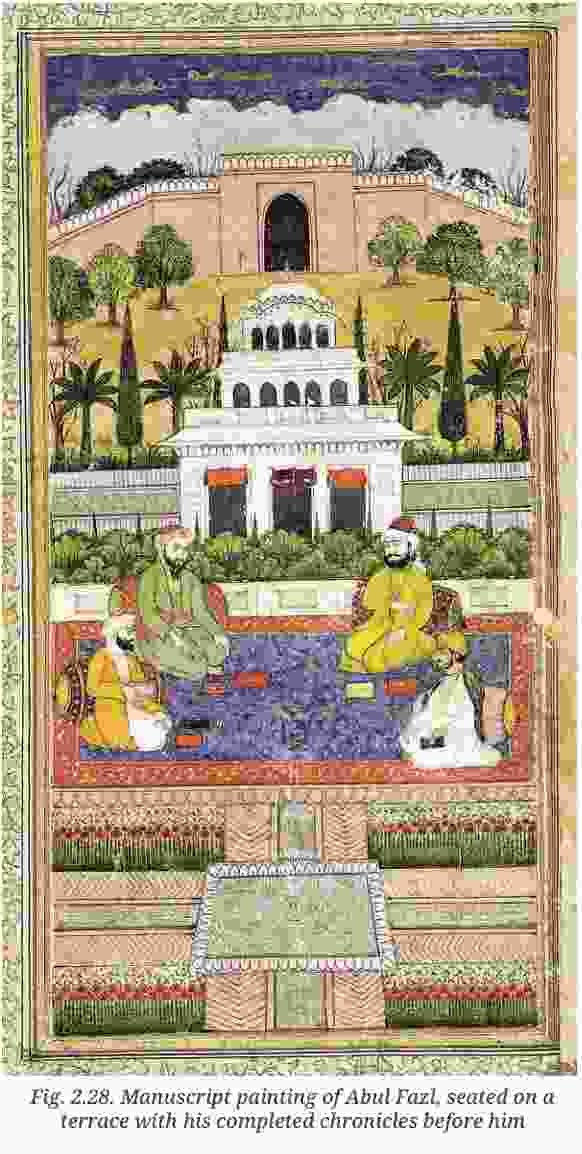
- The Ain-i-Akbari, written by Abul Fazl, describes Akbar’s administration and records details of the mansabdari system.
4. Representation in the Mughal Administration:
- Despite Akbar’s increasing tolerance towards different faiths, non-Muslims remained a minority in higher administrative positions.
- The proportion of non-Muslim officials in Akbar’s administration rarely exceeded one-third and was often much lower.
- Among Muslim officials, those of foreign origin were generally favoured over those of Indian origin.
5. Todar Mal’s Revenue System:
- Todar Mal, Akbar’s finance minister, introduced an efficient revenue system.
- He conducted detailed surveys of:
- Crop yields
- Crop prices
- He determined the price of each crop using the information collected through these surveys.
- Todar Mal also initiated a systematic survey of land throughout the empire.
- The land survey:
- Increased revenue collection.
- Strengthened the state apparatus.
Administering India: Exam & Revision Summary
Administration under the Delhi Sultanate
The Delhi Sultanate had a centralised political system in which the Sultan held supreme political and military authority. His responsibilities included defending the Sultanate, collecting taxes and fees, and remaining informed about public affairs and the condition of the people.
The Sultan was assisted by a council of ministers, with different ministers managing different departments.
The iqta system was an important part of administration. Under this system, territories were assigned to iqtadars, who collected taxes from those areas. After deducting expenses, the revenue was supposed to be sent to the Sultan’s treasury, particularly to support the army. Iqtadars helped connect local administration with the central government, but their positions were not hereditary.
Taxes were collected from trade at different stages, but the peasantry carried the heaviest burden. Some contemporary accounts describe harsh and cruel methods of collecting land revenue.
Mughal Administrative Framework
Akbar reorganised the Mughal administration to improve control and efficiency. Important officials managed different areas of government:
- Diwan: Managed finances.
- Mir Bakhshi: Managed military affairs.
- Khan-i-Saman: Looked after public works, trade, industry, agriculture and the royal household.
- Sadr: Responsible for justice, religious and educational matters.
The empire was divided into twelve provinces called subahs, which were further divided into smaller administrative units. Checks and balances were maintained between officials. At the village level, traditional systems of self-governance largely continued.
Mansabdari System
Akbar introduced the mansabdari system, in which officers called mansabdars were given ranks called mansabs. According to their rank, they had to maintain a specified number of elephants, horses, camels and soldiers for the state.
Regular inspections ensured that mansabdars fulfilled these requirements. This system allowed the Mughal government to quickly assemble a large army without maintaining a fully permanent central army.
Mansabdars were generally paid through assignments of land called jagirs, so they were also known as jagirdars.
Although Akbar became increasingly tolerant of different faiths, non-Muslims remained a minority in higher administrative positions. Officials of foreign origin were also generally preferred over those of Indian origin.
Todar Mal’s Revenue System
Todar Mal, Akbar’s finance minister, introduced a systematic revenue system. He conducted detailed surveys of crop yields and prices and used this information to determine the value of different crops.
He also organised a systematic survey of land across the empire, which improved revenue collection and strengthened the Mughal administrative system.
Quick Revision Points
- Delhi Sultanate: Sultan was the supreme political and military authority.
- Iqta system: Territories assigned to iqtadars for tax collection.
- Iqta posts: Not hereditary.
- Mughal administration: Reorganised by Akbar.
- Diwan: Finance.
- Mir Bakhshi: Military affairs.
- Khan-i-Saman: Public works, trade, industry, agriculture and royal household.
- Sadr: Justice, religious and educational matters.
- Subah: Province of the Mughal Empire.
- Mansabdari system: Officers maintained specified troops and animals according to rank.
- Jagir: Land assignment given as payment to mansabdars.
- Todar Mal: Introduced systematic surveys of land, crop yields and prices to improve revenue collection.
MCQs on NCERT Social Science Class 8 Chapter 2 Topic – Administering India
Question 1. Who was the political and military head of the Delhi Sultanate?
A. Iqta
B. Sultan
C. Iqtadar
D. Council of Ministers
Answer: B. Sultan
Question 2. Which of the following was a major duty of the Sultan according to contemporary chronicles?
A. Only conducting religious ceremonies
B. Defending territories, collecting taxes and keeping in touch with public affairs
C. Managing village-level farming
D. Appointing only military officers
Answer: B. Defending territories, collecting taxes and keeping in touch with public affairs
Question 3. What was the iqta system under the Delhi Sultanate?
A. A system of assigning territories to nobles to collect taxes
B. A system of village self-government
C. A system of military recruitment
D. A system of religious education
Answer: A. A system of assigning territories to nobles to collect taxes
Question 4. Who were the iqtadars?
A. Village headmen
B. Nobles assigned territories to collect taxes
C. Religious scholars
D. Mughal ministers
Answer: B. Nobles assigned territories to collect taxes
Question 5. What was an important purpose of the revenue collected through the iqta system?
A. To maintain the army
B. To build only temples
C. To support foreign trade
D. To fund village festivals
Answer: A. To maintain the army
Question 6. Which statement about the iqta system is correct?
A. Iqtadars could pass their posts automatically to their heirs
B. Iqtadars were local administrators, but their posts were not hereditary
C. Iqtadars were elected by villagers
D. Iqtadars were religious officials
Answer: B. Iqtadars were local administrators, but their posts were not hereditary
Question 7. Which Mughal emperor reorganised the administrative machinery to improve control and efficiency?
A. Babur
B. Humayun
C. Akbar
D. Aurangzeb
Answer: C. Akbar
Question 8. Which Mughal official was responsible for finances?
A. Mir Bakhshi
B. Diwan
C. Sadr
D. Khan-i-Saman
Answer: B. Diwan
Question 9. Match the following Mughal officials with their responsibilities:
| Official | Responsibility |
|---|---|
| 1. Diwan | a. Military matters |
| 2. Mir Bakhshi | b. Finances |
| 3. Sadr | c. Justice, religious and educational matters |
A. 1-a, 2-b, 3-c
B. 1-b, 2-a, 3-c
C. 1-c, 2-a, 3-b
D. 1-b, 2-c, 3-a
Answer: B. 1-b, 2-a, 3-c
Question 10. What were the provinces of the Mughal Empire called?
A. Iqtas
B. Subahs
C. Jagirs
D. Mansabs
Answer: B. Subahs
Question 11. What was the main purpose of Akbar’s mansabdari system?
A. To maintain a system of village self-government
B. To ensure that officers maintained specified numbers of troops and animals for the state
C. To collect religious taxes
D. To appoint village headmen
Answer: B. To ensure that officers maintained specified numbers of troops and animals for the state
Question 12. How did the mansabdari system help the Mughal state?
A. It allowed the state to assemble an army quickly without maintaining a large permanent centralised army
B. It abolished the need for military officers
C. It ended the collection of revenue
D. It gave complete independence to mansabdars
Answer: A. It allowed the state to assemble an army quickly without maintaining a large permanent centralised army
Question 13. What were mansabdars generally paid through?
A. Gold coins only
B. Jagirs or assigned lands
C. Trade profits
D. Village donations
Answer: B. Jagirs or assigned lands
Question 14. Who introduced an efficient revenue system based on detailed surveys of crop yields, prices and land?
A. Abul Fazl
B. Todar Mal
C. Mir Bakhshi
D. Khan-i-Saman
Answer: B. Todar Mal
Question 15. What was one major effect of Todar Mal’s systematic land and crop surveys?
A. They reduced the state’s ability to collect revenue
B. They strengthened revenue collection and the state apparatus
C. They ended agriculture
D. They abolished the mansabdari system
Answer: B. They strengthened revenue collection and the state apparatus
Next & Previous Topics of NCERT/CBSE Social Science Class 8 Chapter 2: Reshaping India’s Political Map
| Topics No. | Topics Name |
|---|---|
| 1 | Rise and Fall of The Delhi Sultanate |
| 2 | The Vijayanagara Empire |
| 3 | The Mughals |
| 4 | Resistance to the Mughals |
| 5 | Administering India |
| 6 | People’s Lives |
FAQs on Administering India Class 8 Social Science
1. What was the role of the Sultan in the administration of the Delhi Sultanate?
Answer: The Sultan was the political and military head of the Delhi Sultanate and possessed absolute authority. His duties included defending the territories, collecting fees and taxes, and keeping in touch with public affairs and the condition of the people. He was assisted by a council of ministers who looked after different departments.
2. What was the Iqta system under the Delhi Sultanate?
Answer: The Iqta system was an important instrument of administration under the Delhi Sultanate. Territories were assigned to nobles called iqtadars, who collected taxes from those areas. After deducting expenses, the revenue was supposed to be sent to the Sultan’s treasury, particularly for maintaining the army. The system created a network of local administrators loyal to the central authority, and their posts were not hereditary.
3. How did Akbar organise the Mughal administrative framework?
Answer: Akbar reorganised the Mughal administration to achieve greater control and efficiency. The Diwan looked after finances, the Mir Bakhshi handled military matters, the Khan-i-Saman managed public works, trade, industry, agriculture and the royal household, while the Sadr was responsible for justice, religious and educational matters. These officials were appointed in the empire’s provinces, which were further divided with checks and balances between officials.
4. What was the Mansabdari system introduced by Akbar?
Answer: The Mansabdari system was an administrative and military system introduced by Akbar. Mansabdars were officers whose rank determined the number of elephants, horses, camels and troops they were expected to maintain for the state. Regular inspections ensured that they fulfilled these requirements. This system allowed the Mughal state to assemble an army at short notice without maintaining a permanent centralised army. Mansabdars were generally paid through land assignments called jagirs and were therefore also known as jagirdars.
5. What was the role of Todar Mal in Mughal revenue administration?
Answer: Todar Mal, Akbar’s finance minister, introduced an efficient revenue system. He conducted detailed surveys of crop yields and prices and determined the prices of different crops on the basis of this information. He also organised a systematic survey of land throughout the empire. This helped improve revenue collection and strengthened the Mughal state apparatus.
6. How was the administration of the Delhi Sultanate different from the Mughal administration?
Answer: The Delhi Sultanate relied on the iqta system, in which territories were assigned to iqtadars to collect taxes and support the Sultan’s administration and army. The Mughals under Akbar developed a more organised administrative framework involving different ministers, provinces, the mansabdari system, jagirs and a systematic revenue system introduced by Todar Mal. Both systems aimed to strengthen central control and maintain the army.