
The Marathas are a people native to the Deccan Plateau, mainly present-day Maharashtra, identified with the Marathi language. Their society developed a strong cultural foundation through the Bhakti movement, with saints such as Dnyaneshwar, Namdev, Tukaram and Ramdas spreading devotional teachings in Marathi. Their efforts also promoted social organisation and political awareness. By the 17th century, Maratha chiefs began seeking sovereignty, but these attempts were unsuccessful until Chhatrapati Shivaji united the Marathas and established them as a powerful political force.
We have discussed in-depth and exam-oriented pointers that can be asked in the board exam of class 8th about “Who are the Marathas?“ from the NCERT social science for class 8th chapter 3 “The Rise of the Marathas”.
Who are the Marathas?
1. Marathas: Origin and Identity
- The Marathas are a group of people native to the Deccan Plateau, particularly present-day Maharashtra.
- They are identified with the Marathi language.
- Marathi has had a rich and continuous literary history since the 12th century.
- The Marathas later rose as a powerful political entity that altered the course of India’s history.
2. Yadava Rule in Maharashtra
- During the 13th century, most of Maharashtra was ruled by the Yadava dynasty.
- The capital of the Yadava dynasty was Devagiri, present-day Daulatabad.
- In the early 14th century, the Yadava dynasty was defeated by the Khilji Sultanate from Delhi.
3. Continuity of Cultural Traditions
- Despite political changes, cultural traditions continued.
- Traditions associated with bhakti were particularly important.
- Bhakti means devotion to the divine or to a particular deity.
4. Spread of Bhakti
- Between the 7th and 17th centuries, many saints and seekers across India followed the path of bhakti for spiritual upliftment.
- Bhakti was preferred by many over merely external ritualism.
- Saints came from diverse sections of society.
- They composed devotional songs and poetry in the languages of the masses.
- Use of popular languages helped their messages travel far and wide.
5. Bhakti Saints of Maharashtra
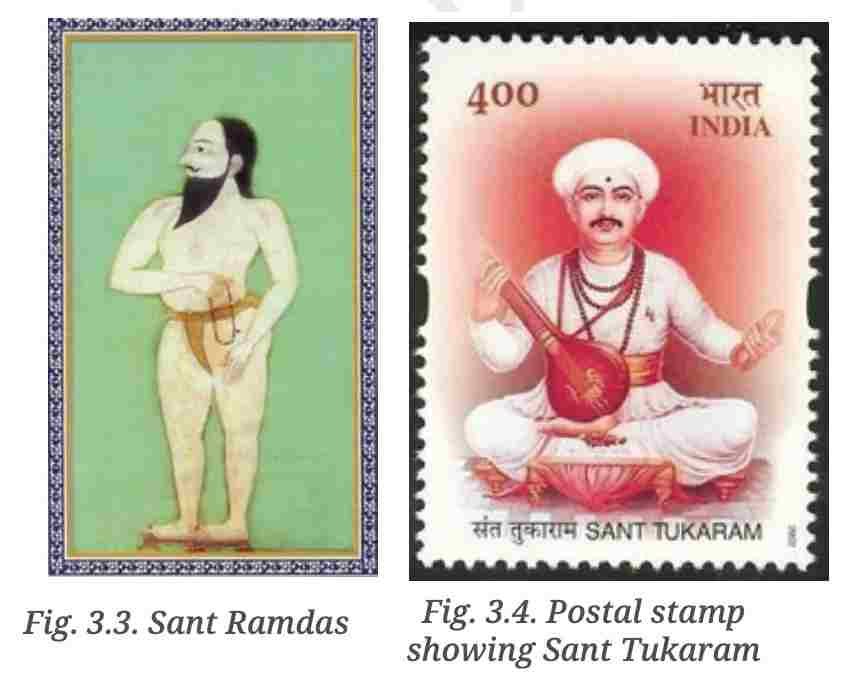
- Important saints of Maharashtra included:
- Dnyaneshwar
- Namdev
- Tukaram
- Ramdas
- These saints became popular in Maharashtra during this period.
6. Contribution to Marathi Literature and Society
- Some saints helped translate important texts into Marathi.
- These included:
- Upaniṣhads
- Bhagavad Gītā
- Translation into Marathi made their philosophy accessible to the people.
- Some saints also focused on:
- Social organisation
- Political awareness
7. Cultural Foundation of the Marathas
- The activities of the saints gave society a solid cultural foundation.
- This cultural foundation later helped the Marathas organise themselves into a political power.
- The role of these saints in social organisation and political awareness was similar to that of the Sikh gurus.
8. Early Attempts at Maratha Sovereignty
- By the 17th century, some Maratha chiefs made early attempts to establish sovereignty.
- These early attempts were unsuccessful.
- The Marathas were eventually brought together when Chhatrapati Shivaji rose to power.
- Shivaji’s rise marked an important stage in the organisation of the Marathas as a political power.
Who are the Marathas: Exam & Revision Summary
The Marathas are a people native to the Deccan Plateau, especially present-day Maharashtra, and are associated with the Marathi language, which has a rich literary history since the 12th century.
In the 13th century, most of Maharashtra was ruled by the Yadava dynasty, whose capital was Devagiri, present-day Daulatabad. In the early 14th century, the Yadavas were defeated by the Khilji Sultanate of Delhi. Despite these political changes, Maharashtra’s cultural traditions continued, especially the Bhakti tradition, which emphasised devotion to the divine rather than merely external rituals.
Between the 7th and 17th centuries, Bhakti saints from different sections of society composed devotional songs and poetry in languages understood by ordinary people. In Maharashtra, saints such as Dnyaneshwar, Namdev, Tukaram and Ramdas became highly popular. They helped make important texts such as the Upanishads and Bhagavad Gita accessible to people through Marathi. Some saints also encouraged social organisation and political awareness.
This strong cultural and social foundation later helped the Marathas organise themselves into a powerful political force. By the 17th century, some Maratha chiefs had attempted to establish sovereignty, but these efforts were unsuccessful until Chhatrapati Shivaji rose to power and united the Marathas.
Worksheet on Who are the Marathas?
Fill in The Blanks:
1. The Marathas are native to the __________ plateau, particularly present-day Maharashtra.
2. The language spoken by the Marathas is __________.
3. Marathi has had a rich and continuous literary history since the __________ century.
4. During the 13th century, most of Maharashtra was ruled by the __________ dynasty.
5. The capital of the Yadava dynasty was __________, which is present-day Daulatabad.
6. In the early 14th century, the Yadava dynasty was overcome by the __________ Sultanate from Delhi.
7. The cultural traditions that continued during political changes were particularly related to __________.
8. Bhakti refers to devotion to the divine or a particular __________.
9. Between the 7th and the __________ centuries, many saints and seekers preferred the path of bhakti.
10. Saints and seekers composed devotional songs and poetry in the languages of the __________.
11. In Maharashtra, saints like Dnyaneshwar, Namdev, __________ and Ramdas gained popularity.
12. The saints helped translate important texts like the Upaniṣhads and the __________ into Marathi.
13. The saints made their philosophy accessible to the __________.
14. Some saints focused on social organisation and political awareness, similar to the __________ gurus.
15. The society acquired a solid __________ foundation, which later helped the Marathas organise themselves into a political power.
16. By the __________ century, some Maratha chiefs made early attempts at establishing sovereignty.
17. The early attempts by some Maratha chiefs to establish sovereignty proved __________.
18. The Marathas were brought together when __________ rose to power.
Answer:
- Deccan
- Marathi
- 12th
- Yadava
- Devagiri
- Khilji
- bhakti
- deity
- 17th
- masses
- Tukaram
- Bhagavad Gītā
- people
- Sikh
- cultural
- 17th
- unsuccessful
- Chhatrapati Shivaji
MCQs:
Question 1. The Marathas are native to which region of India?
A. Northern India
B. Deccan Plateau
C. Eastern India
D. Himalayan region
Answer: B. Deccan Plateau
Question 2. The Marathas are more specifically associated with present-day:
A. Gujarat
B. Karnataka
C. Maharashtra
D. Madhya Pradesh
Answer: C. Maharashtra
Question 3. Which language is associated with the Marathas?
A. Hindi
B. Marathi
C. Gujarati
D. Telugu
Answer: B. Marathi
Question 4. Since when has Marathi had a rich and continuous literary history?
A. 7th century
B. 10th century
C. 12th century
D. 17th century
Answer: C. 12th century
Question 5. Which dynasty ruled most of Maharashtra during the 13th century?
A. Khilji dynasty
B. Yadava dynasty
C. Mughal dynasty
D. Lodi dynasty
Answer: B. Yadava dynasty
Question 6. What was the capital of the Yadava dynasty?
A. Delhi
B. Devagiri
C. Pune
D. Vijayanagara
Answer: B. Devagiri
Question 7. Which Sultanate from Delhi overcame the Yadava dynasty in the early 14th century?
A. Tughlaq Sultanate
B. Khilji Sultanate
C. Lodi Sultanate
D. Sayyid Sultanate
Answer: B. Khilji Sultanate
Question 8. What was an important spiritual tradition that continued in Maharashtra despite political changes?
A. Sufism only
B. Bhakti
C. Jainism
D. Buddhism
Answer: B. Bhakti
Question 9. What did the Bhakti saints mainly use to spread their devotional messages among ordinary people?
A. Persian royal documents
B. Devotional songs and poetry in languages of the masses
C. Military campaigns
D. Official government orders
Answer: B. Devotional songs and poetry in languages of the masses
Question 10. Which of the following were prominent Bhakti saints of Maharashtra mentioned in the passage?
A. Dnyaneshwar, Namdev, Tukaram and Ramdas
B. Kabir, Guru Nanak, Tulsidas and Surdas
C. Akbar, Babur, Humayun and Jahangir
D. Rana Sanga, Rana Kumbha, Shivaji and Sambhaji
Answer: A. Dnyaneshwar, Namdev, Tukaram and Ramdas
Question 11. How did the saints help make the philosophy of texts such as the Upaniṣhads and Bhagavad Gītā accessible to people?
A. By translating them into Marathi
B. By translating them into Persian
C. By restricting them to royal courts
D. By replacing them with new texts
Answer: A. By translating them into Marathi
Question 12. How did the Bhakti tradition contribute to the later rise of the Marathas?
A. It provided a strong cultural foundation that helped society organise into a political power
B. It directly established the Maratha Empire
C. It ended the rule of the Yadavas
D. It created the Mughal administration
Answer: A. It provided a strong cultural foundation that helped society organise into a political power
Next & Previous Topics of NCERT/CBSE Social Science Class 8 Chapter 3: The Rise of the Marathas
| Topics No. | Topics Name |
|---|---|
| 1 | Who are the Marathas |
| 2 | Foundation of Maratha Power and the Rise of Chhatrapati Shivaji |
| 3 | The Marathas after Chhatrapati Shivaji |
| 4 | Maratha Administration |
| 5 | Cultural Revival |
FAQs on Who are the Marathas Class 8 Social Science
1. Who are the Marathas?
Answer: The Marathas are a group of people native to the Deccan Plateau, particularly present-day Maharashtra. They are identified with the Marathi language, which has a rich and continuous literary history since the 12th century.
2. What was the political condition of Maharashtra during the 13th and early 14th centuries?
Answer: During the 13th century, most of Maharashtra was ruled by the Yadava dynasty, with Devagiri, present-day Daulatabad, as its capital. In the early 14th century, the Yadava dynasty was overcome by the Khilji Sultanate of Delhi.
3. What was the role of the Bhakti tradition in the rise of the Marathas?
Answer: The Bhakti tradition created a strong cultural foundation in Maharashtra. Saints composed devotional songs and poetry in the languages of the masses, allowing their messages to spread widely. This helped strengthen society and later contributed to the Marathas organising themselves into a political power.
4. Who were the important Bhakti saints of Maharashtra?
Answer: Important Bhakti saints of Maharashtra included Dnyaneshwar, Namdev, Tukaram and Ramdas. They became popular among the people and contributed to the spread of devotional ideas and social awareness.
5. How did the Bhakti saints make important religious texts accessible to the people?
Answer: The Bhakti saints helped translate important texts such as the Upanishads and the Bhagavad Gita into Marathi. By making their philosophy available in the language of the people, they helped ordinary people understand these ideas more easily.
6. How did the Bhakti movement contribute to the political rise of the Marathas?
Answer: The Bhakti movement helped create a strong cultural foundation in Maharashtra. Some saints also promoted social organisation and political awareness. This strengthened society and later helped the Marathas organise themselves into a powerful political force.
7. Why did the Marathas emerge as a powerful political force in the 17th century?
Answer: By the 17th century, some Maratha chiefs had begun trying to establish sovereignty, although their early attempts were unsuccessful. The rise of Chhatrapati Shivaji changed the situation. He brought the Marathas together and laid the foundation for their emergence as a powerful political entity.