
The Foundation of Maratha Power and the Rise of Chhatrapati Shivaji began with Chhatrapati Shivaji, who was born in 1630 to Shahji and Jijabai. At the age of 16, he began capturing and strengthening forts around Pune and developed the vision of Swarājya, or a sovereign kingdom. He expanded towards the western coast, created the Maratha Navy, and successfully used guerrilla warfare against larger armies. After defeating Afzal Khan, raiding Shaista Khan’s camp, and escaping house arrest at Agra, Shivaji was coronated at Raigad in 1674. His southern conquests later provided strategic depth against the Mughals.
We have discussed in-depth and exam-oriented pointers that can be asked in the board exam of class 8th about “Foundation of Maratha Power and the Rise of Chhatrapati Shivaji“ from the NCERT social science for class 8th chapter 3 “The Rise of the Marathas”.
Foundation of Maratha Power and the Rise of Chhatrapati Shivaji
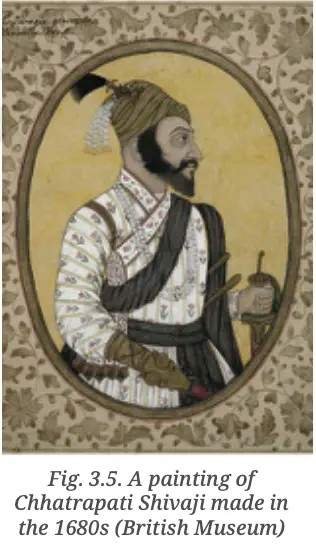
1. Birth and Early Life of Chhatrapati Shivaji:
- Chhatrapati Shivaji was born in 1630 in the Bhonsle clan.
- His parents were Shahji and Jijabai.
- Shahji served the Deccan sultanates and was often away from his family.
- Shivaji grew up in his father’s jāgīr at Pune.
- He was brought up under the care of Jijabai and trusted officials.
- He received good education and strong values during his upbringing.
- The Pune region was affected by constant infighting among the Deccan sultans whom the Marathas served.
- This political conflict caused hardship for the common people.
2. Beginning of Shivaji’s Military Career:
- At the age of 16, Shivaji began his military campaigns.
- He first consolidated his control over the Pune region.
- He captured neglected and unoccupied forts.
- He strengthened the defences of these forts.
- Over time, Shivaji developed the vision of establishing a sovereign kingdom called Swarājya.
- His vision of Swarājya extended to political, economic and cultural aspects.
3. Expansion towards the West Coast:
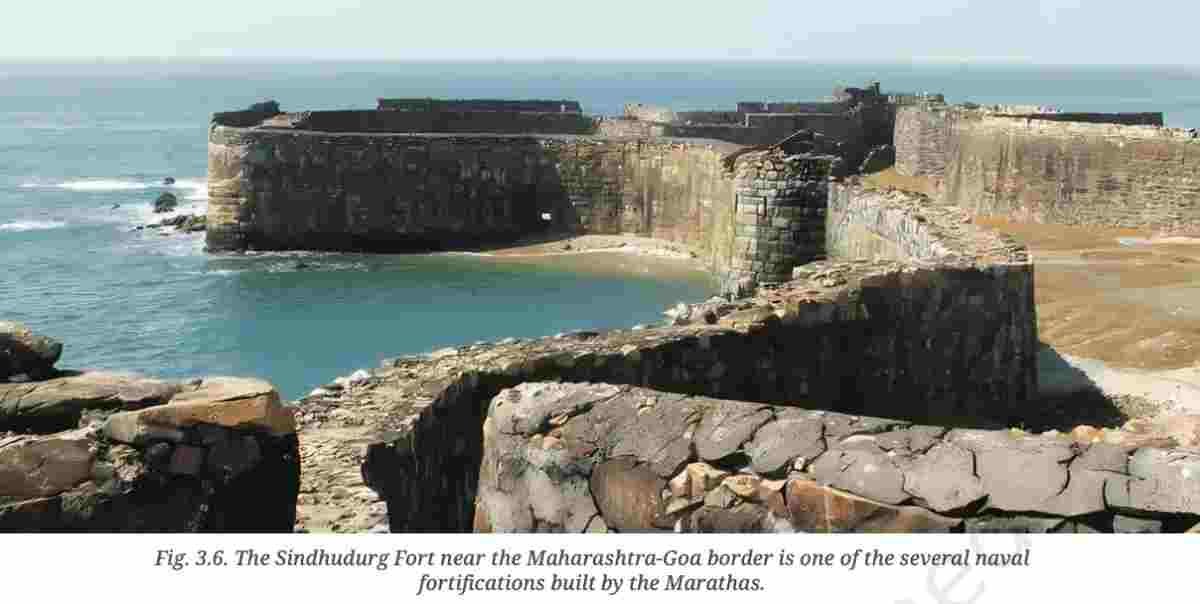
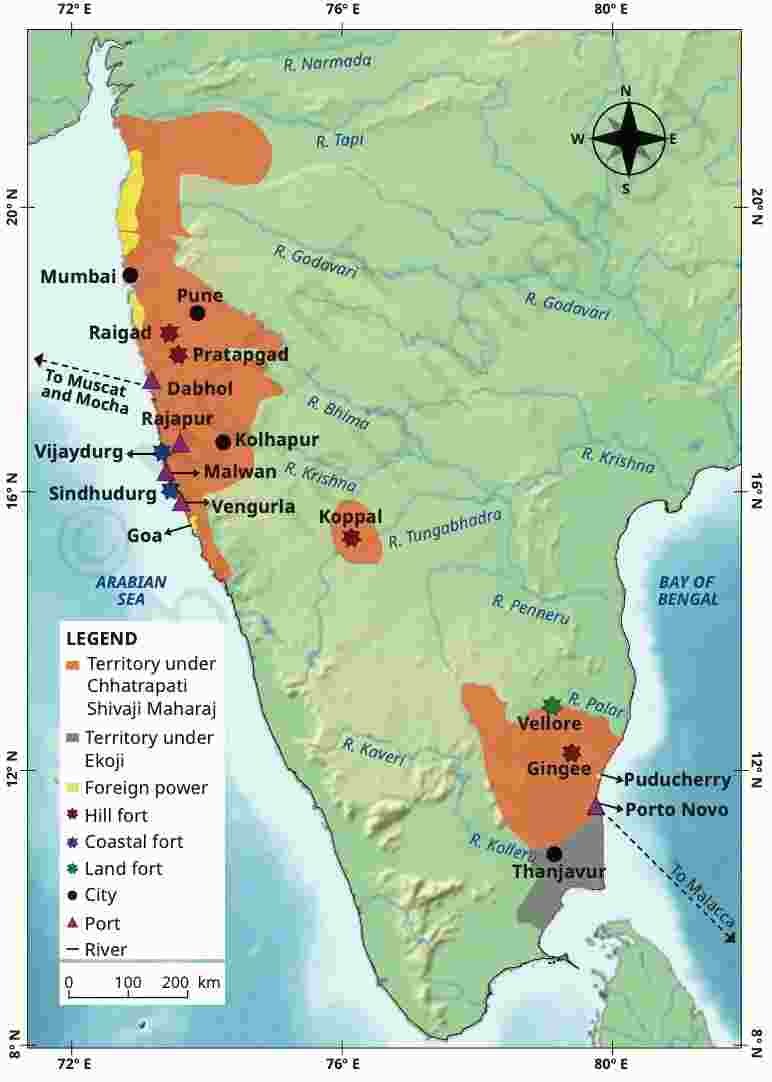
- Shivaji’s kingdom soon expanded towards India’s west coast.
- To secure access to the resources of coastal regions, he recognised the need for a navy.
- He established the Maratha Navy.
- The creation of a navy was considered a revolutionary step at the time.
4. Maratha Navy in Comparison with Other Powers:
- The Bijapur Sultanate, ruled by the Adil Shahi dynasty, maintained merchant ships.
- However, Bijapur did not have a full-time naval force to protect the coast.
- The Mughal Empire also had only very limited use of a navy.
- The exploits of the Maratha Navy later became legendary.
5. Shivaji’s Guerrilla Warfare:
- Shivaji used the tactic of guerrilla warfare to protect his people from powerful enemies.
- Guerrilla warfare involved using small groups in a focused manner.
- Its main advantages were:
- Speed
- Surprise
- Knowledge of the terrain
- This tactic enabled smaller forces to defeat larger armies.
6. Conflict with Afzal Khan:
- Shivaji’s successes angered the Bijapur Sultanate.
- Bijapur sent its veteran general Afzal Khan against Shivaji.
- Shivaji and his advisers persuaded Afzal Khan to meet him for a one-on-one meeting.
- The meeting took place at the foot of Pratapgad Fort, amid thick forests.
- Shivaji killed Afzal Khan.
- Maratha forces hidden in the mountains then used guerrilla attacks to defeat Afzal Khan’s army.
7. Wāgh Nakh:
- The wāgh nakh was a small weapon shaped like a tiger’s claw.
- Shivaji used the wāgh nakh to kill Afzal Khan in close combat.
8. Shaista Khan’s Invasion:
- Mughal nobleman Shaista Khan invaded Shivaji’s territories with a large army.
- His forces remained in Shivaji’s territories for three years.
- Shivaji eventually attacked Shaista Khan’s camp at night with only a few soldiers.
- Shaista Khan barely escaped.
- He lost a few fingers during the raid.
- He then left Maharashtra.
- The daring night raid is compared in the text to a modern-day surgical strike.
9. Sacking of Surat:
- As a retaliatory action for the three-year-long attacks, Shivaji sacked Surat.
- Surat was a wealthy port city of the Mughal Empire in present-day Gujarat.
- Shivaji obtained treasure worth almost one crore rupees.
- This was an extremely large sum at that time.
- Shivaji was careful not to attack religious places.
- He spared the house of Mohandas Parekh, who was known as a charitable man.
- Shivaji sacked Surat again after a few years.
10. Surat in the London Gazette:
- The events surrounding the sacking of Surat became so famous that they appeared in the London Gazette, an English newspaper of the time.
- According to the account, Shivaji wrote to European diplomatic agents in Surat demanding immediate presents of money.
- He warned that otherwise he would return and ruin the city.
- The sacking of Surat was a major insult to the power and prestige of the Mughal Empire.
11. Treaty of Purandar:
- In response to Shivaji’s growing power, Aurangzeb sent Jai Singh, a distinguished Rajput general, to defeat him.
- Shivaji was defeated at Purandar Fort near Pune.
- He was forced to enter into a treaty.
- Under the treaty:
- Shivaji gave up a sizeable part of his kingdom.
- His son Sambhaji entered Mughal service.
12. Visit to the Mughal Court:
- Jai Singh persuaded Shivaji to visit the Mughal court at Agra.
- At Agra, Shivaji was made to stand before:
- Aurangzeb
- A Mughal general whom Shivaji had previously defeated
- Shivaji considered this an insult.
- He became angry and stormed out of the court.
- Aurangzeb subsequently placed Shivaji under house arrest.
13. Escape from House Arrest:
- Shivaji devised a strategy to escape.
- He began distributing gifts to holy men and Mughal generals.
- The gifts were packed in large baskets containing fruits and sweets.
- Initially, guards checked the baskets.
- Later, the guards stopped checking them.
- Shivaji and his son Sambhaji hid inside the baskets.
- They successfully escaped from house arrest.
- After this escape, Aurangzeb could never capture Shivaji again.
14. Coronation of Shivaji:
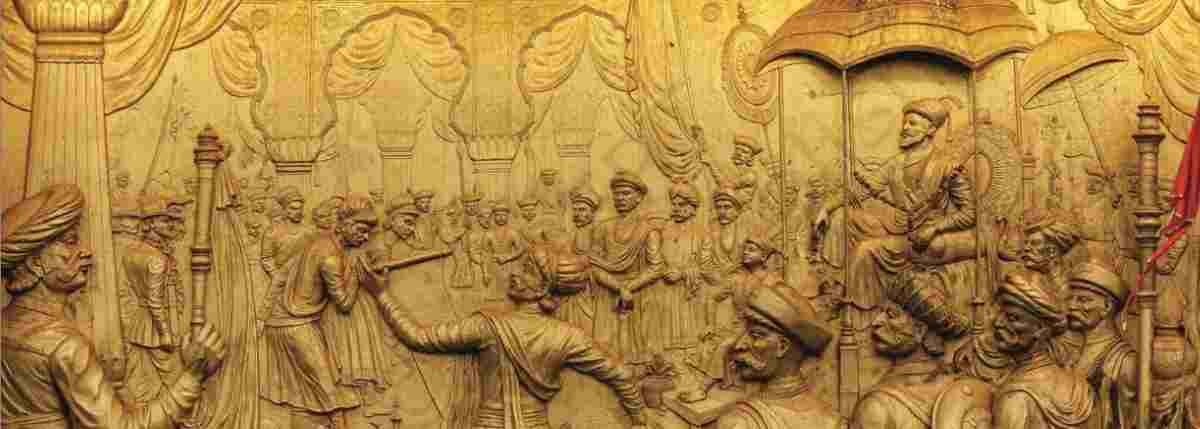
- In 1674, Shivaji was formally coronated.
- The coronation was performed with full Vedic rites.
- It took place at the strong mountain fortress of Raigad.
- His formal title after coronation was Shri Raja Shiva Chhatrapati.
- Shivaji also began his own era called the Rājyābhiṣheka shaka.
15. Conquest of the South:
- After his coronation, Shivaji launched a conquest of the South.
- This campaign was known as dakṣhiṇa-digvijaya.
- It included:
- Present-day northern Tamil Nadu
- Parts of Karnataka
- These regions were important because they were then poorly defended.
- The southern extension later provided the Marathas with great strategic depth against Mughal invasions.
16. Death and Legacy of Chhatrapati Shivaji:
- Shivaji died of fever at the age of 50.
- He was regarded as a master strategist and true visionary.
- During his lifetime, his exploits became legendary across India and beyond.
- Europeans compared Shivaji with ancient generals such as Alexander.
- Chhatrasal, the Bundela prince, was inspired by Shivaji’s struggle against the Mughals.
- Chhatrasal subsequently established an independent kingdom of Bundelkhand.
- Bundelkhand is divided between present-day Uttar Pradesh and Madhya Pradesh.
- The famous Hindi poet Bhushan travelled to Maharashtra to meet Shivaji.
- Bhushan composed poems praising Shivaji, some of which remain famous.
17. Shivaji’s Stand against the Slave Trade:
- During his southern campaign, Shivaji forbade the Dutch from trading slaves.
- At that time, many Europeans were capturing and selling Indians as slaves.
- Shivaji’s intervention opposed this practice.
- His stand demonstrated his concern for the welfare of his subjects.
Foundation of Maratha Power and the Rise of Chhatrapati Shivaji: Exam & Revision Summary
Chhatrapati Shivaji was born in 1630 in the Bhonsle clan to Shahji and Jijabai. His father served the Deccan sultanates and was often away, so Shivaji grew up in his jāgīr at Pune under the care of Jijabai and trusted officials. He received good education and strong values during his childhood. The Pune region was suffering from constant conflicts among the Deccan sultans, which caused hardship for ordinary people. At the age of 16, Shivaji began military campaigns and strengthened his position in Pune by capturing neglected and unoccupied forts and improving their defences. Gradually, he developed the vision of establishing a sovereign kingdom called Swarājya, covering political, economic and cultural aspects.
Expansion and the Maratha Navy
Shivaji’s kingdom expanded towards the west coast. To secure coastal resources and protect his territories, he recognised the importance of a navy and established the Maratha Navy. This was an important step because the Bijapur Sultanate had merchant ships but no full-time naval force to protect its coast, while the Mughal Empire also had very limited naval use.
Shivaji also used guerrilla warfare, in which small groups relied on speed, surprise and knowledge of local terrain to defeat larger armies. This strategy became an important part of his military success.
Conflict with Afzal Khan
The growing power of Shivaji angered the Bijapur Sultanate, which sent its experienced general Afzal Khan against him. Shivaji and his advisers arranged a one-on-one meeting with Afzal Khan near Pratapgad Fort, surrounded by dense forests. During the meeting, Shivaji killed Afzal Khan. The Maratha forces, positioned in the surrounding mountains, then used guerrilla attacks to defeat and scatter Afzal Khan’s army.
Conflict with Shaista Khan and the Sack of Surat
Later, Mughal nobleman Shaista Khan invaded Shivaji’s territories with a large army and continued his attacks for about three years. Shivaji eventually carried out a daring night raid on Shaista Khan’s camp with only a few soldiers. Shaista Khan narrowly escaped, losing some fingers, and soon left Maharashtra. The raid is compared in the text with a modern-day surgical strike.
As retaliation for the prolonged Mughal attacks, Shivaji attacked Surat, a wealthy Mughal port city in present-day Gujarat. He obtained treasure worth almost one crore rupees, an enormous amount at that time. However, he avoided attacking religious places and spared the house of Mohandas Parekh, known for his charitable activities. Shivaji later sacked Surat again.
The events at Surat became so well known that they were reported in the London Gazette. The attack was considered a major insult to the power and prestige of the Mughal Empire.
Treaty of Purandar and Escape from Agra
To deal with Shivaji, Aurangzeb sent the distinguished Rajput general Jai Singh. Shivaji was defeated at Purandar Fort near Pune and had to enter into a treaty. He surrendered a considerable portion of his kingdom, while his son Sambhaji entered Mughal service.
Jai Singh later persuaded Shivaji to visit the Mughal court at Agra. There, Shivaji was made to stand before Aurangzeb and a Mughal general whom he had previously defeated. Feeling insulted, Shivaji left the court angrily. Aurangzeb placed him under house arrest.
Shivaji then planned a clever escape. He began sending baskets of fruits and sweets as gifts to holy men and Mughal generals. At first, guards checked the baskets, but they gradually stopped doing so. Taking advantage of this, Shivaji and his son Sambhaji hid inside the baskets and escaped. After this, Aurangzeb was never able to capture Shivaji again.
Coronation and Southern Conquest
In 1674, Shivaji was formally crowned at the mountain fortress of Raigad according to full Vedic rites. After his coronation, his formal title became ‘Shri Raja Shiva Chhatrapati’. He also introduced his own era, known as the Rājyābhiṣheka shaka.
After the coronation, Shivaji began the dakṣhiṇa-digvijaya, or conquest of the South. It included important but then poorly defended regions of present-day northern Tamil Nadu and parts of Karnataka. This southern expansion later provided the Marathas with important strategic depth when they faced Mughal invasions.
Legacy of Chhatrapati Shivaji
Chhatrapati Shivaji died of fever at the age of 50. He was remembered as a master strategist and visionary whose achievements became legendary during his own lifetime. European observers compared him with ancient generals such as Alexander.
His struggle against the Mughals also inspired Chhatrasal, the Bundela prince, who later established an independent kingdom in Bundelkhand, covering parts of present-day Uttar Pradesh and Madhya Pradesh. The Hindi poet Bhushan travelled to Maharashtra to meet Shivaji and composed poems praising him, some of which remain famous.
Shivaji and the Prohibition of Slave Trade
During his southern campaign, Shivaji forbade the Dutch from trading slaves. At a time when European powers were capturing and selling Indians as slaves, his intervention demonstrated his concern for the protection and welfare of his subjects.
Wāgh Nakh

The wāgh nakh was a small weapon shaped like a tiger’s claw. According to the given text, Shivaji used it during his close combat with Afzal Khan.
Overall, Chhatrapati Shivaji laid the foundation of a powerful Maratha political force through military strategy, fortification, guerrilla warfare, naval development, territorial expansion and the vision of Swarājya. His achievements and resistance to powerful opponents became an important foundation for the later rise of Maratha power.
Worksheet on Foundation of Maratha Power and the Rise of Chhatrapati Shivaji
Fill in The Blanks:
1. Chhatrapati Shivaji was born in __________ in the Bhonsle clan.
2. Chhatrapati Shivaji was the son of __________ and Jijabai.
3. Chhatrapati Shivaji grew up in his father’s __________ at Pune.
4. Chhatrapati Shivaji launched his military campaigns when he was just __________ years old.
5. Chhatrapati Shivaji first consolidated his hold over the __________ region.
6. Chhatrapati Shivaji captured neglected and unoccupied __________ and strengthened their defences.
7. Chhatrapati Shivaji’s vision of a sovereign kingdom was known as __________.
8. To secure access to the resources of coastal regions, Chhatrapati Shivaji established a __________.
9. The Bijapur Sultanate was ruled by the __________ dynasty.
10. Chhatrapati Shivaji used __________ warfare to defeat larger armies.
11. The Bijapur Sultanate sent the veteran general __________ to confront Chhatrapati Shivaji.
12. Afzal Khan met Chhatrapati Shivaji at the foot of the __________ fort.
13. Chhatrapati Shivaji used the __________ to kill Afzal Khan in close combat.
14. The Mughal nobleman __________ Khan invaded Chhatrapati Shivaji’s territories with a large army.
15. Chhatrapati Shivaji raided Shaista Khan’s camp at __________.
16. Chhatrapati Shivaji sacked __________, a wealthy port city of the Mughal Empire.
17. Surat was located in present-day __________.
18. Chhatrapati Shivaji obtained treasure worth almost __________ crore of rupees from Surat.
19. Chhatrapati Shivaji was careful not to attack __________ places while sacking Surat.
20. Aurangzeb sent the distinguished Rajput general __________ to defeat Chhatrapati Shivaji.
21. Chhatrapati Shivaji had to concede defeat at __________ Fort near Pune.
22. After the treaty, Chhatrapati Shivaji’s son __________ had to enter Mughal service.
23. Chhatrapati Shivaji was persuaded by Jai Singh to visit the Mughal court at __________.
24. Aurangzeb placed Chhatrapati Shivaji under __________ arrest.
25. Chhatrapati Shivaji and Sambhaji escaped from house arrest by hiding in baskets containing fruits and __________.
26. In __________, Chhatrapati Shivaji was coronated with full Vedic rites at Raigad.
27. Chhatrapati Shivaji was coronated at the strong mountain fortress of __________.
28. Chhatrapati Shivaji’s formal title after his coronation was ‘__________’.
29. Chhatrapati Shivaji started his own era known as the __________ shaka.
30. Chhatrapati Shivaji’s conquest of the South was known as the __________.
31. The southern conquest included parts of present-day northern __________ Nadu and Karnataka.
32. Chhatrapati Shivaji’s southern expansion provided the Marathas with great __________ depth against the Mughal invasion.
33. A __________ claimed Chhatrapati Shivaji’s life when he was fifty.
34. The Bundela prince __________ was inspired by Chhatrapati Shivaji’s struggle against the Mughals.
35. Chhatrasal created an independent kingdom of __________.
36. The famous Hindi poet __________ came to Maharashtra to meet Chhatrapati Shivaji and composed poems in his praise.
37. While in the South, Chhatrapati Shivaji forbade the __________ from trading slaves.
38. The __________ is a small weapon shaped like a tiger’s claw.
Answer:
- 1630
- Shahji
- jāgīr
- 16
- Pune
- forts
- Swarājya
- navy
- Adil Shahi
- guerrilla
- Afzal Khan
- Pratapgad
- wāgh nakh
- Shaista
- night
- Surat
- Gujarat
- one
- religious
- Jai Singh
- Purandar
- Sambhaji
- Agra
- house
- sweets
- 1674
- Raigad
- Shri Raja Shiva Chhatrapati
- Rājyābhiṣheka
- dakṣhiṇa-digvijaya
- Tamil
- strategic
- fever
- Chhatrasal
- Bundelkhand
- Bhushan
- Dutch
- wāgh nakh
MCQs:
Question 1. In which year was Chhatrapati Shivaji born?
A. 1610
B. 1620
C. 1630
D. 1640
Answer: C. 1630
Question 2. Chhatrapati Shivaji belonged to which clan?
A. Sisodia
B. Bhonsle
C. Rathore
D. Gajapati
Answer: B. Bhonsle
Question 3. Who were the parents of Chhatrapati Shivaji?
A. Shahji and Jijabai
B. Shahji and Tarabai
C. Sambhaji and Jijabai
D. Afzal Khan and Jijabai
Answer: A. Shahji and Jijabai
Question 4. At what age did Chhatrapati Shivaji begin his military campaigns?
A. 14 years
B. 16 years
C. 18 years
D. 20 years
Answer: B. 16 years
Question 5. What was the vision of a sovereign kingdom developed by Chhatrapati Shivaji called?
A. Rajaniti
B. Swarājya
C. Sulh-i-kul
D. Digvijaya
Answer: B. Swarājya
Question 6. Why did Chhatrapati Shivaji establish a navy?
A. To conquer Delhi
B. To protect inland forts
C. To secure access to and protect the resources of coastal regions
D. To defeat the Rajputs
Answer: C. To secure access to and protect the resources of coastal regions
Question 7. Which military tactic did Chhatrapati Shivaji use to defeat larger armies?
A. Trench warfare
B. Guerrilla warfare
C. Naval warfare
D. Siege warfare
Answer: B. Guerrilla warfare
Question 8. Who was the Bijapur general sent to confront Chhatrapati Shivaji?
A. Jai Singh
B. Shaista Khan
C. Afzal Khan
D. Ram Singh
Answer: C. Afzal Khan
Question 9. What happened during the meeting between Chhatrapati Shivaji and Afzal Khan?
A. Afzal Khan captured Shivaji
B. Shivaji killed Afzal Khan
C. They signed a treaty
D. Afzal Khan joined the Marathas
Answer: B. Shivaji killed Afzal Khan
Question 10. Which Mughal nobleman invaded Chhatrapati Shivaji’s territories with a large army?
A. Jai Singh
B. Shaista Khan
C. Aurangzeb
D. Ibrahim Lodi
Answer: B. Shaista Khan
Question 11. Which wealthy Mughal port city was sacked by Chhatrapati Shivaji?
A. Surat
B. Agra
C. Delhi
D. Lahore
Answer: A. Surat
Question 12. At which fort did Chhatrapati Shivaji concede defeat to Jai Singh and enter into a treaty with the Mughals?
A. Raigad Fort
B. Pratapgad Fort
C. Purandar Fort
D. Daulatabad Fort
Answer: C. Purandar Fort
Question 13. How did Chhatrapati Shivaji escape from house arrest at Agra?
A. He escaped through a secret tunnel
B. He disguised himself as a soldier
C. He hid in baskets containing fruits and sweets
D. He fought his way out
Answer: C. He hid in baskets containing fruits and sweets
Question 14. In which year was Chhatrapati Shivaji coronated at Raigad?
A. 1665
B. 1670
C. 1674
D. 1680
Answer: C. 1674
Question 15. What was the southern campaign of Chhatrapati Shivaji known as?
A. Dakṣhiṇa-digvijaya
B. Rājyābhiṣheka
C. Swarājya
D. Sulh-i-kul
Answer: A. Dakṣhiṇa-digvijaya
Question 16. What was the strategic importance of Chhatrapati Shivaji’s southern expansion?
A. It gave the Marathas access to Delhi
B. It provided strategic depth against Mughal invasion
C. It ended the Bijapur Sultanate
D. It established Maratha rule over Bengal
Answer: B. It provided strategic depth against Mughal invasion
Question 17. What was the name of the era started by Chhatrapati Shivaji after his coronation?
A. Vikrama Samvat
B. Rājyābhiṣheka shaka
C. Gupta Era
D. Shaka Era
Answer: B. Rājyābhiṣheka shaka
Question 18. What did Chhatrapati Shivaji forbid the Dutch from doing in the South?
A. Trading horses
B. Trading spices
C. Trading slaves
D. Trading textiles
Answer: C. Trading slaves
Question 19. What was the wāgh nakh?
A. A type of fort
B. A naval weapon
C. A small weapon shaped like a tiger’s claw
D. A Maratha military formation
Answer: C. A small weapon shaped like a tiger’s claw
Next & Previous Topics of NCERT/CBSE Social Science Class 8 Chapter 3: The Rise of the Marathas
| Topics No. | Topics Name |
|---|---|
| 1 | Who are the Marathas |
| 2 | Foundation of Maratha Power and the Rise of Chhatrapati Shivaji |
| 3 | The Marathas after Chhatrapati Shivaji |
| 4 | Maratha Administration |
| 5 | Cultural Revival |
FAQs on Foundation of Maratha Power and the Rise of Chhatrapati Shivaji Class 8 Social Science
1. Who was Chhatrapati Shivaji and where was he born?
Answer: Chhatrapati Shivaji was the son of Shahji and Jijabai and belonged to the Bhonsle clan. He was born in 1630. He grew up in his father’s jāgīr at Pune under the care of Jijabai and trusted officials, who helped him develop good values and receive a proper education.
2. What was Swarajya according to Chhatrapati Shivaji?
Answer: Swarajya was Chhatrapati Shivaji’s vision of a sovereign kingdom. His idea gradually developed beyond political independence and included economic and cultural aspects as well. He began working towards this vision by consolidating his control over the Pune region and capturing neglected and unoccupied forts.
3. Why did Chhatrapati Shivaji establish a navy?
Answer: As Shivaji’s kingdom expanded towards the west coast, he realised that controlling and protecting the coastal regions and their resources required a naval force. Therefore, he established the Maratha Navy. At that time, the Bijapur Sultanate had merchant ships but no full-time navy to protect its coast, while Mughal use of naval forces was also limited.
4. What was guerrilla warfare used by Chhatrapati Shivaji?
Answer: Guerrilla warfare was a military tactic in which small groups used speed, surprise and knowledge of the local terrain to defeat larger armies. Chhatrapati Shivaji used this method effectively to protect his people and fight powerful enemies. His forces used the mountains and other features of the terrain to launch focused attacks against larger armies.
5. How did Chhatrapati Shivaji defeat Afzal Khan?
Answer: The Bijapur Sultanate sent its experienced general Afzal Khan to confront Shivaji. Shivaji and his advisers arranged a one-to-one meeting with Afzal Khan at the foot of Pratapgad Fort, surrounded by thick forests. Shivaji killed Afzal Khan during the meeting, after which Maratha forces hidden in the mountains attacked and defeated Khan’s army using guerrilla tactics.
6. How did Chhatrapati Shivaji escape from Agra?
Answer: After Shivaji was placed under house arrest by Aurangzeb at Agra, he devised a clever escape plan. He began sending baskets containing fruits and sweets as gifts to holy men and Mughal generals. When the guards gradually stopped checking the baskets, Shivaji and his son Sambhaji hid inside them and escaped. Aurangzeb was never able to capture Shivaji again.
7. When and where was Chhatrapati Shivaji crowned?
Answer: Chhatrapati Shivaji was crowned in 1674 at Raigad Fort with full Vedic rites. After his coronation, his formal title was Shri Raja Shiva Chhatrapati. He also began his own era, known as the Rājyābhiṣheka shaka. The coronation marked the formal beginning of the Maratha Empire.
8. What was the significance of Chhatrapati Shivaji’s conquest of the South?
Answer: After his coronation, Shivaji undertook the dakṣhiṇa-digvijaya, or conquest of the South. It included important areas of present-day northern Tamil Nadu and parts of Karnataka. This southern expansion later provided the Marathas with great strategic depth against Mughal invasions.
9. Why did Chhatrapati Shivaji attack Surat?
Answer: Shivaji attacked Surat, a wealthy Mughal port city in present-day Gujarat, as a retaliatory action following the prolonged attacks by Shaista Khan. He obtained enormous treasure, worth almost one crore rupees. However, according to the given account, he avoided attacking religious places and spared the house of Mohandas Parekh, a charitable man.
10. What was the importance of Chhatrapati Shivaji’s struggle against the Mughals?
Answer: Shivaji built an independent kingdom through military strategy, fortification, guerrilla warfare and naval power. His resistance against the Mughals inspired others, including the Bundela prince Chhatrasal, who later established an independent kingdom of Bundelkhand. Shivaji’s achievements became widely known during his lifetime and were praised in historical accounts and poetry.