
The story of Korea in Class 11 History explains its journey from Japanese colonial rule to becoming a modern democratic and industrial nation. After gaining independence in 1945, Korea was divided into North and South Korea, and the Korean War (1950–53) deepened this division. South Korea focused on export-led industrialisation under strong government leadership, achieving rapid economic growth through industries, education, and technology. At the same time, citizens continuously fought for democratic rights, leading to constitutional reforms and free elections. Today, South Korea is recognised as a successful democracy and one of the world’s leading economies.
The Story of Korea
Beginnings of Modernisation
1. Crisis of the Joseon Dynasty:
- Joseon Dynasty ruled Korea from 1392–1910
- Faced internal political and social strife
- Experienced increasing foreign pressure from:
- China
- Japan
- Western powers
2. Early Modernisation Efforts:
- Reforms introduced in:
- Governmental structures
- Diplomatic relations
- Infrastructure
- Society
3. Japanese Annexation of Korea:
- Imperial Japan annexed Korea in 1910
- Ended the 500-year-old Joseon Dynasty
- Korea became a Japanese colony
4. Korean Resistance to Colonial Rule:
- Anger against:
- Suppression of Korean culture
- Forced assimilation
- Koreans:
- Demonstrated nationwide
- Set up a provisional government
- Sent delegations to international meetings:
- Cairo Conference
- Yalta Conference
- Potsdam Conference
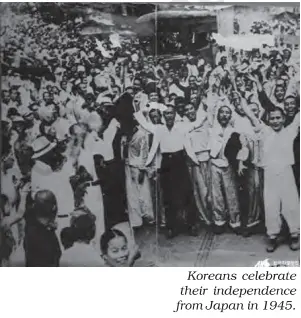
5. End of Japanese Rule:
- Japanese colonial rule lasted 35 years
- Ended in August 1945 after Japan’s defeat in World War II
- Independence ensured by:
- Activists inside Korea
- Activists abroad
6. Division of the Korean Peninsula:
- Temporary division along the 38th parallel
- North managed by Soviets
- South managed by the United Nations
- Division became permanent in 1948
- Separate governments formed in:
- North Korea
- South Korea
A Post-War Nation
1. Outbreak of the Korean War:
- Began in June 1950
- South Korea supported by:
- United States
- United Nations forces
- North Korea supported by:
- Communist China
- Functioned as a Cold War proxy war
2. End of the War:
- Ended in July 1953
- Concluded with an armistice
- Korea remained divided
3. Impact of the Korean War:
- Massive loss of:
- Life
- Property
- Delayed:
- Free-market economic development
- Democratisation
- Inflation caused by:
- Increased national expenditure
- Excess currency issuance
- Industrial facilities from colonial period destroyed
4. Economic Dependence:
- South Korea relied on US economic assistance
5. Syngman Rhee’s Presidency:
- Elected president in 1948 through democratic process
- Extended rule twice via:
- Illegal constitutional amendments
6. April Revolution (1960):
- Triggered by a rigged election
- Citizens protested nationwide
- Rhee forced to resign
7. Political Instability After Rhee:
- Democratic Party came to power
- Failed to meet citizens’ demands due to:
- Internal divisions
- Conflicts
- Student movement evolved into:
- Unification movement
8. Military Coup of 1961:
- Democratic Party government overthrown
- Led by General Park Chung-hee
- Backed by military authorities
Rapid Industrialisation under Strong Leadership
1. Rise of Park Chung-hee:
- Elected president in October 1963
- Former leader of the military coup
2. Economic Strategy:
- Adopted:
- State-led policy
- Export-oriented growth model
- Introduced five-year economic plans
- Favoured:
- Large corporate firms
- Employment expansion
- Export competitiveness
3. Shift in Industrial Policy:
- Early 1960s:
- Shift from ISI to export orientation
- Focus on labour-intensive light industries:
- Textiles
- Garments
- Late 1960s–1970s:
- Shift to heavy and chemical industries
- Priority sectors included:
- Steel
- Shipbuilding
- Electronics
- Chemicals
- Machinery
4. Saemaul (New Village) Movement:
- Introduced in 1970
- Aimed at:
- Rural mobilisation
- Agricultural modernisation
- Encouraged:
- Self-help
- Community development
- Later expanded to:
- Urban areas
- Industrial neighbourhoods
- Korea later shared this model with developing countries
5. Factors Behind Economic Growth:
- Strong leadership
- Skilled bureaucrats
- Aggressive industrialists
- Capable labour force
- High literacy rates
- Open economic policy
- Foreign investment
- High domestic savings
- Remittances from overseas workers
6. Political Authoritarianism:
- Park revised constitution for:
- Third presidential term (1971)
- Introduced Yusin Constitution (1972)
- Granted president:
- Absolute authority
- Emergency powers
- Democracy suspended for economic development
7. Decline of the Park Administration:
- Second oil crisis (1979) hurt economy
- Over-investment in heavy industries
- Protests by:
- Students
- Scholars
- Opposition
- Park assassinated in October 1979
Continued Economic Growth and Calls for Democratisation
1. Chun Doo-hwan’s Military Coup:
- Occurred in December 1979
- Democracy demands intensified
2. Gwangju Democratisation Movement (1980):
- Protests against martial law
- Strong resistance in Gwangju
- Movement suppressed by military
3. Chun’s Presidency
- Became president through indirect election
- Continued suppression of democratic forces
4. Economic Recovery:
- Economic growth rose from:
- 1.7% (1980) to 13.2% (1983)
- Inflation reduced
- Growth led to:
- Urbanisation
- Better education
- Media development
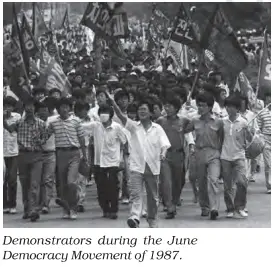
5. June Democracy Movement (1987):
- Triggered by: Cover-up of death-by-torture of a student
- Included:
- Students
- Middle class
- Forced constitutional revision
- Allowed direct presidential elections
Korean Democracy and the IMF Crisis
1. Democratic Elections:
- First direct presidential election held in 1987
- Roh Tae-woo elected due to divided opposition
2. Civilian Rule:
- Kim Young-sam elected president in 1992
- Ended decades of military dominance
3. Economic Liberalisation:
- Export-driven growth continued
- Growth of global Korean conglomerates
- Joined OECD in 1996
4. IMF Crisis (1997):
- Causes included:
- Trade deficits
- Poor financial management
- Reckless corporate practices
- IMF provided emergency support
- Citizens participated through:
- Gold Collection Movement
5. Peaceful Transfers of Power:
- Kim Dae-jung elected in 1997
- Lee Myung-bak elected in 2008
- Park Geun-hye elected in 2012
- Impeached and removed in 2017
- Moon Jae-in elected in 2017
6. Maturity of Korean Democracy:
- Candlelight protests (2016) were peaceful
- Democracy advanced through:
- Economic development
- Citizens’ political awareness
- Republican values strengthened
The Story of Korea – Exam & Revision Summary
Modern Korea’s history is centred on modernisation, Japanese colonial rule, national independence, rapid industrialisation, and democratic development. During the late nineteenth century, the Joseon Dynasty introduced reforms, but Japan annexed Korea in 1910, ending the dynasty and imposing colonial rule until 1945. After Japan’s defeat in World War II, Korea was liberated but divided along the 38th Parallel, leading to the creation of North and South Korea in 1948.
The Korean War (1950–53) caused massive destruction and ended with an armistice, leaving Korea permanently divided. South Korea relied on US aid for reconstruction. After the April Revolution (1960) removed President Syngman Rhee, Park Chung-hee seized power through a military coup in 1961.
Park introduced export-oriented industrialisation, Five-Year Economic Plans, and the Saemaul (New Village) Movement, transforming South Korea into a rapidly growing industrial economy. However, his Yusin Constitution (1972) strengthened authoritarian rule and slowed democratic progress.
Following Park’s assassination in 1979, demands for democracy increased. The Gwangju Democratisation Movement (1980) and the June Democracy Movement (1987) forced constitutional reforms and restored direct presidential elections. During the 1990s, South Korea became a major industrial economy but faced the IMF Financial Crisis (1997), which was overcome with international assistance and public support through the Gold Collection Movement.
Since then, South Korea has experienced peaceful transfers of power and stronger democratic institutions. The Candlelight Protests (2016–17), which led to President Park Geun-hye’s impeachment, demonstrated the strength of Korean democracy. Today, South Korea is recognised as one of the world’s leading economies and a successful democratic nation.
Quick Revision Points
- Joseon Dynasty: 1392–1910.
- Japan annexed Korea: 1910.
- Japanese colonial rule: 1910–1945.
- Korea liberated: 1945 after Japan’s defeat in World War II.
- Division along the 38th Parallel: 1945; separate governments formed in 1948.
- Korean War: 1950–1953; ended with an armistice.
- April Revolution (1960): Ended Syngman Rhee’s rule.
- Park Chung-hee’s military coup: 1961.
- Export-oriented industrialisation and Five-Year Plans drove economic growth.
- Saemaul (New Village) Movement: 1970.
- Yusin Constitution: 1972 strengthened presidential powers.
- Gwangju Democratisation Movement: 1980.
- June Democracy Movement: 1987 led to direct presidential elections.
- First civilian president: Kim Young-sam (1992).
- IMF Financial Crisis: 1997; supported by the Gold Collection Movement.
- Candlelight Protests (2016–17): Led to Park Geun-hye’s impeachment.
- South Korea is now known for its strong economy, industrial success, and mature democracy.
MCQs on NCERT History Class 11 Chapter 7 Topic – The Story of Korea
Here are the top exam-oriented MCQ-type questions on “The Story of Korea Class 11 history” that you should prepare for your CBSE or state board exams:
Question 1. Which dynasty ruled Korea from 1392 to 1910?
A. Qing Dynasty
B. Joseon Dynasty
C. Meiji Dynasty
D. Han Dynasty
Answer: B
Question 2. Korea faced foreign pressure in the late nineteenth century mainly from:
A. Russia, France and Britain
B. China, Japan and the West
C. USA, Japan and Russia
D. China, Russia and Germany
Answer: B
Question 3. Korea was annexed by imperial Japan in:
A. 1895
B. 1905
C. 1910
D. 1920
Answer: C
Question 4. Japanese annexation brought an end to the Joseon Dynasty after how many years?
A. About 300 years
B. About 400 years
C. About 500 years
D. About 600 years
Answer: C
Question 5. Korean resistance to Japanese rule included all EXCEPT:
A. Setting up a provisional government
B. Armed invasion of Japan
C. Public demonstrations
D. Sending delegations to international meetings
Answer: B
Question 6. Delegations were sent to international meetings such as:
A. Vienna, Geneva and Paris
B. Cairo, Yalta and Potsdam
C. Geneva, Versailles and Rome
D. Berlin, Moscow and Tokyo
Answer: B
Question 7. Japanese colonial rule over Korea ended in:
A. 1942
B. 1943
C. 1945
D. 1948
Answer: C
Question 8. After liberation, Korea was divided along which parallel?
A. 17th parallel
B. 24th parallel
C. 38th parallel
D. 49th parallel
Answer: C
Question 9. Who managed North and South Korea immediately after liberation?
A. USA and USSR
B. China and USA
C. Soviets in the North and UN in the South
D. UN in the North and China in the South
Answer: C
Question 10. Separate governments in North and South Korea were established in:
A. 1945
B. 1947
C. 1948
D. 1950
Answer: C
Question 11. The Korean War began in:
A. June 1948
B. June 1950
C. July 1953
D. August 1955
Answer: B
Question 12. The Korean War is described as a proxy war of the:
A. First World War era
B. Inter-war period
C. Cold War era
D. Post-Cold War era
Answer: C
Question 13. South Korea was supported by:
A. USSR
B. China
C. US-led United Nations forces
D. Japan
Answer: C
Question 14. The Korean War ended in:
A. A peace treaty
B. A surrender
C. An armistice agreement
D. A UN resolution
Answer: C
Question 15. The armistice was signed in:
A. 1950
B. 1951
C. 1952
D. 1953
Answer: D
Question 16. One major economic effect of the Korean War was:
A. Rapid industrial growth
B. Decline in inflation
C. Delay in free-market development
D. Immediate democratisation
Answer: C
Question 17. South Korea depended economically after the war mainly on:
A. China
B. USSR
C. Japan
D. USA
Answer: D
Question 18. South Korea’s first president was:
A. Park Chung-hee
B. Chun Doo-hwan
C. Syngman Rhee
D. Roh Tae-woo
Answer: C
Question 19. The April Revolution of 1960 was caused by:
A. Military coup
B. Foreign invasion
C. Rigged election
D. Economic collapse
Answer: C
Question 20. Who led the military coup of May 1961?
A. Syngman Rhee
B. Roh Tae-woo
C. Park Chung-hee
D. Kim Young-sam
Answer: C
Question 21. Park Chung-hee became president through an election in:
A. 1961
B. 1963
C. 1967
D. 1971
Answer: B
Question 22. The Park administration followed which economic policy?
A. Socialist planning
B. Import substitution only
C. State-led, export-oriented growth
D. Agricultural collectivisation
Answer: C
Question 23. Korea’s economic policy shifted in the early 1960s from ISI to:
A. Agriculture-based economy
B. Export-oriented industrialisation
C. Service-based economy
D. Military economy
Answer: B
Question 24. Early export growth focused mainly on:
A. Steel and chemicals
B. Electronics and machinery
C. Textiles and garments
D. Oil and gas
Answer: C
Question 25. Heavy and chemical industries expanded mainly during:
A. 1950s
B. Early 1960s
C. Late 1960s and 1970s
D. 1980s
Answer: C
Question 26. The Saemaul (New Village) Movement was launched in:
A. 1965
B. 1968
C. 1970
D. 1975
Answer: C
Question 27. The main aim of the Saemaul Movement was to:
A. Promote urbanisation
B. Modernise agriculture and rural life
C. Control population growth
D. Expand military power
Answer: B
Question 28. High literacy among Korean workers helped by:
A. Reducing wages
B. Slowing growth
C. Easy skill acquisition
D. Preventing industrialisation
Answer: C
Question 29. The Yusin Constitution was implemented in:
A. 1971
B. 1972
C. 1975
D. 1979
Answer: B
Question 30. Under the Yusin Constitution, the president had:
A. Limited authority
B. Only legislative power
C. Absolute authority
D. No emergency powers
Answer: C
Question 31. Park Chung-hee was assassinated in:
A. 1975
B. 1977
C. 1979
D. 1980
Answer: C
Question 32. The military coup of December 1979 was led by:
A. Roh Tae-woo
B. Chun Doo-hwan
C. Kim Dae-jung
D. Park Chung-hee
Answer: B
Question 33. The Gwangju Democratisation Movement took place in:
A. April 1960
B. May 1980
C. June 1987
D. December 1979
Answer: B
Question 34. Chun Doo-hwan became president through:
A. Direct election
B. Military appointment
C. Indirect election under Yusin Constitution
D. Referendum
Answer: C
Question 35. The June Democracy Movement occurred in:
A. 1980
B. 1983
C. 1987
D. 1990
Answer: C
Question 36. A key demand of the June Democracy Movement was:
A. Military rule
B. Martial law
C. Direct presidential elections
D. One-party rule
Answer: C
Question 37. The first direct presidential election after 1971 was held in:
A. 1980
B. 1983
C. 1987
D. 1990
Answer: C
Question 38. Who was elected president in the 1987 election?
A. Kim Young-sam
B. Roh Tae-woo
C. Kim Dae-jung
D. Chun Doo-hwan
Answer: B
Question 39. Korea joined the OECD in:
A. 1992
B. 1994
C. 1996
D. 1998
Answer: C
Question 40. The foreign currency crisis occurred in:
A. 1995
B. 1996
C. 1997
D. 1999
Answer: C
Question 41. The crisis was handled with assistance from:
A. World Bank
B. Asian Development Bank
C. IMF
D. UNDP
Answer: C
Question 42. Citizens contributed to loan repayment through the:
A. Green Movement
B. Gold Collection Movement
C. Saemaul Movement
D. Democracy Fund
Answer: B
Question 43. Korea’s first peaceful transfer of power occurred in:
A. 1987
B. 1992
C. 1997
D. 2008
Answer: C
Question 44. The first female president of South Korea was:
A. Kim Dae-jung
B. Roh Mu-hyun
C. Park Geun-hye
D. Moon Jae-in
Answer: C
Question 45. Candlelight protests of 2016 symbolised:
A. Military rule
B. Economic crisis
C. Democratic maturity
D. Foreign intervention
Answer: C
Next & Previous Topics of NCERT/CBSE History Class 11 Chapter 7: Paths to Modernisation
| Topics No. | Topics Name |
|---|---|
| 1 | Japan |
| 2 | China |
| 3 | The Story of Korea |
| 4 | Two Roads to Modernisation |
FAQs on The Story of Korea Class 11 History
1. What is the modern history of Korea mainly about?
Answer: The modern history of Korea focuses on its struggle for modernization, independence from Japanese colonial rule, economic transformation, and the establishment of democracy. From the late Joseon Dynasty to rapid industrialization and democratic reforms, Korea evolved into one of the world’s leading economies while overcoming political conflicts, war, and foreign intervention.
2. Why did Japan annex Korea in 1910, and what was its impact?
Answer: Japan annexed Korea in 1910 after decades of political interference and increasing influence over the Korean Peninsula. Japanese colonial rule lasted for 35 years, during which Korea experienced cultural suppression, forced assimilation, and loss of political independence. Koreans continuously resisted colonial rule through protests, independence movements, and the establishment of a provisional government until liberation in 1945.
3. Why is Korea divided into North Korea and South Korea?
Answer: After Japan’s defeat in World War II in 1945, Korea was temporarily divided along the 38th parallel. The Soviet Union administered the North, while the United Nations and the United States managed the South. Political differences led to the establishment of separate governments in 1948, making the division permanent and creating North Korea and South Korea.
4. What caused the Korean War, and what were its consequences?
Answer: The Korean War began in June 1950 as a conflict between North and South Korea. Supported by communist China and the US-led United Nations respectively, it became a major Cold War proxy war. The war ended with an armistice in 1953, leaving Korea permanently divided. It caused massive destruction, economic hardship, inflation, and delayed South Korea’s economic development and democratization.
5. How did Park Chung-hee contribute to South Korea’s economic development?
Answer: After becoming president in 1963, Park Chung-hee introduced state-led, export-oriented economic policies and Five-Year Economic Plans. His government promoted industries such as textiles, steel, shipbuilding, electronics, and chemicals while encouraging exports, industrialization, and infrastructure development. These policies laid the foundation for South Korea’s rapid economic growth.
6. What was the Saemaul (New Village) Movement?
Answer: The Saemaul Movement, launched in 1970, was a rural development programme aimed at modernizing agriculture and improving village living standards. It encouraged self-help, community participation, and rural infrastructure development. The movement later expanded to urban areas and became an internationally recognized model for rural development.
7. Why was the Yusin Constitution controversial?
Answer: Introduced by President Park Chung-hee in 1972, the Yusin Constitution granted the president extensive powers over the government, legislature, and judiciary. It allowed him to remain in office indefinitely and suspend democratic processes through emergency powers. While it supported economic development, it also restricted political freedom and delayed democratization.
8. What were the Gwangju Democratisation Movement and the June Democracy Movement?
Answer: The Gwangju Democratisation Movement of 1980 was a public protest demanding democracy that was violently suppressed by the military government. In 1987, the June Democracy Movement united students, workers, and the middle class to demand direct presidential elections and constitutional reforms. These movements played a crucial role in establishing democratic governance in South Korea.
9. What caused the 1997 IMF Crisis in South Korea, and how was it overcome?
Answer: The 1997 IMF Crisis was caused by rising foreign debt, trade deficits, weak financial institutions, and reckless business expansion. South Korea received emergency financial assistance from the International Monetary Fund (IMF) and implemented economic reforms. Citizens also contributed through the Gold Collection Movement, helping the country recover and strengthen its economy.
10. How did South Korea become a successful democracy and global economy?
Answer: South Korea achieved remarkable economic growth through export-led industrialization, investment in education, technological advancement, and government support for industries. At the same time, repeated democracy movements, constitutional reforms, and peaceful transfers of power strengthened democratic institutions. Today, South Korea is recognized as both a major economic power and a stable democracy.