
Topic & sub-topics covered: The Struggle for a Fair Globalisation: Globalisation and The Indian Economy (All single detail notes are exam-oriented).
We have discussed in-depth and exam-oriented pointers that can be asked in the board exam of class 10th about “The Struggle for a Fair Globalisation” which is taken from the NCERT Economics notes for class 10th chapter 4 “Globalisation and The Indian Economy“.
Download the NCERT Economics for Class 10th Chapter 4 Globalisation and The Indian Economy PDF
“Download the NCERT Economics for Class 10th Chapter 4 Globalisation and The Indian Economy PDF” is essential for students. It offers insights into globalization’s impact on India’s economy, aiding comprehension of economic integration’s nuances. Students gain access to in-depth analyses, case studies, and theories, enhancing their understanding.
NCERT Class 10 Economics Chapter 4 Globalisation and the Indian Economy Class 10 Notes PDF
The PDF facilitates convenient learning, covering globalization’s historical context, theoretical frameworks, and practical implications for India. It serves as a valuable reference for educators, policymakers, researchers, and business leaders, providing a comprehensive understanding of globalization’s effects on India’s economic development. Accessing this resource empowers stakeholders to navigate globalization’s complexities effectively, fostering informed decision-making and strategic planning.
The Struggle for a Fair Globalisation
1. Disparities in Globalization Benefits:
- Globalization has not equally benefited all individuals, with those possessing education, skills, and wealth making the best use of new opportunities, while others have been left behind.
2. Need for Fair Globalization:
- The imperative now is to make globalization more equitable, ensuring that opportunities are accessible to all segments of society and that the benefits are shared more fairly among the populace.
3. Role of Government in Ensuring Fairness:
- Governments can play a crucial role in promoting fair globalization by implementing policies that safeguard the interests of all citizens, not just the affluent and influential.
4. Implementation of Labour Laws:
- Governments must ensure the proper implementation of labour laws to protect workers’ rights and ensure decent working conditions for all employees.
5. Support for Small Producers:
- Government intervention is necessary to support small-scale producers, enabling them to improve their performance and competitiveness until they are sufficiently robust to compete in the global market.
6. Use of Trade and Investment Barriers:
- Governments can deploy trade and investment barriers, if required, to safeguard domestic industries and shield them from unfair competition or exploitation in the global marketplace.
7. Advocacy for Fairer Rules at WTO:
- Governments can advocate for fairer rules at international forums like the World Trade Organization (WTO), negotiating for policies that prioritize equitable outcomes for all member nations.
8. Collaboration with Developing Countries:
- Governments can align with other developing nations with similar interests to collectively address issues of domination and unfair practices by developed countries within international trade agreements like the WTO.
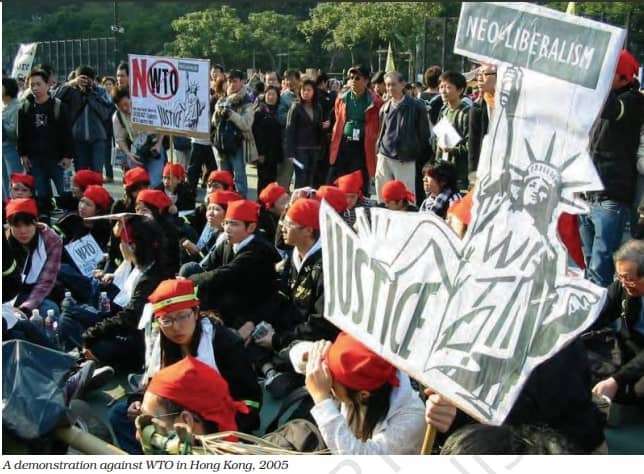
9. Influence of People’s Campaigns:
- Massive campaigns and representation by people’s organizations have proven influential in shaping decisions related to trade and investment at the WTO, demonstrating the power of grassroots movements in advocating for fair globalization.
10. Role of Citizens in Advocating for Fairness:
- Citizens also have a significant role to play in the fight for fair globalization, as demonstrated by the influence of people’s organizations in shaping policies and decisions at both national and international levels.
Summary
1. Understanding Globalization:
- Globalization refers to the rapid integration of countries through increased foreign trade and investment, with multinational corporations (MNCs) playing a significant role in this process.
2. Role of MNCs in Globalization:
- MNCs seek locations worldwide that offer cost-effective production opportunities, leading to the complex organization of production across countries.
3. Influence of Technology, Especially IT:
- Technology, particularly Information Technology (IT), has been instrumental in facilitating the organization of production across borders, contributing to the globalization phenomenon.
4. Facilitation through Trade and Investment Liberalization:
- The liberalization of trade and investment, achieved through the removal of barriers, has further facilitated globalization by promoting the free flow of goods, services, and capital across borders.
5. Pressure from WTO for Liberalization:
- At the international level, organizations like the World Trade Organization (WTO) exert pressure on developing countries to liberalize trade and investment policies, aligning with the broader goals of globalization.
6. Differential Impact of Globalization:
- While globalization has benefited affluent consumers and skilled producers, many small-scale producers and workers have faced challenges and suffered due to intensified competition in the global market.
7. Call for Fair Globalization:
- The concept of fair globalization emphasizes the need to create opportunities for all segments of society and ensure that the benefits of globalization are more equitably distributed.
8. Addressing Inequality in Globalization:
- Achieving fair globalization involves addressing inequalities and disparities by promoting inclusive policies that enable broader participation in the global economy, particularly among marginalized producers and workers.
9. Role of Policies in Ensuring Fairness:
- Governments and international organizations must adopt policies and interventions aimed at ensuring fair globalization and protecting the interests of all stakeholders, including small producers and workers.
10. Collective Responsibility for Shared Benefits:
- Fair globalization requires collective efforts from governments, organizations, and societies to ensure that the benefits of globalization are shared more equitably, fostering sustainable development and prosperity for all.
Next & Previous Topics of NCERT/CBSE Economics Class 10 Chapter 4: Globalisation and The Indian Economy
MCQs on NCERT Economics Class 10 Chapter 4 Topic – The Struggle for a Fair Globalisation Class 10
Here are top exam oriented mcq’s type questions on “The Struggle for a Fair Globalisation class 10” that you should prepare for your CBSE or state board exams:
Question 1. Globalisation benefits mostly:
A) Unskilled workers
B) Educated and skilled people
C) Farmers only
D) Rural poor
Answer: B
Question 2. Fair globalisation means:
A) Benefits only for rich
B) Equal opportunities for all
C) No trade
D) No investment
Answer: B
Question 3. Governments can ensure fair globalisation by:
A) Ignoring policies
B) Protecting interests of all citizens
C) Supporting only rich
D) Stopping trade
Answer: B
Question 4. Labour laws are important to:
A) Increase profits
B) Protect workers’ rights
C) Reduce wages
D) Increase taxes
Answer: B
Question 5. Small producers need support to:
A) Stop production
B) Compete globally
C) Reduce quality
D) Avoid trade
Answer: B
Question 6. Trade barriers can be used to:
A) Increase imports
B) Protect domestic industries
C) Stop production
D) Reduce exports
Answer: B
Question 7. WTO stands for:
A) World Trade Office
B) World Trade Organisation
C) World Transport Organisation
D) World Tax Organisation
Answer: B
Question 8. Governments can demand fair rules at:
A) UNO
B) WTO
C) IMF
D) RBI
Answer: B
Question 9. Developing countries can work together to:
A) Increase competition
B) Address unfair trade practices
C) Stop trade
D) Increase taxes
Answer: B
Question 10. People’s organisations influence:
A) Weather
B) Trade decisions
C) Agriculture only
D) Transport
Answer: B
Question 11. Citizens play a role in:
A) Ignoring policies
B) Promoting fair globalisation
C) Stopping trade
D) Reducing production
Answer: B
Question 12. Globalisation refers to:
A) Isolation
B) Integration of countries
C) Localisation
D) No trade
Answer: B
Question 13. MNCs aim to:
A) Increase cost
B) Find cheap production locations
C) Reduce trade
D) Stop production
Answer: B
Question 14. Technology helps globalisation by:
A) Reducing communication
B) Facilitating production across countries
C) Stopping trade
D) Increasing barriers
Answer: B
Question 15. Liberalisation means:
A) Increasing restrictions
B) Removing trade barriers
C) Stopping imports
D) Increasing taxes
Answer: B
Question 16. WTO pressures countries to:
A) Increase barriers
B) Liberalise trade
C) Stop exports
D) Reduce production
Answer: B
Question 17. Globalisation has benefited:
A) Only workers
B) Only farmers
C) Affluent consumers and skilled producers
D) Only rural areas
Answer: C
Question 18. Globalisation has negatively affected:
A) MNCs
B) Small producers and workers
C) Governments
D) Banks
Answer: B
Question 19. Fair globalisation aims to:
A) Increase inequality
B) Reduce inequality
C) Stop trade
D) Increase barriers
Answer: B
Question 20. Fair globalisation requires:
A) Individual effort only
B) Collective effort of governments and society
C) No policies
D) No trade
Answer: B