
The Third Order: Peasants, Free and Unfree Class 11 – Concept, MCQs & Notes PDF
Topic covered: The Third Order: Peasants, Free and Unfree class 11 notes and MCQs questions: The Three Orders (All single detail notes are exam-oriented).
We have discussed in-depth and exam-oriented pointers that can be asked in the board exam of class 11th about “The Third Order: Peasants, Free and Unfree“ from the NCERT history notes for class 11th chapter 4 “The Three Orders”.
Download the NCERT History for Class 11th Chapter 4 The Three Orders Notes PDF
Download the NCERT History for Class 11th Chapter 4 The Three Orders Notes PDF for a detailed and easy-to-understand explanation of medieval European society. These notes begin with an introduction to feudalism and explain how the feudal system developed in France and England. You will clearly understand the three orders of society, focusing on the second order, the nobility, their privileges, duties, and life on the manorial estate, including the role of knights in feudal warfare.
The chapter also explains the first order, the clergy, covering monks, the Church, and its deep influence on social life, education, and moral values. Equal attention is given to the third order, peasants, both free and unfree, with specific references to England and their everyday struggles. In addition, the notes discuss factors affecting social and economic relations, the emergence of a possible fourth order with new towns, townspeople, and cathedral towns, and the major crisis of the fourteenth century, marked by social unrest and political changes. These NCERT-based notes are ideal for concept clarity, revision, and exam preparation.
The Third Order: Peasants, Free and Unfree
1. The Third Order: Cultivators:
- The majority of people sustained the first two orders.
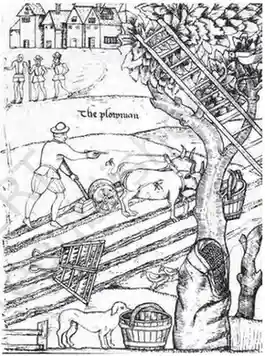
- Cultivators formed the third order of society.
2. Types of Cultivators:
- Cultivators were of two kinds:
- Free peasants
- Serfs (from the verb to serve)
3. Free Peasants:
- Held their farms as tenants of the lord.
- Male peasants had to provide military service for at least forty days every year.
4. Labour Services by Peasant Families:
- Peasant families worked on the lord’s estate for certain days each week.
- Usually three days, often more.
- Output from this work was called labour-rent.
- Labour-rent went directly to the lord.
5. Additional Unpaid Labour:
- Peasants could be forced to perform unpaid services, such as:
- Digging ditches
- Gathering firewood
- Building fences
- Repairing roads and buildings
6. Role of Women and Children:
- Women and children performed supporting tasks.
- Their work included:
- Spinning thread
- Weaving cloth
- Making candles
- Pressing grapes to prepare wine for the lord
7. Taxation on Peasants:
- A direct tax called ‘taille’ was imposed by kings.
- Clergy and nobles were exempted from paying this tax.
8. Serfs:
- Cultivated land that belonged to the lord.
- Had to give most of the produce to the lord.
- Also worked on the lord’s exclusive land.
9. Restrictions on Serfs:
- Received no wages.
- Could not leave the estate without the lord’s permission.
10. Lord’s Monopolies Over Serfs:
- Serfs had to:
- Use the lord’s mill to grind flour
- Use the lord’s oven to bake bread
- Use the lord’s wine-press to make wine and beer
11. Control Over Marriage:
- The lord could decide a serf’s marriage.
- Or grant permission to marry after payment of a fee.
Next & Previous Topics of NCERT/CBSE History Class 11 Chapter 4: The Three Orders
MCQs on NCERT History Class 11 Chapter 4 Topic – The Third Order: Peasants, Free and Unfree Class 11
Here are the top exam-oriented MCQ-type questions on “The Third Order: Peasants, Free and Unfree Class 11” that you should prepare for your CBSE or state board exams:
Question 1. The majority of people in feudal society mainly sustained:
a) Only the king
b) The first two orders
c) The nobility alone
d) The Church alone
Answer: b) The first two orders
Question 2. Cultivators in medieval Europe were divided into:
a) Lords and vassals
b) Knights and soldiers
c) Free peasants and serfs
d) Traders and artisans
Answer: c) Free peasants and serfs
Question 3. The term ‘serf’ is derived from a verb meaning:
a) To obey
b) To cultivate
c) To serve
d) To rent
Answer: c) To serve
Question 4. Free peasants held their land as:
a) Owners
b) Slaves
c) Tenants of the lord
d) Royal grants
Answer: c) Tenants of the lord
Question 5. Free peasant men were required to provide military service for:
a) 20 days a year
b) 30 days a year
c) At least 40 days a year
d) 60 days a year
Answer: c) At least 40 days a year
Question 6. Peasant families usually worked on the lord’s estate for how many days a week?
a) One
b) Two
c) Three
d) Five
Answer: c) Three
Question 7. The produce from labour done on the lord’s land was called:
a) Rent
b) Wage
c) Labour-rent
d) Tax
Answer: c) Labour-rent
Question 8. Labour-rent was given directly to the:
a) King
b) Church
c) Lord
d) Village council
Answer: c) Lord
Question 9. Which of the following was an unpaid labour service?
a) Trading goods
b) Digging ditches
c) Selling crops
d) Paying tax
Answer: b) Digging ditches
Question 10. Repairing roads and buildings was an example of:
a) Wage labour
b) Military duty
c) Unpaid labour service
d) Tax payment
Answer: c) Unpaid labour service
Question 11. Besides field work, women and children were engaged in:
a) Military service
b) Administrative work
c) Household and productive tasks
d) Trade
Answer: c) Household and productive tasks
Question 12. Which activity was performed by women and children?
a) Minting coins
b) Weaving cloth
c) Collecting taxes
d) Guarding estates
Answer: b) Weaving cloth
Question 13. Grapes were pressed mainly to prepare:
a) Juice
b) Oil
c) Wine
d) Vinegar
Answer: c) Wine
Question 14. The direct tax imposed on peasants was called:
a) Tithe
b) Rent
c) Taille
d) Levy
Answer: c) Taille
Question 15. The ‘taille’ was imposed by:
a) Lords
b) Bishops
c) Kings
d) Knights
Answer: c) Kings
Question 16. Who were exempted from paying the ‘taille’?
a) Merchants
b) Serfs
c) Clergy and nobles
d) Artisans
Answer: c) Clergy and nobles
Question 17. The land cultivated by serfs legally belonged to:
a) The village
b) The king
c) The lord
d) The Church
Answer: c) The lord
Question 18. A large portion of the serf’s produce had to be given to:
a) The king
b) The Church
c) The lord
d) The market
Answer: c) The lord
Question 19. Serfs also worked on land that belonged exclusively to:
a) The Church
b) The village
c) The lord
d) The king
Answer: c) The lord
Question 20. Serfs were paid wages for their labour:
a) Always
b) Sometimes
c) Rarely
d) Never
Answer: d) Never
Question 21. A serf could leave the estate only:
a) During festivals
b) After harvest
c) With the lord’s permission
d) After paying tax
Answer: c) With the lord’s permission
Question 22. The lord’s monopolies mainly affected:
a) Free peasants
b) Merchants
c) Serfs
d) Nobles
Answer: c) Serfs
Question 23. Serfs could grind flour only at:
a) Village mill
b) Church mill
c) Lord’s mill
d) Royal mill
Answer: c) Lord’s mill
Question 24. Bread could be baked only in:
a) Private ovens
b) Community ovens
c) Lord’s oven
d) Church ovens
Answer: c) Lord’s oven
Question 25. Wine and beer had to be made using:
a) Village presses
b) Personal presses
c) Lord’s wine-presses
d) Church presses
Answer: c) Lord’s wine-presses
Question 26. The lord had the right to decide:
a) Crop prices
b) Serf marriages
c) Church taxes
d) Military laws
Answer: b) Serf marriages
Question 27. A serf could marry of his choice only after:
a) Church approval
b) Royal approval
c) Payment of a fee
d) Military service
Answer: c) Payment of a fee
Question 28. Which feature best distinguishes serfs from free peasants?
a) Tax payment
b) Military service
c) Lack of freedom to leave the estate
d) Agricultural work
Answer: c) Lack of freedom to leave the estate
Question 29. Free peasants differed from serfs because free peasants:
a) Worked less
b) Owned land fully
c) Held land as tenants
d) Paid no rent
Answer: c) Held land as tenants
Question 30. The system described in the passage reflects:
a) Capitalism
b) Industrialism
c) Feudalism
d) Socialism
Answer: c) Feudalism
Question 31. Labour-rent refers to:
a) Cash paid to the lord
b) Crops sold in the market
c) Produce from unpaid labour
d) Royal tax
Answer: c) Produce from unpaid labour
Question 32. Building fences and gathering firewood were examples of:
a) Paid labour
b) Domestic work
c) Unpaid labour services
d) Military duty
Answer: c) Unpaid labour services
Question 33. The phrase ‘vast majority of people’ refers mainly to:
a) Clergy
b) Nobles
c) Cultivators
d) Knights
Answer: c) Cultivators
Question 34. Serfs were bound to:
a) The village council
b) The Church
c) The lord’s estate
d) The king’s court
Answer: c) The lord’s estate
Question 35. Which right was completely denied to serfs?
a) Farming
b) Marriage
c) Free movement
d) Family life
Answer: c) Free movement