
The Manorial Estate Class 11 – Concept, MCQs & Notes PDF
Topic covered: The Manorial Estate class 11 notes and MCQs questions: The Three Orders (All single detail notes are exam-oriented).
We have discussed in-depth and exam-oriented pointers that can be asked in the board exam of class 11th about “The Manorial Estate“ from the NCERT history notes for class 11th chapter 4 “The Three Orders”.
Download the NCERT History for Class 11th Chapter 4 The Three Orders Notes PDF
Download the NCERT History for Class 11th Chapter 4 The Three Orders Notes PDF for a detailed and easy-to-understand explanation of medieval European society. These notes begin with an introduction to feudalism and explain how the feudal system developed in France and England. You will clearly understand the three orders of society, focusing on the second order, the nobility, their privileges, duties, and life on the manorial estate, including the role of knights in feudal warfare.
The chapter also explains the first order, the clergy, covering monks, the Church, and its deep influence on social life, education, and moral values. Equal attention is given to the third order, peasants, both free and unfree, with specific references to England and their everyday struggles. In addition, the notes discuss factors affecting social and economic relations, the emergence of a possible fourth order with new towns, townspeople, and cathedral towns, and the major crisis of the fourteenth century, marked by social unrest and political changes. These NCERT-based notes are ideal for concept clarity, revision, and exam preparation.
The Manorial Estate
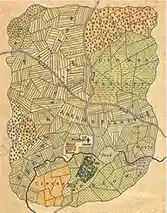
1. Manor-House and Control of Villages:
- Every lord had his own manor-house.
- Lords controlled villages where peasants lived.
- Some lords controlled hundreds of villages.
2. Size of Manorial Estates:
- A small manorial estate had about a dozen families.
- Larger estates included fifty or sixty families.
3. Self-Contained Economic Unit:
- Most daily needs were met within the estate.
- Grain was grown in the fields.
4. Role of Artisans:
- Blacksmiths and carpenters maintained implements and repaired weapons.
- Stonemasons looked after the lord’s buildings.
5. Work of Women and Children:
- Women spun and wove fabric.
- Children worked in the lord’s wine-presses.
6. Woodlands, Pastures, and Hunting:
- Estates had extensive woodlands and forests.
- Lords used forests for hunting.
- Pastures were used for grazing cattle and horses.
7. Religious and Defensive Structures:
- Each estate had a church.
- A castle was built for defence.
8. Development of Castles:
- From the thirteenth century, some castles were enlarged.
- Castles became residences for a knight’s family.
- In England, castles were rare before the Norman Conquest.
- Under feudalism, castles developed as:
- Centres of political administration
- Centres of military power
9. Limits of Manorial Self-Sufficiency:
- Manors were not completely self-sufficient.
- Salt, millstones, and metalware were obtained from outside.
10. Luxury Goods and External Trade:
- Lords seeking a luxurious lifestyle needed outside goods.
- Items obtained externally included:
- Rich furnishings
- Musical instruments
- Ornaments not produced locally
Next & Previous Topics of NCERT/CBSE History Class 11 Chapter 4: The Three Orders
MCQs on NCERT History Class 11 Chapter 4 Topic – The Manorial Estate Class 11
Here are the top exam-oriented MCQ-type questions on “The Manorial Estate Class 11” that you should prepare for your CBSE or state board exams:
Question 1. The residence of a lord on a manorial estate was called the:
a) Castle only
b) Manor-house
c) Villa
d) Court
Answer: b) Manor-house
Question 2. Lords controlled villages where the following group lived:
a) Knights
b) Merchants
c) Peasants
d) Priests
Answer: c) Peasants
Question 3. Some lords controlled how many villages?
a) A few villages only
b) Around ten villages
c) Hundreds of villages
d) Only one village
Answer: c) Hundreds of villages
Question 4. A small manorial estate usually contained:
a) Two or three families
b) A dozen families
c) Fifty families
d) One hundred families
Answer: b) A dozen families
Question 5. Larger manorial estates could include:
a) Twenty families
b) Thirty families
c) Fifty or sixty families
d) Over two hundred families
Answer: c) Fifty or sixty families
Question 6. Which of the following was grown in the fields of the estate?
a) Cotton
b) Sugarcane
c) Grain
d) Spices
Answer: c) Grain
Question 7. Blacksmiths and carpenters on the estate were responsible for:
a) Teaching peasants
b) Repairing weapons and implements
c) Collecting taxes
d) Hunting
Answer: b) Repairing weapons and implements
Question 8. Stonemasons mainly looked after:
a) Weapons
b) Crops
c) Buildings
d) Horses
Answer: c) Buildings
Question 9. Which activity was performed by women on the estate?
a) Hunting
b) Weapon repair
c) Spinning and weaving fabric
d) Military training
Answer: c) Spinning and weaving fabric
Question 10. Children on the estate worked in:
a) Fields
b) Forests
c) Wine-presses
d) Churches
Answer: c) Wine-presses
Question 11. Extensive woodlands and forests on the estate were mainly used for:
a) Farming
b) Trade
c) Hunting
d) Mining
Answer: c) Hunting
Question 12. Pastures on the estate were used for grazing:
a) Sheep only
b) Cattle and horses
c) Goats only
d) Camels
Answer: b) Cattle and horses
Question 13. Which religious structure was present on the estate?
a) Mosque
b) Monastery
c) Church
d) Shrine
Answer: c) Church
Question 14. A castle on the estate was mainly meant for:
a) Trade
b) Education
c) Defence
d) Worship
Answer: c) Defence
Question 15. From which century were some castles enlarged to serve as residences?
a) Eleventh century
b) Twelfth century
c) Thirteenth century
d) Fourteenth century
Answer: c) Thirteenth century
Question 16. Enlarged castles were used as residences for:
a) Kings only
b) Peasants
c) Knights’ families
d) Priests
Answer: c) Knights’ families
Question 17. Before the Norman Conquest, castles in England were:
a) Very common
b) Partially common
c) Practically unknown
d) Used only by kings
Answer: c) Practically unknown
Question 18. After the Norman Conquest, castles developed mainly as centres of:
a) Trade and religion
b) Agriculture and craft
c) Political administration and military power
d) Education and culture
Answer: c) Political administration and military power
Question 19. The manor could not be completely self-sufficient because:
a) Food was imported
b) Labour was insufficient
c) Some goods had to be obtained from outside
d) Land was limited
Answer: c) Some goods had to be obtained from outside
Question 20. Which of the following items had to be obtained from outside the manor?
a) Grain
b) Fabric
c) Salt
d) Wine
Answer: c) Salt
Question 21. Which item was NOT produced within the manor?
a) Millstones
b) Grain
c) Fabric
d) Wine
Answer: a) Millstones
Question 22. Metalware used on the estate was:
a) Produced locally
b) Imported from outside
c) Unnecessary
d) Brought by peasants
Answer: b) Imported from outside
Question 23. Lords who wanted a luxurious lifestyle needed to:
a) Increase taxes
b) Depend only on the manor
c) Obtain goods from other places
d) Reduce expenses
Answer: c) Obtain goods from other places
Question 24. Which of the following items was NOT locally produced on the estate?
a) Rich furnishings
b) Grain
c) Fabric
d) Wine
Answer: a) Rich furnishings
Question 25. Musical instruments owned by wealthy lords were:
a) Made by peasants
b) Locally available
c) Obtained from outside regions
d) Imported by the church
Answer: c) Obtained from outside regions
Question 26. Ornaments used by lords indicate:
a) Self-sufficiency of manors
b) Poverty of estates
c) Trade beyond the manor
d) Decline of feudalism
Answer: c) Trade beyond the manor
Question 27. The manorial estate was mainly designed to:
a) Support urban life
b) Serve religious purposes
c) Meet daily needs locally
d) Promote overseas trade
Answer: c) Meet daily needs locally
Question 28. Which statement best describes the manorial system?
a) Entirely dependent on cities
b) Completely self-sufficient
c) Largely self-sufficient but not fully
d) Dependent only on trade
Answer: c) Largely self-sufficient but not fully
Question 29. The presence of craftsmen on the estate shows:
a) Decline of agriculture
b) Importance of local production
c) Growth of cities
d) End of feudalism
Answer: b) Importance of local production
Question 30. The development of castles under feudalism highlights the link between:
a) Religion and trade
b) Agriculture and art
c) Political power and military strength
d) Education and culture
Answer: c) Political power and military strength