
Social, Political and Military Organisation Class 11 – Concept, MCQs & Notes PDF
Topic covered: Social, Political and Military Organisation class 11 notes and MCQs questions: Nomadic Empires (All single detail notes are exam-oriented).
We have discussed in-depth and exam-oriented pointers that can be asked in the board exam of class 11th about “Social, Political and Military Organisation“ from the NCERT history notes for class 11th chapter 3 “Nomadic Empires”.
Download the NCERT History for Class 11th Chapter 3 Nomadic Empires Notes PDF
Class 11 History Chapter 3 Nomadic Empires is one of the most important chapters in the NCERT syllabus, especially for students preparing for school exams and competitive exams. This chapter explains how nomadic societies like the Mongols built powerful empires, their social organisation, military strategies, and administrative systems.
If you are looking to download the NCERT History for Class 11th Chapter 3 Nomadic Empires Notes PDF, this page gives you exam-oriented, easy-to-revise notes based strictly on the NCERT textbook.
Social, Political and Military Organisation
1. Composition of the Mongol Army:
- All able-bodied adult males among the Mongols bore arms.
- The army was formed whenever the need arose.
- Unification of tribes introduced diverse groups into the army.
- The army became a heterogeneous body of people.
2. Inclusion of Different Groups:
- Turkic Uighurs joined willingly after accepting Mongol authority.
- Defeated groups like the Kereyits were also absorbed.
- Earlier hostility did not prevent inclusion in the confederacy.
3. Erasure of Tribal Identities:
- Genghis Khan worked to eliminate old tribal identities.
- Members of different tribes were mixed deliberately.
- Tribal loyalties were replaced with loyalty to the Khan.
4. Decimal Military Organisation:
- Army organised into units of 10, 100, 1,000 and 10,000 soldiers.
- Earlier, clans and tribes coexisted within these units.
- Genghis Khan abolished this practice.
5. Formation of New Military Units:
- Old tribal groups were broken up.
- Members were redistributed into new units.
- Movement without permission invited harsh punishment.
6. Tuman and New Social Order:
- The tuman consisted of about 10,000 soldiers.
- Included people from many clans and tribes.
- Created a new social order based on service to Genghis Khan.
7. Command Structure:
- New military units served under Genghis Khan’s four sons.
- Specially chosen commanders were called noyan.
8. Loyal Followers and New Aristocracy:
- Loyal followers were publicly honoured.
- Some were declared blood-brothers (anda).
- Others were ranked as bondsmen (naukar).
- Status depended on closeness to the Great Khan.
- Old clan chieftains lost their privileges.
9. Administration of the Empire: Ulus System:
- Governance was assigned to Genghis Khan’s four sons.
- Their territories were called ulus.
- Ulus did not originally mean fixed territories.
- Frontiers remained fluid during Genghis Khan’s lifetime.
10. Distribution of Territories among Sons:
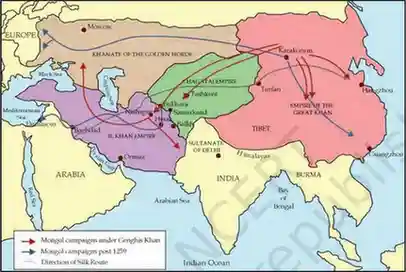
- Jochi received the Russian steppes.
- His territory extended as far as his horses could roam.
- Chaghatai received Transoxiana and lands north of the Pamirs.
- Ogodei was designated successor and ruled from Karakorum.
- Toluy received the ancestral lands of Mongolia.
11. Collective Rule and Quriltai:
- Genghis Khan envisaged collective rule by his sons.
- Military contingents (tama) were placed in each ulus.
- Decisions were taken collectively at quriltai assemblies.
- Matters included campaigns, plunder, pastures and succession.
12. Courier System (Yam):
- A rapid courier system connected distant regions.
- Fresh horses and riders were stationed at regular intervals.
- Nomads contributed one-tenth of their herd for maintenance.
- This levy was called the qubcur tax.
13. Impact of the Courier System:
- The system was refined after Genghis Khan’s death.
- Speed and reliability amazed travellers.
- Helped Great Khans monitor distant regions.
14. Impact on Conquered Populations:
- Conquered people felt little affinity with Mongol rulers.
- Cities were destroyed and agriculture damaged.
- Trade and handicrafts were disrupted.
- Large numbers were killed or enslaved.
15. Ecological Consequences:
- Qanats in Iran fell into disrepair.
- Desertification followed.
- Parts of Khurasan never recovered.
16. Pax Mongolica and Trade Expansion:
- Europe and China became territorially linked.
- Trade along the Silk Route expanded.
- Routes extended to Mongolia and Karakorum.
- Commerce and travel reached their peak.
17. Travel and Trade Regulations:
- Travellers carried passes called paiza or gerege.
- Traders paid the baj tax.
- Both acknowledged Mongol authority.
18. Nomadic–Sedentary Tensions:
- Early Mongol leaders advocated killing peasants.
- Fields were proposed to be converted into pasture.
- Over time, attitudes changed.
19. Protection of Peasantry:
- Qubilai Khan protected peasants and cities.
- Ghazan Khan warned against pillaging peasants.
- Sedentary values gained influence.
20. Role of Civil Administrators:
- Administrators were recruited from conquered societies.
- Chinese served in Iran; Persians served in China.
- They helped integrate distant regions.
- Their role softened nomadic harshness.
21. Influential Administrators:
- Yeh-lu Ch’u-ts’ai restrained Ogodei’s excesses.
- The Juwaini family advised in Iran.
- Rashiduddin drafted Ghazan Khan’s speech.
22. Emergence of Separate Dynasties:
- By mid-13th century, ulus became territorial states.
- Succession struggles weakened shared rule.
- Toluyids ruled China and Iran.
- Jochids ruled the Russian steppes.
- Chaghatai’s successors ruled Transoxiana.
23. Persistence of Nomadic Traditions:
- Nomadic traditions lasted longest in Central Asia and Russia.
- Steppe societies retained older ways.
24. Changing Memory of Genghis Khan:
- Later chronicles exaggerated Mongol violence.
- Il-Khanid histories overstated killings.
- Relief was expressed that mass killings had ended.
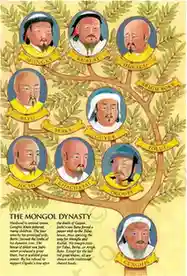
25. The Yasa: Law of Genghis Khan:
- Initially called yasaq meaning law or decree.
- Concerned administration, army, hunt and postal system.
- Later referred to as a legal code.
26. Purpose of the Yasa:
- Helped preserve Mongol identity.
- United Mongols around shared beliefs.
- Claimed Genghis Khan as a lawgiver.
- Strengthened authority over subjects.
27. Ideological Significance:
- The yasa legitimised Mongol rule.
- Enabled dominance over sedentary societies.
- Played a key role in building a universal empire.
Ghazan Khan’s Speech
1. Ghazan Khan and His Reign:
- Ghazan Khan ruled from 1295 to 1304.
- He was the first Il-Khanid ruler to convert to Islam.
2. Context of the Speech:
- The speech was addressed to Mongol-Turkish nomad commanders.
- It was probably drafted by his Persian wazir, Rashiduddin.
- The speech was included in Rashiduddin’s letters.
3. Ghazan Khan’s Position on Peasantry:
- Ghazan Khan stated he was not siding with the Persian peasantry.
- He claimed he had the power to pillage them if required.
- He acknowledged his authority to lead such actions.
4. Warning Against Pillage:
- Ghazan Khan warned commanders against indiscriminate pillaging.
- He stressed the need to ensure future supplies of grain and food.
- He argued that destroying crops would harm future survival.
5. Discipline of Mongol Commanders:
- Ghazan Khan declared he would be harsh with undisciplined commanders.
- He stated that the commanders “must be taught reason.”
- Authority was used to control nomadic excesses.
6. Protection of Agricultural Resources:
- Taking oxen, seeds and trampling crops was condemned.
- Such actions were shown to be harmful in the long term.
- Agricultural production was linked to future stability.
7. Differentiation Among Peasantry:
- Ghazan Khan distinguished between obedient peasants and rebels.
- Obedient peasantry were to be treated differently from rebels.
8. Significance of the Speech:
- The speech reflected concern for long-term revenue and food supply.
- It indicated a shift towards protecting settled agricultural society.
Yasa
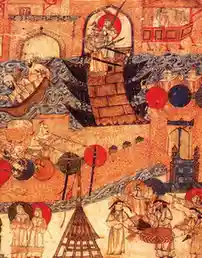
1. Conquest of Bukhara (1221):
- In 1221, Genghis Khan conquered Bukhara.
- After the conquest, he assembled rich Muslim residents at the festival ground.
2. Genghis Khan’s Address to Muslims:
- Genghis Khan admonished the assembled Muslims.
- He called them sinners.
- He warned them to compensate for their sins by surrendering hidden wealth.
3. Public and Memorable Nature of the Event:
- The episode was dramatic in nature.
- It was painted and visually recorded.
- People remembered the incident for a long time afterwards.
4. Visit of ‘Abdullah Khan in the Late Sixteenth Century:
- In the late sixteenth century, ‘Abdullah Khan visited the same festival ground in Bukhara.
- He was a distant descendant of Jochi, Genghis Khan’s eldest son.
5. Contrast with Genghis Khan’s Actions:
- Unlike Genghis Khan, Abdullah Khan went there to perform holiday prayers.
- His action reflected Muslim religious practice.
6. Chronicler’s Account:
- Hafiz-i Tanish was the chronicler of ‘Abdullah Khan.
- He reported the act as an example of Muslim piety.
7. Reference to the Yasa of Genghis Khan:
- Hafiz-i Tanish described the prayer as being “according to the yasa of Genghis Khan.”
- This comment linked Islamic practice with Genghis Khan’s yasa.
Conclusion: Situating Genghis Khan and the Mongols in World History
1. Dominant Modern Image of Genghis Khan:
- Today, Genghis Khan is commonly remembered as a conqueror and destroyer of cities.
- He is associated with large-scale killings and violence.
2. Contemporary Fear among Sedentary Societies:
- Thirteenth-century residents of towns in China, Iran and eastern Europe viewed the Mongols with fear and distaste.
- The steppe hordes were seen as threatening and destructive.
3. Mongol Perception of Genghis Khan:
- For the Mongols, Genghis Khan was regarded as the greatest leader of all time.
- He united the Mongol people.
- He ended prolonged tribal conflicts.
- He freed the Mongols from Chinese exploitation.
4. Achievements Credited to Genghis Khan by the Mongols:
- He brought prosperity to the Mongol people.
- He created a vast transcontinental empire.
- He restored trade routes and markets.
- These routes attracted distant travellers such as Marco Polo.
5. Importance of Multiple Historical Perspectives:
- The contrasting images of Genghis Khan highlight how one dominant perspective can erase others.
- Historical understanding must go beyond the viewpoint of defeated sedentary populations.
6. Scale and Diversity of the Mongol Empire:
- The Mongol dominion in the thirteenth century was vast in size.
- It included a highly diverse population and multiple faiths.
7. Religious Diversity among Mongol Rulers:
- Mongol Khans followed different religions: Shamanism, Buddhism, Christianity and later Islam.
- Personal religious beliefs did not influence state policy.
8. Administrative and Military Inclusiveness:
- Administrators were recruited from different ethnic and religious groups.
- Armed contingents also came from diverse communities.
- The Mongol regime was multiethnic, multilingual and multi-religious.
9. Uniqueness of Mongol Pluralism:
- The Mongol state was not threatened by its pluralistic nature.
- Such tolerance was highly unusual for the period.
10. Historical Influence of the Mongol Model:
- Historians are studying Mongol governance as an ideological model.
- Later regimes, such as the Mughals of India, drew inspiration from Mongol practices.
11. Limitations of Historical Sources:
- Documentation on nomadic regimes like the Mongols is limited.
- It is difficult to fully understand the inspiration behind the Mongol confederation.
12. Enduring Influence of Genghis Khan:
- Although the empire changed in different regions, the founder’s inspiration remained powerful.
- Genghis Khan’s legacy continued to shape political ambitions.
13. Timur and Genghis Khanid Legitimacy:
- Timur hesitated to declare himself monarch because he lacked Genghis Khanid descent.
- He later claimed legitimacy as a son-in-law (guregen) of the Genghis Khanid family.
14. Modern Mongolian National Identity:
- After Soviet control, Mongolia is rebuilding its national identity.
- Genghis Khan is celebrated as a national hero.
- His achievements are publicly honoured and remembered with pride.
15. Genghis Khan as a Symbol of the Future:
- Genghis Khan has re-emerged as an iconic figure in modern Mongolia.
- His memory is used to mobilise national pride.
- He plays a role in shaping Mongolia’s future identity.
Next & Previous Topics of NCERT/CBSE History Class 11 Chapter 3: Nomadic Empires
| Topics No. | Topics Name |
|---|---|
| 1 | Social and Political Background |
| 2 | The Career of Genghis Khan |
| 3 | The Mongols after Genghis Khan |
| 4 | Social, Political and Military Organisation |
MCQs on NCERT History Class 11 Chapter 3 Topic – Social, Political and Military Organisation Class 11
Here are the top exam-oriented MCQ-type questions on “Social, Political and Military Organisation Class 11” that you should prepare for your CBSE or state board exams:
Question 1. Among the Mongols, who constituted the armed forces when required?
A. Professional soldiers
B. Slave warriors
C. Able-bodied adult males
D. Tribal chiefs only
Answer: C
Question 2. The Mongol army became heterogeneous mainly due to:
A. Trade relations
B. Religious conversions
C. Unification of tribes and conquered peoples
D. Foreign mercenaries
Answer: C
Question 3. Which group accepted Genghis Khan’s authority willingly?
A. Kereyits
B. Turkic Uighurs
C. Persians
D. Chinese peasants
Answer: B
Question 4. The Kereyits were included in the Mongol confederacy despite:
A. Religious differences
B. Earlier hostility
C. Cultural isolation
D. Economic rivalry
Answer: B
Question 5. Genghis Khan attempted to erase old tribal identities to:
A. Promote clan hierarchy
B. Strengthen unity and discipline
C. Encourage religious uniformity
D. Increase trade
Answer: B
Question 6. The Mongol army was organised according to:
A. Caste system
B. Provincial divisions
C. Decimal system
D. Clan hierarchy
Answer: C
Question 7. Which of the following was NOT a unit in the Mongol decimal system?
A. 10
B. 100
C. 1,000
D. 5,000
Answer: D
Question 8. The largest Mongol military unit of about 10,000 soldiers was called:
A. Ulus
B. Noyan
C. Tuman
D. Tama
Answer: C
Question 9. Movement between military units without permission was punished with:
A. Fine
B. Demotion
C. Harsh punishment
D. Exile
Answer: C
Question 10. Mongol army commanders were known as:
A. Anda
B. Noyan
C. Naukar
D. Ulama
Answer: B
Question 11. ‘Anda’ referred to:
A. Slave soldiers
B. Blood-brothers of Genghis Khan
C. Traders
D. Tax collectors
Answer: B
Question 12. ‘Naukar’ were:
A. Clan chiefs
B. Foreign administrators
C. Bondsmen loyal to Genghis Khan
D. Prisoners of war
Answer: C
Question 13. The new Mongol aristocracy derived its status from:
A. Clan lineage
B. Land ownership
C. Relationship with the Great Khan
D. Military rank alone
Answer: C
Question 14. The term ‘ulus’ originally meant:
A. Fixed territory
B. Administrative capital
C. Political jurisdiction without fixed borders
D. Military unit
Answer: C
Question 15. Which son of Genghis Khan received the Russian steppes?
A. Ogodei
B. Toluy
C. Chaghatai
D. Jochi
Answer: D
Question 16. Chaghatai was given control over:
A. Mongolia
B. Iran
C. Transoxianian steppe
D. China
Answer: C
Question 17. Who was designated as the successor of Genghis Khan?
A. Jochi
B. Chaghatai
C. Ogodei
D. Toluy
Answer: C
Question 18. Ogodei established his capital at:
A. Beijing
B. Samarkand
C. Karakorum
D. Bukhara
Answer: C
Question 19. Toluy received:
A. China
B. Iran
C. Ancestral lands of Mongolia
D. Russian steppes
Answer: C
Question 20. The assembly of chieftains was known as:
A. Yam
B. Ulus
C. Quriltai
D. Paiza
Answer: C
Question 21. The Mongol courier system was called:
A. Baj
B. Qubcur
C. Yam
D. Yasa
Answer: C
Question 22. The tax paid by nomads to maintain the courier system was:
A. Baj
B. Qubcur
C. Zakat
D. Tribute
Answer: B
Question 23. Pax Mongolica refers to:
A. Mongol law code
B. Religious harmony
C. Peace under Mongol rule
D. Decline of warfare
Answer: C
Question 24. The travel pass issued for safe conduct was called:
A. Baj
B. Paiza
C. Tuman
D. Ulus
Answer: B
Question 25. Traders paid which tax for protection and trade?
A. Qubcur
B. Baj
C. Yasaq
D. Kharaj
Answer: B
Question 26. Underground irrigation canals damaged during Mongol invasions were known as:
A. Yam
B. Qanats
C. Ulus
D. Paiza
Answer: B
Question 27. Which Mongol ruler appeared as protector of peasants and cities?
A. Ogodei
B. Genghis Khan
C. Qubilai Khan
D. Toluy
Answer: C
Question 28. Ghazan Khan ruled over:
A. China
B. Mongolia
C. Iran
D. Central Asia
Answer: C
Question 29. Ghazan Khan advised Mongols to avoid:
A. Trade
B. Taxation
C. Pillaging peasantry
D. Religious tolerance
Answer: C
Question 30. Which Chinese minister moderated Ogodei’s harsh policies?
A. Rashiduddin
B. Yeh-lu Ch’u-ts’ai
C. Hafiz-i-Tanish
D. Marco Polo
Answer: B
Question 31. Rashiduddin served as:
A. Military general
B. Persian wazir
C. Mongol prince
D. Chronicler only
Answer: B
Question 32. By the mid-13th century, ulus came to signify:
A. Nomadic camp
B. Military unit
C. Territorial dominion
D. Religious centre
Answer: C
Question 33. The Golden Horde ruled over:
A. China
B. Iran
C. Russian steppes
D. Mongolia
Answer: C
Question 34. The Yuan and Il-Khanid dynasties were ruled by descendants of:
A. Jochi
B. Ogodei
C. Toluy
D. Chaghatai
Answer: C
Question 35. Nomadic traditions survived longest among the descendants of:
A. Ogodei
B. Toluy
C. Chaghatai
D. Qubilai
Answer: C
Question 36. The Mongol law code associated with Genghis Khan was called:
A. Baj
B. Yam
C. Yasa
D. Ulus
Answer: C
Question 37. The original term ‘yasaq’ meant:
A. Religious doctrine
B. Law or decree
C. Custom only
D. Moral teaching
Answer: B
Question 38. The yasa helped the Mongols mainly to:
A. Convert subjects
B. Maintain ethnic identity
C. Promote agriculture
D. End warfare
Answer: B
Question 39. Mongol rulers followed which policy regarding religion?
A. Religious uniformity
B. Forced conversion
C. Religious tolerance
D. Shamanism only
Answer: C
Question 40. Timur claimed legitimacy by presenting himself as:
A. Descendant of Ogodei
B. Son of Toluy
C. Son-in-law of Genghis Khan’s family
D. Successor of Qubilai Khan
Answer: C