
Late Antiquity Class 11 – Concept, MCQs & Notes PDF
Topic covered: Late Antiquity class 11 notes and MCQs questions: An Empire Across Three Continents (All single detail notes are exam-oriented).
We have discussed in-depth and exam-oriented pointers that can be asked in the board exam of class 11th about “Late Antiquity“ from the NCERT history notes for class 11th chapter 2 “An Empire Across Three Continents”.
Download the NCERT History for Class 11th Chapter 2 An Empire Across Three Continents Notes PDF
NCERT History Class 11 Chapter 2 notes are prepared to help students study more effectively and revise faster. This chapter, An Empire Across Three Continents, introduces to the rise and expansion of a powerful empire that spread across Asia, Europe, and Africa, shaping political, cultural, and administrative systems. This chapter plays an important role in building a strong foundation in Class 11 History.
At E-book NCERT, the Class 11 History Chapter 2 notes are created to support focused and exam-oriented study. Students can download the NCERT History notes PDF anytime for quick revision and better understanding. This chapter explores the growth of a vast empire, its administration, economy, military organisation, and cultural integration across three continents. It also discusses important archaeological and literary sources that help us understand how such empires functioned and influenced the ancient world.
Late Antiquity
1. Meaning of Late Antiquity:
- Late antiquity refers to the fourth to seventh centuries.
- This period marks the final phase in the evolution and breakup of the Roman Empire.
- The fourth century witnessed major cultural and economic changes.
2. Religious Transformations:
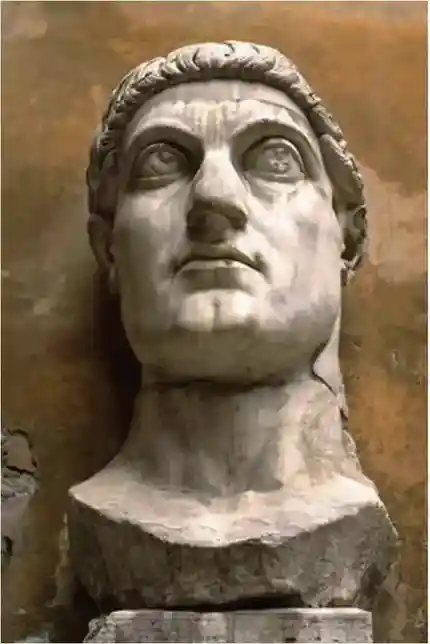
- Emperor Constantine made Christianity the official religion.
- The rise of Islam occurred in the seventh century.
- Traditional Greek and Roman religion was polytheistic with multiple cults and deities.
- Judaism was diverse and not a single uniform tradition.
- Christianisation in the fourth and fifth centuries was slow and complex.
- Polytheism persisted longer in the western provinces.
- Bishops led efforts to enforce stricter Christian beliefs and practices.
- Boundaries between religions were fluid in the early fourth century.
3. Administrative and Military Reforms:
- Emperor Diocletian abandoned territories with low strategic or economic value.
- He fortified frontiers and reorganised provincial boundaries.
- Civil and military functions were separated.
- Military commanders (duces) gained greater autonomy.
- Constantine strengthened these reforms and added new ones.
4. Monetary Innovations:
- Constantine introduced the solidus, a 4.5-gram pure gold coin.
- The solidus continued in use even after the fall of the Roman Empire.
- Solidi were minted on a massive scale and circulated in millions.
5. Creation of a Second Capital:
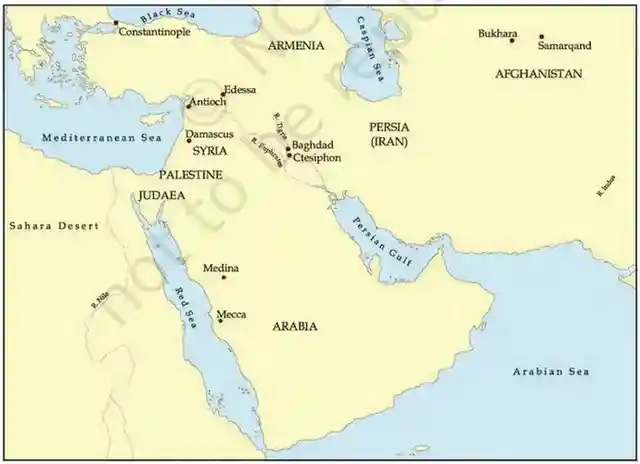
- Constantine established Constantinople as a new capital.
- The city was surrounded on three sides by the sea.
- A new senate was created for Constantinople, expanding the governing class.
6. Economic Growth and Prosperity:
- Monetary stability and population growth boosted economic activity.
- Archaeology shows investment in rural estates and industrial setups like oil presses, glass factories, screw presses and water-mills.
- Long-distance trade with the East revived.
- Cities showed strong prosperity with new architecture and luxury culture.
- Ruling elites became wealthier and more powerful than before.
7. Wealth and Taxation in the East:
- Egypt was affluent, with money widely used.
- Rural estates in Egypt generated very high gold incomes.
- Under Justinian (sixth century), Egypt paid over 2.5 million solidi in taxes annually (around 35,000 lbs of gold).
- Much of the Near Eastern countryside was more developed in the fifth and sixth centuries than even in the twentieth century.
8. Population and Plague:
- Eastern populations continued to grow until the sixth century.
- The plague of the 540s affected the Mediterranean but did not halt prosperity in the East.
9. Political Fragmentation in the West:
- Germanic groups—Goths, Vandals, Lombards and others—took over western provinces.
- They created “post-Roman” kingdoms.
- Key kingdoms: Visigoths in Spain, Franks in Gaul, Lombards in Italy.
- These kingdoms marked the early stages of medieval Europe.
10. Justinian’s Achievements and Setbacks:
- Justinian’s reign was the peak of late Roman prosperity.
- He recaptured Africa from the Vandals in 533.
- His reconquest of Italy from the Ostrogoths devastated the region.
- The devastation encouraged the later Lombard invasion.
11. Sasanian Invasions:
- In the early seventh century, Rome and Iran went to war again.
- The Sasanians invaded major eastern Roman provinces, including Egypt.
- Byzantium recovered these lands in the 620s but faced a new threat soon after.
12. Rise of Islam and Arab Conquests:
- Expansion of Islam is described as one of the greatest political revolutions of the ancient world.
- By 642, within ten years of Prophet Muhammad’s death, large parts of the eastern Roman and Sasanian empires fell to Arab forces.
- Conquests later extended to Spain, Sind and Central Asia.
- The expansion began with the unification and subjection of Arabian tribes by the early Islamic state.
Next & Previous Topics of NCERT/CBSE History Class 11 Chapter 2: An Empire Across Three Continents
| Topics No. | Topics Name |
|---|---|
| 1 | The Early Empire |
| 2 | The Third-Century Crisis |
| 3 | Gender, Literacy, Culture |
| 4 | Economic Expansion |
| 5 | Controlling Workers |
| 6 | Social Hierarchies |
| 7 | Late Antiquity |
MCQs on NCERT History Class 11 Chapter 2 Topic – Late Antiquity Class 11
Here are the top exam-oriented MCQ-type questions on “Late Antiquity Class 11” that you should prepare for your CBSE or state board exams:
Question 1. The term ‘Late antiquity’ refers to which period of Roman history?
a) First to third centuries
b) Second to fourth centuries
c) Fourth to seventh centuries
d) Fifth to ninth centuries
Answer: c)
Question 2. Which century is described as a period of major cultural and economic ferment?
a) Third century
b) Fourth century
c) Fifth century
d) Sixth century
Answer: b)
Question 3. Which Roman emperor made Christianity the official religion of the empire?
a) Diocletian
b) Justinian
c) Constantine
d) Theodosius
Answer: c)
Question 4. Islam rose as a major religious force during which century?
a) Fifth century
b) Sixth century
c) Seventh century
d) Eighth century
Answer: c)
Question 5. Which emperor initiated major administrative reforms between 284–305 CE?
a) Constantine
b) Diocletian
c) Augustus
d) Justinian
Answer: b)
Question 6. Diocletian abandoned territories mainly because of
a) religious pressure
b) foreign invasions
c) overexpansion
d) economic collapse
Answer: c)
Question 7. Which measure strengthened the Roman frontiers under Diocletian?
a) Expansion of trade
b) Fortification of frontiers
c) Abolition of provinces
d) Reduction of army
Answer: b)
Question 8. Separation of civilian and military functions led to greater power for
a) senators
b) governors
c) bishops
d) military commanders (duces)
Answer: d)
Question 9. The solidus was introduced by
a) Diocletian
b) Constantine
c) Justinian
d) Augustus
Answer: b)
Question 10. The solidus was made of
a) silver
b) bronze
c) copper
d) pure gold
Answer: d)
Question 11. The weight of one solidus was approximately
a) 3 gm
b) 4 gm
c) 4½ gm
d) 5 gm
Answer: c)
Question 12. Which city became the second capital of the Roman Empire?
a) Rome
b) Antioch
c) Alexandria
d) Constantinople
Answer: d)
Question 13. Constantinople was earlier known as
a) Troy
b) Athens
c) Byzantium
d) Sparta
Answer: c)
Question 14. Expansion of the governing classes occurred mainly due to
a) military decline
b) creation of a new senate
c) fall in population
d) loss of provinces
Answer: b)
Question 15. Economic growth in late antiquity was supported by
a) monetary instability
b) population decline
c) monetary stability and population growth
d) reduced trade
Answer: c)
Question 16. Which of the following was NOT an example of rural investment?
a) Oil presses
b) Glass factories
c) Multiple water-mills
d) Stone fortresses
Answer: d)
Question 17. Revival of long-distance trade was mainly with
a) Africa
b) Europe
c) the East
d) Northern tribes
Answer: c)
Question 18. Urban prosperity in late antiquity was marked by
a) simplicity
b) decline of cities
c) exaggerated luxury
d) disappearance of architecture
Answer: c)
Question 19. Which region showed exceptional prosperity and population growth till the sixth century?
a) West
b) North Europe
c) East
d) Italy
Answer: c)
Question 20. Egypt contributed over how many solidi annually in taxes under Justinian?
a) 1 million
b) 1.5 million
c) 2 million
d) 2½ million
Answer: d)
Question 21. Traditional Greco-Roman religion was
a) monotheistic
b) polytheistic
c) atheistic
d) pantheistic
Answer: b)
Question 22. Which of the following was a Roman/Italian god?
a) Zeus
b) Apollo
c) Jupiter
d) Isis
Answer: c)
Question 23. Polytheists had
a) a single religious text
b) a common label
c) no common name
d) a central church
Answer: c)
Question 24. Which was another major religious tradition besides polytheism?
a) Zoroastrianism
b) Buddhism
c) Judaism
d) Islam
Answer: c)
Question 25. Judaism in late antiquity was
a) uniform
b) rigid
c) centralized
d) diverse
Answer: d)
Question 26. Christianisation of the empire was
a) sudden
b) violent
c) gradual and complex
d) forced overnight
Answer: c)
Question 27. Christian bishops opposed polytheism more strongly than
a) emperors
b) soldiers
c) Christian laity
d) senators
Answer: c)
Question 28. Religious boundaries in the fourth century were
a) rigid
b) fixed
c) fluid
d) legally enforced
Answer: c)
Question 29. Which factor affected the Mediterranean in the 540s?
a) war
b) famine
c) plague
d) drought
Answer: c)
Question 30. Political fragmentation occurred mainly in the
a) East
b) South
c) West
d) Central regions
Answer: c)
Question 31. Which Germanic group ruled Spain?
a) Franks
b) Lombards
c) Vandals
d) Visigoths
Answer: d)
Question 32. The Frankish kingdom was established in
a) Italy
b) Gaul
c) Spain
d) Africa
Answer: b)
Question 33. Lombards ruled mainly in
a) Gaul
b) Spain
c) Italy
d) Africa
Answer: c)
Question 34. These post-Roman kingdoms marked the beginning of the
a) ancient age
b) modern age
c) medieval world
d) industrial era
Answer: c)
Question 35. The empire remained united mainly in the
a) West
b) North
c) East
d) South
Answer: c)
Question 36. Justinian’s reign is considered a
a) period of decline
b) high point of prosperity
c) military collapse
d) religious conflict
Answer: b)
Question 37. Justinian recaptured Africa from the
a) Goths
b) Lombards
c) Vandals
d) Franks
Answer: c)
Question 38. Recovery of Italy led to its devastation and later invasion by
a) Franks
b) Arabs
c) Lombards
d) Huns
Answer: c)
Question 39. The final major blow to Byzantium came from the
a) north-west
b) north-east
c) south-east
d) south-west
Answer: c)
Question 40. The key factor behind the expansion of Islam was
a) decline of Rome
b) weak Persian army
c) trade routes
d) unification of Arabian tribes
Answer: d)