
Controlling Workers Class 11 – Concept, MCQs & Notes PDF
Topic covered: Controlling Workerse class 11 notes and MCQs questions: An Empire Across Three Continents (All single detail notes are exam-oriented).
We have discussed in-depth and exam-oriented pointers that can be asked in the board exam of class 11th about “Controlling Workers“ from the NCERT history notes for class 11th chapter 2 “An Empire Across Three Continents”.
Download the NCERT History for Class 11th Chapter 2 An Empire Across Three Continents Notes PDF
NCERT History Class 11 Chapter 2 notes are prepared to help students study more effectively and revise faster. This chapter, An Empire Across Three Continents, introduces to the rise and expansion of a powerful empire that spread across Asia, Europe, and Africa, shaping political, cultural, and administrative systems. This chapter plays an important role in building a strong foundation in Class 11 History.
At E-book NCERT, the Class 11 History Chapter 2 notes are created to support focused and exam-oriented study. Students can download the NCERT History notes PDF anytime for quick revision and better understanding. This chapter explores the growth of a vast empire, its administration, economy, military organisation, and cultural integration across three continents. It also discusses important archaeological and literary sources that help us understand how such empires functioned and influenced the ancient world.
Controlling Workers
1. Nature of Slavery in the Ancient World:
- Slavery was deeply rooted in both the Mediterranean and the Near East.
- Even after Christianity became the state religion in the fourth century, it did not challenge slavery.
- In the Republican period, Italy had heavy dependence on slave labour (3 million slaves out of 7.5 million people under Augustus).
2. Changing Role of Slavery in the Empire:
- The empire as a whole did not rely mainly on slaves for labour.
- Slaves were costly investments, so landowners avoided using them in labour-intensive or unhealthy environments.
- Economic calculation, not compassion, shaped decisions about slave use.
3. Attitudes Toward Slaves:
- Roman upper classes were often brutal towards slaves.
- Ordinary people sometimes showed compassion, as seen in an incident during Nero’s reign.
4. Decline in Slave Supply:
- With peace in the first century, warfare decreased, reducing the supply of new slaves.
- Slave users turned to slave breeding or cheaper options like wage labour.
5. Preference for Free Labour in Public Works:
- Free labour was widely used in public works in Rome because slave labour was more expensive.
- Slaves required year-round maintenance, unlike hired workers.
6. Slave Use in Agriculture and Business:
- Slaves were not common in later agricultural work, especially in eastern provinces.
- Slaves and freedmen were widely used as business managers.
- Masters often gave slaves or freedmen capital to run businesses for them.
7. Labour Management in Roman Estates:
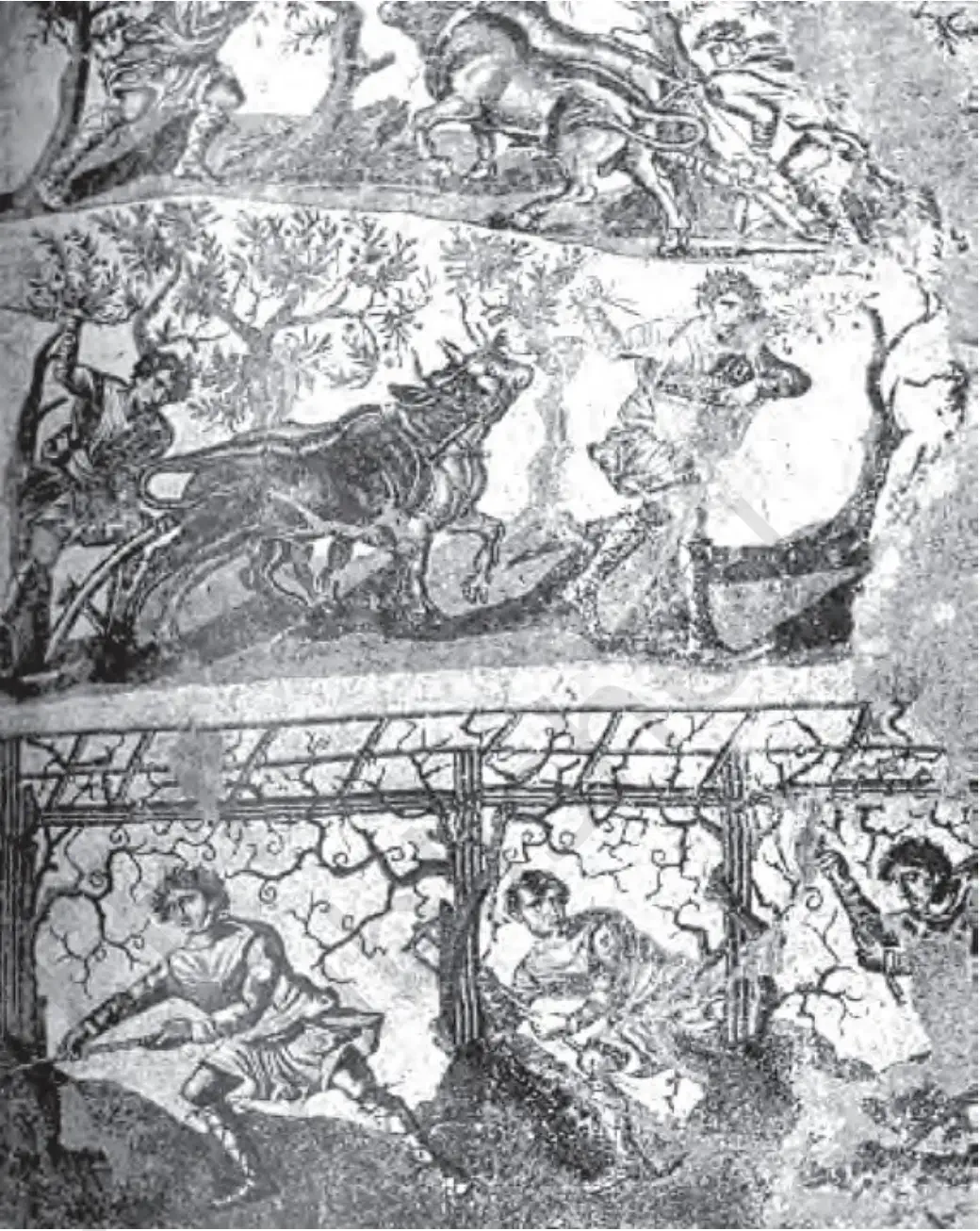
- Agricultural writers gave detailed instructions on labour management.
- Columella advised keeping double the required stock of tools to prevent delays.
- Supervision was considered essential, whether for slaves or free workers.
- Workers were grouped into gangs for easier monitoring; Columella recommended teams of ten.
8. Criticism of Slave Gangs:
- Pliny the Elder condemned slave gangs as the worst system because workers were chained by their feet.
9. Strict Controls in Factories:
- Some industries imposed extreme control measures.
- In Alexandria’s frankincense factories, workers wore sealed aprons and head nets and had to remove all clothing before leaving.
10. Harshness of Agricultural and Industrial Labour:
- Agricultural labour was so disliked that Egyptian peasants deserted villages to avoid it.
- Factory and workshop labour was also unpopular.
11. Runaway Workers and Legal Controls:
- A law of 398 ordered the branding of workers to identify runaways.
- Employers used debt contracts to control workers, claiming employees owed them money.
12. Debt Bondage:
- Many poor families entered debt bondage to survive.
- Augustine’s letters show parents selling children into servitude for 25 years.
- Augustine asked whether such children could be freed after their father’s death.
13. Rural Indebtedness:
- Rural debt was widespread.
- During the Jewish revolt of 66 CE, revolutionaries destroyed moneylenders’ bonds to gain support.
14. Free Wage Labour in the Later Empire:
- Not all labour was coerced.
- Emperor Anastasius built the frontier city of Dara in under three weeks by offering high wages.
- Sixth-century papyri show wage labour was widespread, especially in the eastern Mediterranean.
On the Treatment of Slaves
1. Incident of the Murder:
- City Prefect Lucius Pedanius Secundus was murdered by one of his slaves.
2. Legal Custom After Such Murders:
- Ancient Roman custom required that all slaves living under the same roof be executed, regardless of involvement.
3. Public Reaction:
- A large crowd gathered to protect the innocent slaves.
- Riots broke out in protest against the mass execution.
- The senate-house was surrounded by the angry crowd.
4. Debate Inside the Senate:
- Some senators opposed excessive punishment.
- The majority supported upholding the traditional custom.
- Those favouring mass execution ultimately won the debate.
5. Popular Resistance to the Decision:
- Huge crowds armed with stones and torches blocked the execution from taking place.
6. Nero’s Response:
- Emperor Nero issued a public rebuke through an edict.
- He deployed troops along the entire route where the condemned slaves were to be taken.
7. Key Insight on Roman Society:
- The episode shows the extreme severity of Roman slave laws.
- It also reveals moments of public sympathy for slaves, even against state authority.
Next & Previous Topics of NCERT/CBSE History Class 11 Chapter 2: An Empire Across Three Continents
| Topics No. | Topics Name |
|---|---|
| 1 | The Early Empire |
| 2 | The Third-Century Crisis |
| 3 | Gender, Literacy, Culture |
| 4 | Economic Expansion |
| 5 | Controlling Workers |
| 6 | Social Hierarchies |
| 7 | Late Antiquity |
MCQs on NCERT History Class 11 Chapter 2 Topic – Controlling Workers Class 11
Here are the top exam-oriented MCQ-type questions on “Controlling Workers Class 11” that you should prepare for your CBSE or state board exams:
Question 1. Slavery in the ancient world was:
A. Limited only to the Mediterranean
B. Rooted in both the Mediterranean and Near East
C. Introduced by Christianity
D. Abolished in the fourth century
Answer: B
Question 2. Christianity, after becoming the state religion, did what to slavery?
A. Completely abolished it
B. Strongly opposed it
C. Seriously challenged it
D. Did not seriously challenge it
Answer: D
Question 3. Under Augustus, how many slaves were there in Italy?
A. 1 million
B. 2 million
C. 3 million
D. 5 million
Answer: C
Question 4. The total population of Italy under Augustus was approximately:
A. 5 million
B. 6 million
C. 7.5 million
D. 10 million
Answer: C
Question 5. Slaves were considered by Roman landowners as:
A. Social dependents
B. An investment
C. Religious assets
D. Family members
Answer: B
Question 6. Roman agricultural writers advised landowners to avoid using slaves:
A. In domestic work
B. In skilled trades
C. Where too many were needed or health was at risk
D. On estates near cities
Answer: C
Question 7. The reluctance to use slaves extensively was based on:
A. Moral concern
B. Religious beliefs
C. Sympathy for slaves
D. Economic calculation
Answer: D
Question 8. With reduced warfare in the first century, what happened to the supply of slaves?
A. It increased
B. It declined
C. It remained constant
D. It became irrelevant
Answer: B
Question 9. To meet labour needs after slave supply declined, employers turned to:
A. Military labour
B. Slave breeding and wage labour
C. Only free peasants
D. Imported workers
Answer: B
Question 10. Free labour was preferred on public works in Rome because:
A. Slaves were unskilled
B. Free labour was cheaper
C. Slaves refused such work
D. Slaves were unavailable
Answer: B
Question 11. Why was slave labour more expensive than wage labour?
A. Slaves demanded higher pay
B. Slaves worked fewer hours
C. Slaves had to be maintained all year
D. Slaves were legally protected
Answer: C
Question 12. In which region were slaves not widely used in agriculture in the later period?
A. Italy
B. Western provinces
C. Eastern provinces
D. North Africa
Answer: C
Question 13. Slaves and freedmen were extensively used as:
A. Agricultural labourers
B. Soldiers
C. Business managers
D. Priests
Answer: C
Question 14. Freedmen were:
A. Foreign workers
B. Slaves set free by masters
C. Poor peasants
D. Soldiers
Answer: B
Question 15. Masters often gave slaves or freedmen capital to:
A. Buy land
B. Run businesses
C. Pay taxes
D. Purchase freedom
Answer: B
Question 16. Columella advised landowners to keep extra tools because:
A. Tools were expensive
B. Slaves damaged them
C. Continuous production was important
D. Tools were imported
Answer: C
Question 17. According to Columella, loss in production was mainly due to:
A. Weather conditions
B. Tool shortages
C. Loss of slave labour time
D. Poor soil
Answer: C
Question 18. Roman employers believed that without supervision:
A. Slaves would revolt
B. Free workers would leave
C. No work would get done
D. Production would improve
Answer: C
Question 19. Workers were grouped into small teams mainly to:
A. Increase wages
B. Reduce rebellion
C. Make supervision easier
D. Improve skill
Answer: C
Question 20. Columella recommended work groups of:
A. Five
B. Eight
C. Ten
D. Twenty
Answer: C
Question 21. Pliny the Elder criticised slave gangs because they:
A. Reduced output
B. Encouraged laziness
C. Were usually chained
D. Were too expensive
Answer: C
Question 22. Frankincense factories mentioned by Pliny were located in:
A. Rome
B. Spain
C. Alexandria
D. Gaul
Answer: C
Question 23. In Alexandria’s factories, workers were required to:
A. Work only during daylight
B. Wear seals and masks
C. Receive daily wages
D. Work without supervision
Answer: B
Question 24. An early third-century edict refers to Egyptian peasants:
A. Migrating for trade
B. Joining the army
C. Deserting villages to avoid farm work
D. Becoming slave owners
Answer: C
Question 25. A law of 398 mentioned workers being:
A. Paid in advance
B. Given land
C. Branded for identification
D. Freed from contracts
Answer: C
Question 26. Debt contracts were used by employers to:
A. Help workers save money
B. Ensure tighter control over workers
C. Provide legal protection
D. Promote loyalty
Answer: B
Question 27. According to an early second-century writer, many free people:
A. Refused to work
B. Joined the army
C. Voluntarily entered servitude
D. Became landowners
Answer: C
Question 28. Augustine’s letters reveal that parents sometimes:
A. Abandoned children
B. Educated slaves
C. Sold children into servitude
D. Freed their slaves
Answer: C
Question 29. During the Jewish revolt of 66 CE, revolutionaries destroyed:
A. Farms
B. Temples
C. Moneylenders’ bonds
D. Granaries
Answer: C
Question 30. Emperor Anastasius built the city of Dara by:
A. Using slave labour
B. Forcing peasants
C. Offering high wages
D. Military conscription
Answer: C
Question 31. By the sixth century, papyri show that wage labour:
A. Had disappeared
B. Was limited to Italy
C. Was widespread in parts of the East
D. Replaced slavery completely
Answer: C
Question 32. Lucius Pedanius Secundus was:
A. A Roman emperor
B. A slave owner
C. The City Prefect
D. A senator
Answer: C
Question 33. According to ancient custom, after his murder:
A. Only the guilty slave was punished
B. All slaves under the same roof were executed
C. Slaves were freed
D. An inquiry was held
Answer: B
Question 34. Who opposed the mass execution of slaves?
A. The army
B. The emperor
C. The crowd
D. The senate
Answer: C
Question 35. Emperor Nero responded to the unrest by:
A. Cancelling the executions
B. Supporting the crowd
C. Rebuking the population and using troops
D. Changing the law
Answer: C