
An Introduction To Feudalism Class 11 – Concept, MCQs & Notes PDF
Topic covered: An Introduction To Feudalism class 11 notes and MCQs questions: The Three Orders (All single detail notes are exam-oriented).
We have discussed in-depth and exam-oriented pointers that can be asked in the board exam of class 11th about “An Introduction To Feudalism“ from the NCERT history notes for class 11th chapter 4 “The Three Orders”.
Download the NCERT History for Class 11th Chapter 4 The Three Orders Notes PDF
Download the NCERT History for Class 11th Chapter 4 The Three Orders Notes PDF for a detailed and easy-to-understand explanation of medieval European society. These notes begin with an introduction to feudalism and explain how the feudal system developed in France and England. You will clearly understand the three orders of society, focusing on the second order, the nobility, their privileges, duties, and life on the manorial estate, including the role of knights in feudal warfare.
The chapter also explains the first order, the clergy, covering monks, the Church, and its deep influence on social life, education, and moral values. Equal attention is given to the third order, peasants, both free and unfree, with specific references to England and their everyday struggles. In addition, the notes discuss factors affecting social and economic relations, the emergence of a possible fourth order with new towns, townspeople, and cathedral towns, and the major crisis of the fourteenth century, marked by social unrest and political changes. These NCERT-based notes are ideal for concept clarity, revision, and exam preparation.
An Introduction To Feudalism
1. Meaning of Feudalism:
- Feudalism is a term used by historians to describe medieval European relationships.
- It covered economic, legal, political and social relationships.
2. Origin of the Term ‘Feudalism’:
- The term is derived from the German word feud.
- Feud means a piece of land.
3. Regions Where Feudalism Developed:
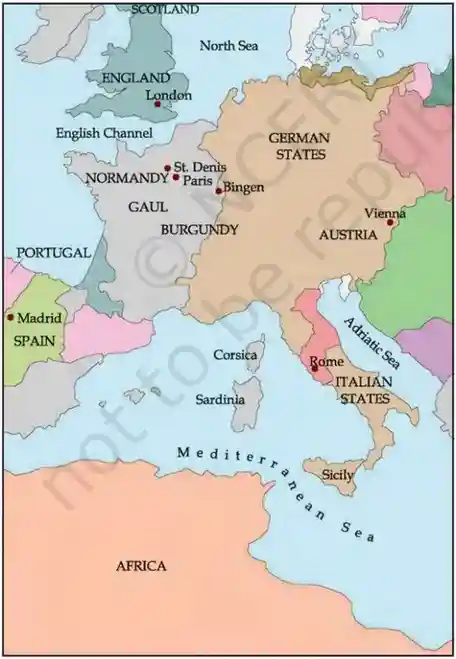
- Feudal society developed first in medieval France.
- It later spread to England.
- It also existed in southern Italy.
4. Economic Basis of Feudalism:
- Feudalism was based on agricultural production.
- It rested on the relationship between lords and peasants.
5. Role of Peasants:
- Peasants cultivated their own land.
- They also cultivated the land of the lord.
- Peasants performed labour services for the lords.
6. Role of Lords:
- Lords provided military protection to peasants.
- They exercised extensive judicial control over peasants.
7. Social and Political Nature of Feudalism:
- Feudalism was not limited to the economy.
- It extended to social aspects of life.
- It also included political control and authority.
8. Historical Roots of Feudalism:
- Its roots can be traced to the Roman Empire.
- Practices during the reign of Charlemagne (742–814) also influenced it.
9. Emergence as an Established System:
- Feudalism emerged as an established way of life later.
- It became widespread in large parts of Europe in the eleventh century.
Next & Previous Topics of NCERT/CBSE History Class 11 Chapter 4: The Three Orders
MCQs on NCERT History Class 11 Chapter 4 Topic – An Introduction to Feudalism Class 11
Here are the top exam-oriented MCQ-type questions on “An Introduction to Feudalism Class 11” that you should prepare for your CBSE or state board exams:
Question 1. The term ‘feudalism’ is used by historians to describe relationships that were:
A. Only economic
B. Only political
C. Economic, legal, political and social
D. Only social
Answer: C
Question 2. The word ‘feudalism’ is derived from the German word:
A. Feodum
B. Feud
C. Fief
D. Manor
Answer: B
Question 3. The German word ‘feud’ means:
A. War
B. Tax
C. A piece of land
D. Village
Answer: C
Question 4. Feudal society first developed mainly in:
A. Medieval Germany
B. Medieval Spain
C. Medieval France
D. Medieval Russia
Answer: C
Question 5. Feudalism later spread to:
A. Scandinavia and Russia
B. England and southern Italy
C. Eastern Europe only
D. Asia and Africa
Answer: B
Question 6. In economic terms, feudalism was based mainly on:
A. Trade and commerce
B. Industrial production
C. Agricultural production
D. Craft production
Answer: C
Question 7. The basic economic relationship in feudalism existed between:
A. Kings and nobles
B. Merchants and artisans
C. Lords and peasants
D. Church and people
Answer: C
Question 8. Peasants cultivated:
A. Only the lord’s land
B. Only their own land
C. Both their own land and the lord’s land
D. Common village land only
Answer: C
Question 9. In return for labour services, lords provided peasants with:
A. Money
B. Land ownership
C. Military protection
D. Freedom from taxes
Answer: C
Question 10. Lords exercised extensive control over peasants in matters of:
A. Trade only
B. Religion only
C. Judicial authority
D. Education
Answer: C
Question 11. Feudalism covered which aspects of life?
A. Economic only
B. Social only
C. Political only
D. Economic, social and political
Answer: D
Question 12. The roots of feudalism can be traced back to practices of the:
A. Greek city-states
B. Roman Empire
C. Islamic Caliphate
D. Byzantine Empire only
Answer: B
Question 13. Feudal practices also existed during the reign of:
A. Julius Caesar
B. Napoleon Bonaparte
C. Charlemagne
D. Otto the Great
Answer: C
Question 14. Charlemagne ruled during:
A. 500–600 CE
B. 600–700 CE
C. 742–814 CE
D. 900–1000 CE
Answer: C
Question 15. Feudalism as an established way of life in Europe emerged mainly in the:
A. Ninth century
B. Tenth century
C. Eleventh century
D. Thirteenth century
Answer: C