
A Fourth Order? New Towns and Townspeople Class 11 – Concept, MCQs & Notes PDF
Topic covered: A Fourth Order? New Towns and Townspeople class 11 notes and MCQs questions: The Three Orders (All single detail notes are exam-oriented).
We have discussed in-depth and exam-oriented pointers that can be asked in the board exam of class 11th about “A Fourth Order? New Towns and Townspeople“ from the NCERT history notes for class 11th chapter 4 “The Three Orders”.
Download the NCERT History for Class 11th Chapter 4 The Three Orders Notes PDF
Download the NCERT History for Class 11th Chapter 4 The Three Orders Notes PDF for a detailed and easy-to-understand explanation of medieval European society. These notes begin with an introduction to feudalism and explain how the feudal system developed in France and England. You will clearly understand the three orders of society, focusing on the second order, the nobility, their privileges, duties, and life on the manorial estate, including the role of knights in feudal warfare.
The chapter also explains the first order, the clergy, covering monks, the Church, and its deep influence on social life, education, and moral values. Equal attention is given to the third order, peasants, both free and unfree, with specific references to England and their everyday struggles. In addition, the notes discuss factors affecting social and economic relations, the emergence of a possible fourth order with new towns, townspeople, and cathedral towns, and the major crisis of the fourteenth century, marked by social unrest and political changes. These NCERT-based notes are ideal for concept clarity, revision, and exam preparation.
A Fourth Order? New Towns and Townspeople
Expansion of Agriculture and Related Growth
1. Areas Linked with Agricultural Expansion:
- Expansion in agriculture was accompanied by growth in:
- Population
- Trade
- Towns
Growth of Population in Europe
1. Population Increase (1000–1300):
- Europe’s population:
- About 42 million in 1000
- About 62 million around 1200
- About 73 million in 1300
2. Reasons for Population Growth:
- Better food availability
- Longer lifespan due to improved nutrition
3. Changes in Life Expectancy:
- By the thirteenth century, Europeans lived 10 years longer than in the eighth century
- Women and girls had shorter lifespans than men
- Men ate better food than women
Decline and Revival of Towns
1. Condition of Towns after Roman Empire:
- Towns of the Roman Empire became deserted and ruined after its fall
2. Revival of Towns (11th Century onwards):
- Growth of agriculture supported a larger population
- Towns began to grow again from the eleventh century
Causes of Town Growth
1. Role of Peasant Surplus:
- Peasants had surplus grain to sell
- Need for places to:
- Sell grain
- Buy tools and cloth
2. Development of Market Centres:
- Growth of:
- Periodic fairs
- Small marketing centres
- These gradually developed town-like features
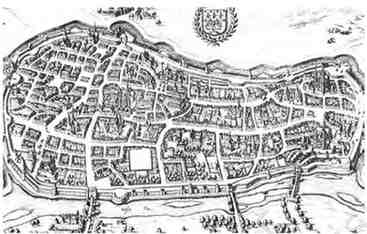
3. Town-like Features:
- Town square
- Church
- Roads with shops and homes of merchants
- Office for town governance
Types of Towns
1. Towns around Important Centers:
- Towns grew around:
- Large castles
- Bishops’ estates
- Large churches
Life and Freedom in Towns
1. Tax System in Towns:
- Town residents paid tax instead of services
- Taxes were paid to lords owning the land
2. Attraction of Towns for Peasants:
- Towns offered:
- Paid work
- Freedom from the lord’s control
3. Escape from Serfdom:
- Saying: “Town air makes free”
- Serfs who stayed in a town for one year and one day became free
- Many serfs ran away and hid in towns
Social Composition of Towns
1. Types of People in Towns:
- Free peasants
- Escaped serfs
- Unskilled labourers
- Shopkeepers and merchants
2. Rise of Skilled Professions:
- Later need for specialised skills:
- Bankers
- Lawyers
Size and Status of Towns
1. Population of Large Towns:
- Bigger towns had populations of about 30,000
2. Towns as a ‘Fourth Order’:
- Town dwellers came to be regarded as a ‘fourth’ order
Guild System in Towns
1. Role of Guilds:
- Guild was the basis of economic organisation
- Each craft or industry formed a guild
2. Functions of Guilds:
- Controlled:
- Quality of products
- Prices
- Sale of goods
3. Guild-Hall:
- Present in every town
- Used for:
- Ceremonial functions
- Meetings of guild heads
Urban Services and Occupations
1. Town Administration and Services:
- Guards patrolled town walls
- Musicians played at feasts and civic processions
- Innkeepers looked after travellers
Growth of Trade Routes
1. New Trade Routes (11th Century):
- Trade routes with West Asia developed
2. Scandinavian Trade:
- Scandinavian merchants:
- Sailed south from the North Sea
- Exchanged furs and hunting-hawks for cloth
3. English Trade:
- English traders sold tin
Growth of Commerce and Crafts
1. Developments in France:
- By the twelfth century:
- Commerce grew
- Crafts expanded
2. Change in Craftsmen’s Work Pattern:
- Earlier, craftsmen travelled from manor to manor
- Later, they settled in one place
- Goods were produced and traded for food
Rise of Town Merchants
1. Economic Power of Merchants:
- Expansion of towns and trade made merchants:
- Rich
- Powerful
2. Challenge to Nobility:
- Town merchants rivalled the power of the nobility
Next & Previous Topics of NCERT/CBSE History Class 11 Chapter 4: The Three Orders
MCQs on NCERT History Class 11 Chapter 4 Topic – A Fourth Order? New Towns and Townspeople Class 11
Here are the top exam-oriented MCQ-type questions on “A Fourth Order? New Towns and Townspeople Class 11” that you should prepare for your CBSE or state board exams:
Question 1. Expansion in agriculture was accompanied by growth in which three areas?
A. Religion, culture and art
B. Population, trade and towns
C. Army, navy and forts
D. Education, science and medicine
Answer: B
Question 2. Europe’s population around the year 1000 was approximately:
A. 30 million
B. 42 million
C. 62 million
D. 73 million
Answer: B
Question 3. By 1200, Europe’s population had increased to about:
A. 52 million
B. 60 million
C. 62 million
D. 70 million
Answer: C
Question 4. Europe’s population around 1300 stood at nearly:
A. 65 million
B. 68 million
C. 70 million
D. 73 million
Answer: D
Question 5. Better food resulted in:
A. Decline in population
B. Shorter lifespan
C. Longer lifespan
D. Increase in diseases
Answer: C
Question 6. By the thirteenth century, an average European lived about how many years longer than in the eighth century?
A. 5 years
B. 8 years
C. 10 years
D. 15 years
Answer: C
Question 7. Women and girls had shorter lifespans mainly because:
A. They worked less
B. They ate better food
C. They ate poorer food
D. They lived in towns
Answer: C
Question 8. After the fall of the Roman Empire, towns became:
A. Industrial centres
B. Overcrowded
C. Deserted and ruined
D. Trade hubs
Answer: C
Question 9. Towns began to grow again from which century?
A. Ninth century
B. Tenth century
C. Eleventh century
D. Thirteenth century
Answer: C
Question 10. Growth of towns was mainly possible because agriculture:
A. Was mechanised
B. Sustained higher population
C. Was controlled by towns
D. Declined sharply
Answer: B
Question 11. Peasants needed towns mainly to:
A. Join the army
B. Attend schools
C. Sell surplus grain and buy goods
D. Pay taxes
Answer: C
Question 12. Periodic fairs and small markets gradually developed into:
A. Villages
B. Ports
C. Towns
D. Fortresses
Answer: C
Question 13. Which of the following was NOT a feature of early towns?
A. Town square
B. Church
C. Roads with shops
D. Royal palace
Answer: D
Question 14. Some towns developed around:
A. Universities
B. Mines
C. Castles and bishops’ estates
D. Farms
Answer: C
Question 15. In towns, people paid ______ instead of services to the lords.
A. Rent in kind
B. Labour
C. Tax
D. Military service
Answer: C
Question 16. Towns offered freedom mainly to:
A. Nobles
B. Kings
C. Young peasants
D. Priests
Answer: C
Question 17. The saying “Town air makes free” reflected:
A. Clean environment
B. Religious freedom
C. Freedom from lord’s control
D. Political equality
Answer: C
Question 18. A serf became free if he stayed in a town for:
A. Six months
B. One year
C. One year and one day
D. Two years
Answer: C
Question 19. Many early town workers were:
A. Skilled artisans
B. Free peasants and escaped serfs
C. Nobles
D. Soldiers
Answer: B
Question 20. Who provided unskilled labour in towns?
A. Merchants
B. Nobles
C. Free peasants and escaped serfs
D. Priests
Answer: C
Question 21. Which group became numerous in towns?
A. Kings
B. Shopkeepers and merchants
C. Farmers
D. Monks
Answer: B
Question 22. Later, towns required specialised professionals like:
A. Farmers and hunters
B. Bankers and lawyers
C. Knights and soldiers
D. Priests and monks
Answer: B
Question 23. The population of bigger towns was around:
A. 10,000
B. 20,000
C. 30,000
D. 50,000
Answer: C
Question 24. Big towns came to be known as a:
A. Second order
B. Third order
C. Fourth order
D. Fifth order
Answer: C
Question 25. The basis of economic organisation in towns was the:
A. Manor
B. Church
C. Guild
D. Kingdom
Answer: C
Question 26. A guild was an association of:
A. Farmers
B. Soldiers
C. Craftsmen or traders
D. Priests
Answer: C
Question 27. Guilds controlled:
A. Only production
B. Quality, price and sale of goods
C. Taxes only
D. Religious activities
Answer: B
Question 28. The guild-hall was mainly used for:
A. Farming
B. Storage of grain
C. Ceremonial and official meetings
D. Defence
Answer: C
Question 29. Who guarded the town walls?
A. Priests
B. Merchants
C. Guards
D. Farmers
Answer: C
Question 30. Scandinavian merchants exchanged furs and hunting hawks for:
A. Spices
B. Gold
C. Cloth
D. Wine
Answer: C
Question 31. English traders mainly sold:
A. Wool
B. Tin
C. Silk
D. Iron
Answer: B
Question 32. Commerce and crafts in France began to grow by the:
A. Tenth century
B. Eleventh century
C. Twelfth century
D. Thirteenth century
Answer: C
Question 33. Earlier, craftsmen travelled from:
A. Town to town
B. Country to country
C. Manor to manor
D. Port to port
Answer: C
Question 34. Craftsmen later settled in one place mainly to:
A. Avoid taxes
B. Trade goods for food
C. Join guilds
D. Serve nobles
Answer: B
Question 35. As towns and trade expanded, merchants became:
A. Poor and dependent
B. Weak and powerless
C. Rich and powerful
D. Isolated
Answer: C
Question 36. Town merchants eventually rivalled the power of the:
A. Kings
B. Clergy
C. Peasants
D. Nobility
Answer: D
Question 37. New trade routes with West Asia developed by the:
A. Ninth century
B. Tenth century
C. Eleventh century
D. Thirteenth century
Answer: C
Question 38. Guards, musicians and innkeepers indicate that towns had:
A. Military rule
B. Civic life and services
C. Agricultural focus
D. Religious dominance
Answer: B
Question 39. Paid work in towns mainly attracted:
A. Nobles
B. Priests
C. Young peasants
D. Kings
Answer: C
Question 40. The revival of towns in Europe was directly linked to:
A. Decline of feudalism
B. Growth of agriculture
C. Spread of Christianity
D. Rise of monarchies
Answer: B